
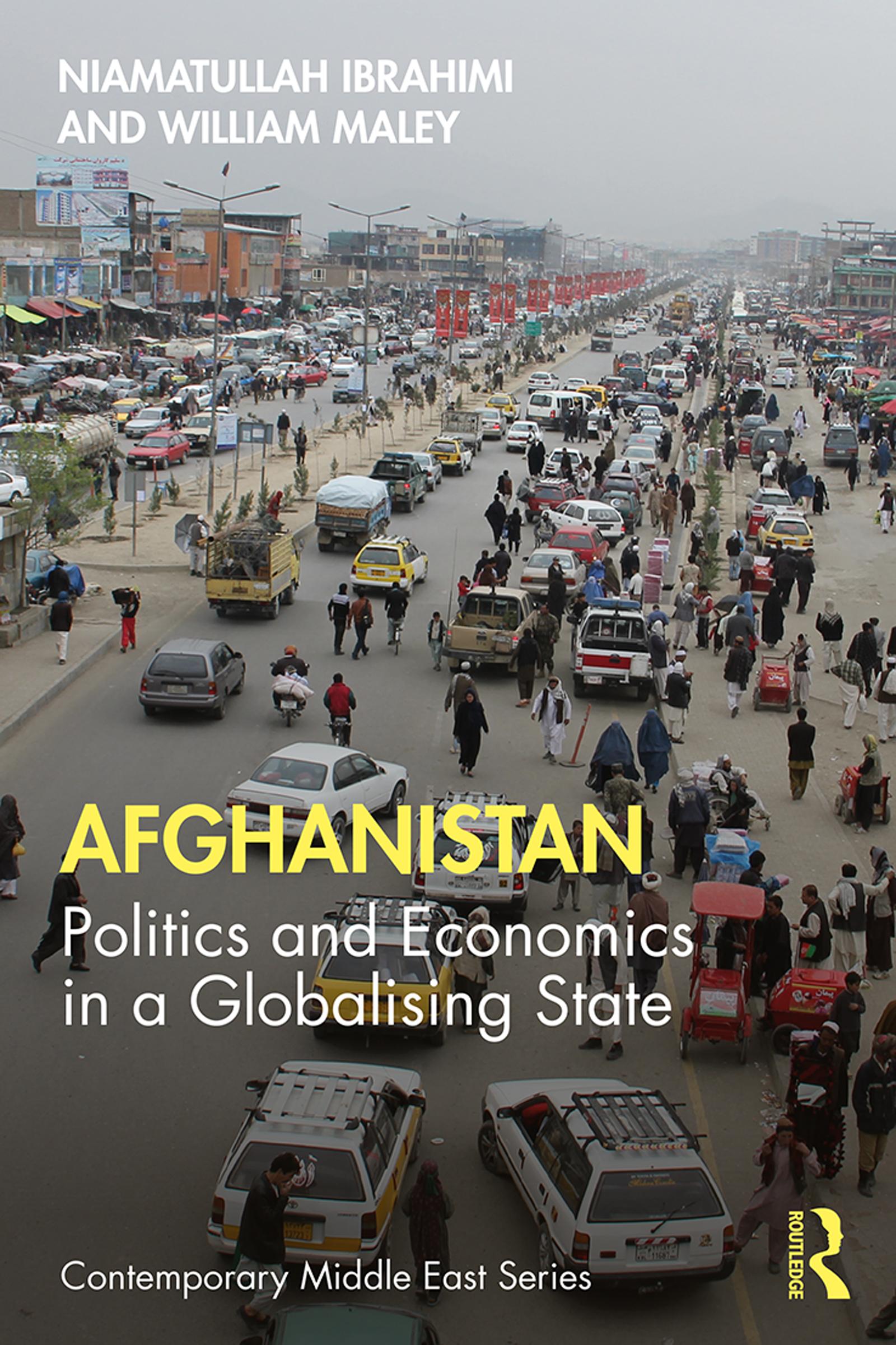
This book offers an overview of the formation of the Afghan state and of the politics, economic challenges and international relations of contemporary Afghanistan.
It opens with an account of some of the key features that make Afghanistan unique and proceeds to discuss how the Afghan state acquired a distinctive character as a rentier state. In addition, the authors outline a complex range of domestic and external factors that led to the breakdown of the state, and how that breakdown gave rise to a set of challenges with which Afghan political and social actors have been struggling to deal since the 2001 international intervention that overthrew the anti-modernist Taliban regime. It then presents the different types of politics that Afghanistan has witnessed over the last two decades; examines some of the most important features of the Afghan economy; and demonstrates how Afghanistan’s geopolitical location and international relations more broadly have complicated the task of promoting stability in the post-2001 period. It concludes with some reflections on the factors that are likely to shape Afghanistan’s future trajectory and notes that if there are hopes for a better future, they largely rest on the shoulders of a globalised generation of younger Afghans.
This book will be of interest to students and scholars in the fields of Middle East and Central Asian studies, international relations, politics, development studies and history.
Betal enkelt med kort, Klarna, Apple Pay eller Google Pay. Ikke fornøyd? Du har alltid 14 dagers angrerett. Les mer i våre vilkår. Har du spørsmål, send oss en e-post på hello@memmo.org.
Memmo gjør det enklere å studere – uansett hvor du er i verden. Hos oss samler du pensumbøker og smarte studieverktøy på ett og samme sted: sammendrag, quizer, podkaster og flashcards. Og så Ted, din studiekompis som svarer på alt du lurer på. Over 50 000 studenter studerer allerede her – bygget for at du skal lære raskere og stresse mindre.