
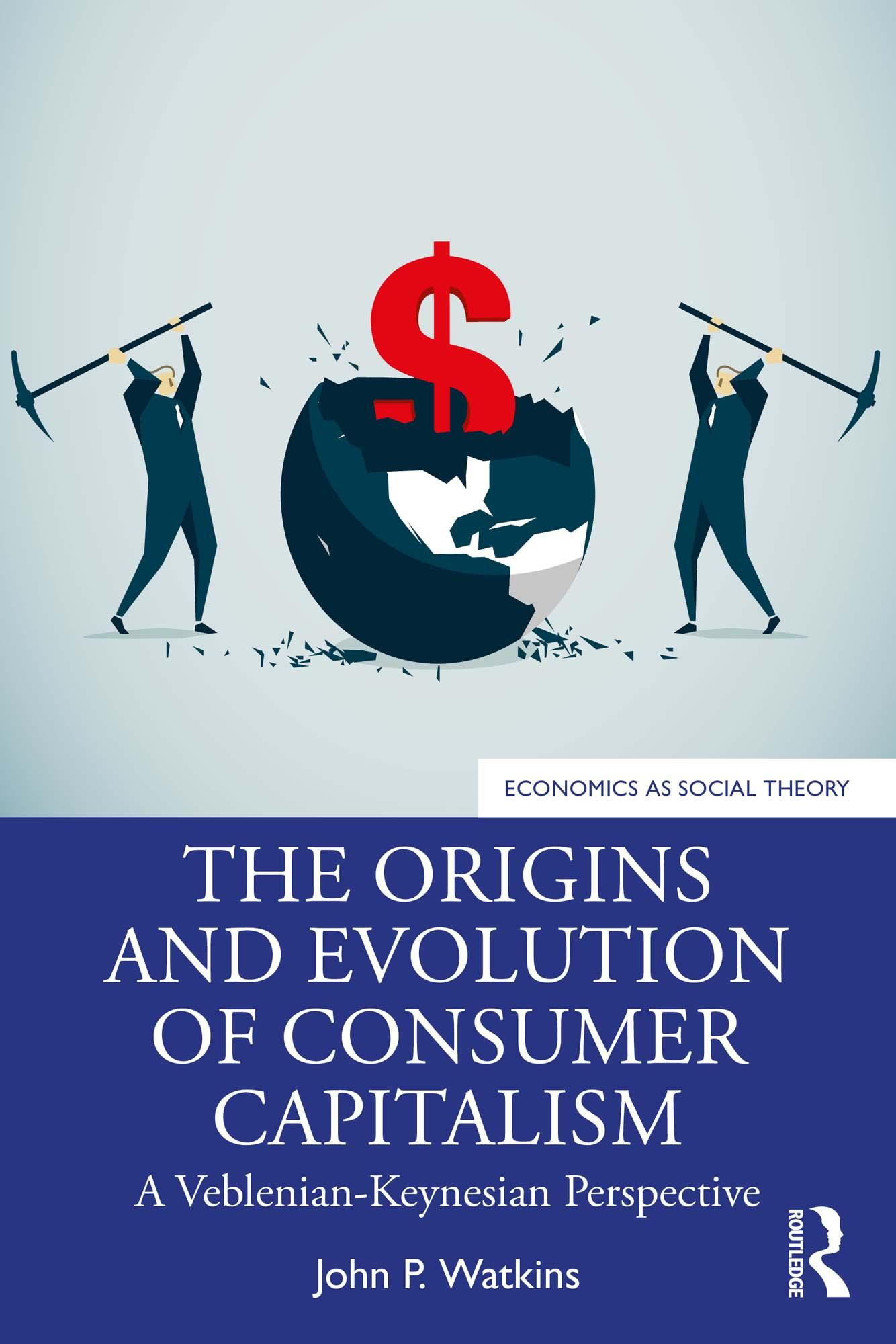
Consumer capitalism arose with the second industrial revolution, the application of continuous-mass production to consumer goods during the late nineteenth and early twentieth centuries. This book adopts a Veblenian, Keynesian viewpoint, presenting an evolutionary view of consumption combined with the need to increase demand to match increases in production. The book traces the history of consumer capitalism, examining the paradox posed by applying continuous-mass production to produce armaments for dynastic ambitions versus consumer goods for the masses, manifesting itself in the world wars of the twentieth century. Multiple paradoxes at the heart of the story address booms leading to busts, over-producing countries in Asia relying on over-consuming countries in the West, and the expansion of demand depending on increasingly inventive ways of liquefying assets, in light of stagnant incomes. The book persuasively argues that these paradoxes result from capitalism’s incessant drive to accumulate capital, fostering conflict, crises, and depression. The latest paradox results from the impact of continuous-mass production on the environment, manifesting itself as the Darwinian dilemma. The dilemma stems from human beings largely winning the struggle for existence and, in the process, possibly making the earth uninhabitable, at least for humans.
Betal enkelt med kort, Klarna, Apple Pay eller Google Pay. Ikke fornøyd? Du har alltid 14 dagers angrerett. Les mer i våre vilkår. Har du spørsmål, send oss en e-post på hello@memmo.org.
Memmo gjør det enklere å studere – uansett hvor du er i verden. Hos oss samler du pensumbøker og smarte studieverktøy på ett og samme sted: sammendrag, quizer, podkaster og flashcards. Og så Ted, din studiekompis som svarer på alt du lurer på. Over 50 000 studenter studerer allerede her – bygget for at du skal lære raskere og stresse mindre.