
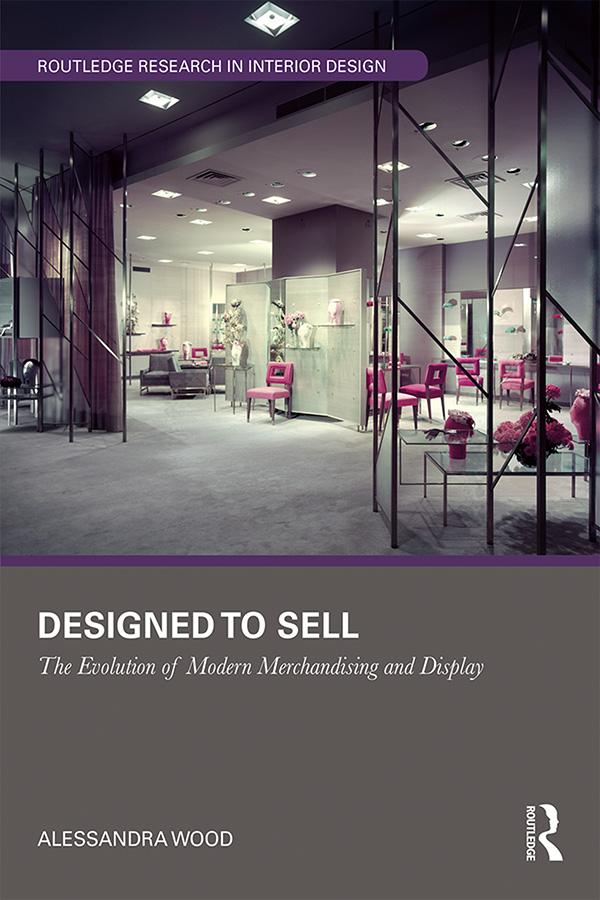
Designed to Sell presents an engaging account of mid-twentieth-century department store design and display in America from the 1930s to the 1960s. It traces the development of postwar philosophies of retail design that embodied aesthetics and function and new modes of merchandise display, resulting in the emergence of a new type of industrial designer.
The evolution of aesthetics in department stores during this period reflected larger cultural shifts in consumer behaviour and lifestyle. Designed to Sell explores these changes using five key case studies and original archival sources to reveal the link between designers and consumption beyond the design of individual objects. It argues that design is not simply connected to retail consumption, but that it is capable of controlling how and where customers shop and what they are drawn to purchase.
This book contextualises this discussion and brings it up to date for students and scholars interested in design, retail, and interior history.
Betal enkelt med kort, Klarna, Apple Pay eller Google Pay. Ikke fornøyd? Du har alltid 14 dagers angrerett. Les mer i våre vilkår. Har du spørsmål, send oss en e-post på hello@memmo.org.
Memmo gjør det enklere å studere – uansett hvor du er i verden. Hos oss samler du pensumbøker og smarte studieverktøy på ett og samme sted: sammendrag, quizer, podkaster og flashcards. Og så Ted, din studiekompis som svarer på alt du lurer på. Over 50 000 studenter studerer allerede her – bygget for at du skal lære raskere og stresse mindre.