
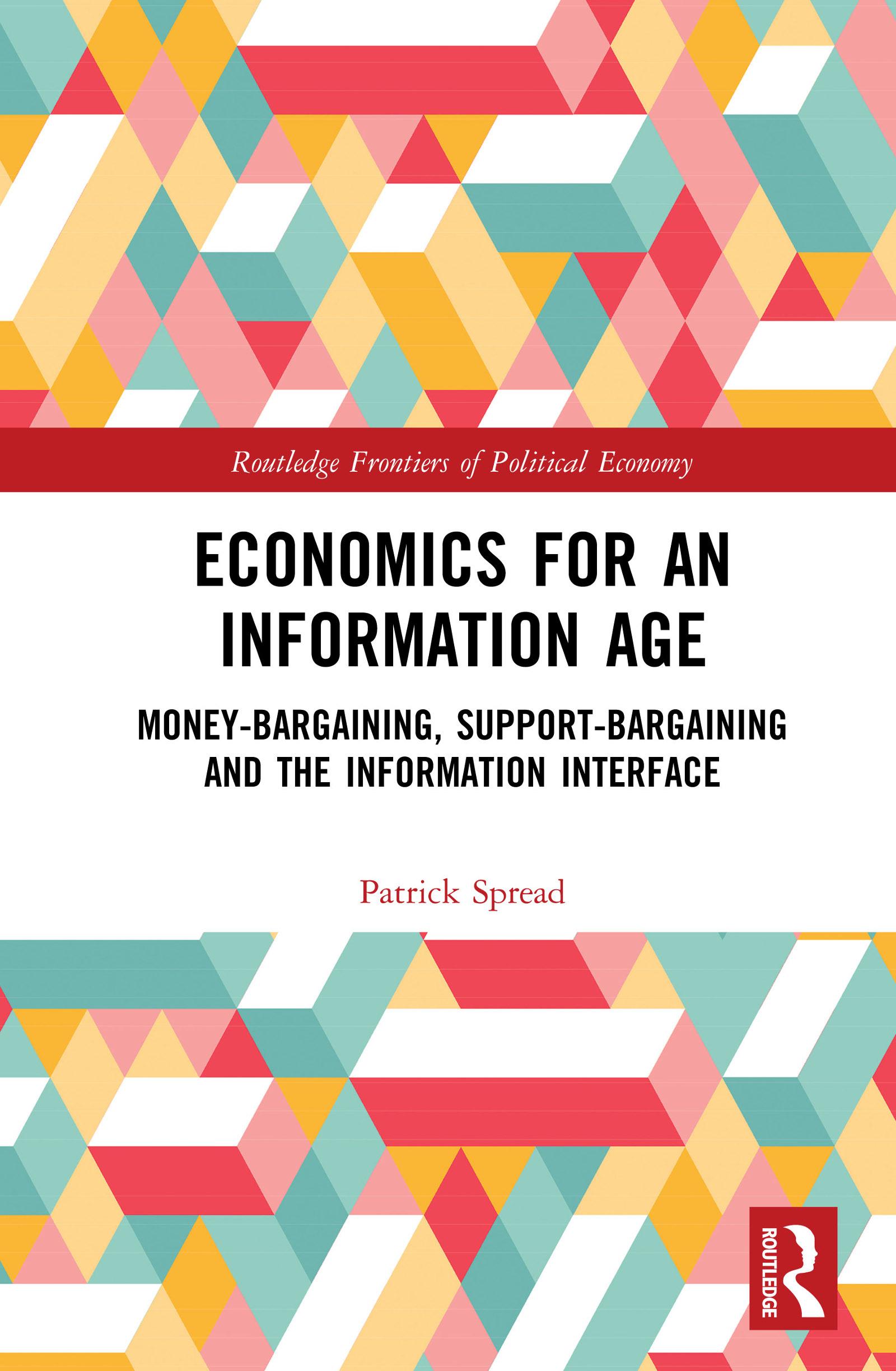
Economics for an Information Age examines the central role of information within economics and society. The neoclassical economic model, taught as ‘mainstream economics’ in universities around the world, relies on a mathematical model of ‘resource allocation’ in which private advantage gives rise to public advantage in the shape of an optimal allocation of resources. However, this model assumes ‘perfect information’. In the present ‘information age’ such an assumption is even farther from the reality than it was in the past. People disseminate and manipulate information to further their interests.
This book explains economic behaviour in terms of a theory of ‘money-bargaining’ and political and intellectual ‘support-bargaining’, in which the dissemination of information plays a central role. It uses this lens to explain how information is created, manipulated, disseminated, organised, understood, interpreted, used, bought and sold.
This book will be of interest to mainstream and heterodox economists alike, as well as historians of economic thought, and anyone who seeks to better understand the impact of the information age on economic behaviour.
Betal enkelt med kort, Klarna, Apple Pay eller Google Pay. Ikke fornøyd? Du har alltid 14 dagers angrerett. Les mer i våre vilkår. Har du spørsmål, send oss en e-post på hello@memmo.org.
Memmo gjør det enklere å studere – uansett hvor du er i verden. Hos oss samler du pensumbøker og smarte studieverktøy på ett og samme sted: sammendrag, quizer, podkaster og flashcards. Og så Ted, din studiekompis som svarer på alt du lurer på. Over 50 000 studenter studerer allerede her – bygget for at du skal lære raskere og stresse mindre.