
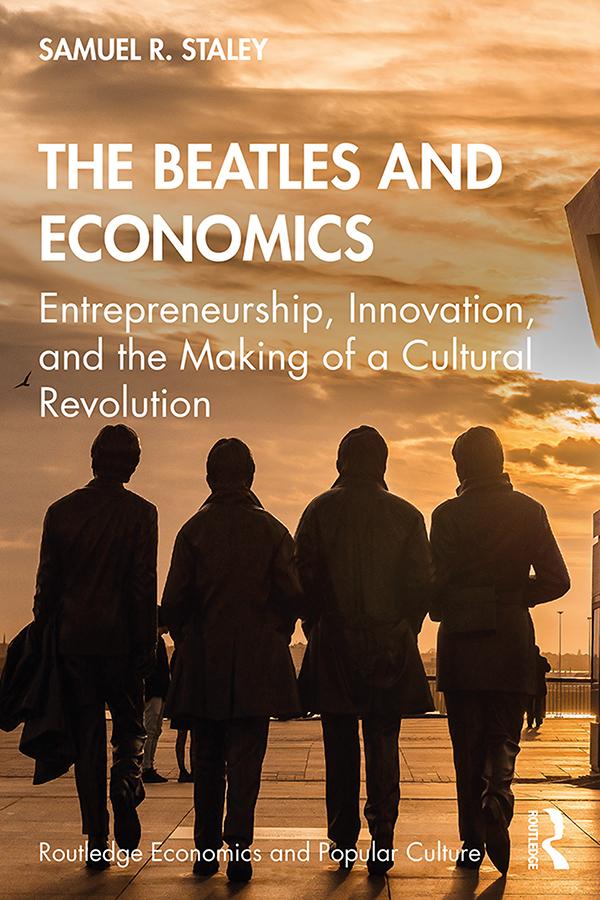
The Beatles are considered the most influential popular music act of the twentieth century, widely recognized for their influence on popular culture. The inability of other bands and artists to imitate their fame has prompted questions such as: How did the Beatles become so successful? What factors contributed to their success? Why did they break up?
The Beatles and Economics: Entrepreneurship, Innovation, and the Making of a Cultural Revolution answers these questions using the lens of economic analysis. Economics provides the prism for explaining why their success—while legendary in scale—is not mythic. This book explores how the band’s commercial achievements were intimately tied to the larger context of economic globalization and rebuilding post-World War II. It examines how the Beatles’ time in Hamburg is best understood as an investment in human capital, and why the entrepreneurial growth mindset was critical to establishing a scalable market niche and sustaining the Beatles’ ability to lead and shape emerging markets in entertainment and popular music. Later chapters consider how the economics of decision making and organizational theory helps us to understand the band’s break-up at its economic peak.
This essential text is of interest to anyone interested in the economic dynamics and social forces that shape cultural change.
Betal enkelt med kort, Klarna, Apple Pay eller Google Pay. Ikke fornøyd? Du har alltid 14 dagers angrerett. Les mer i våre vilkår. Har du spørsmål, send oss en e-post på hello@memmo.org.
Memmo gjør det enklere å studere – uansett hvor du er i verden. Hos oss samler du pensumbøker og smarte studieverktøy på ett og samme sted: sammendrag, quizer, podkaster og flashcards. Og så Ted, din studiekompis som svarer på alt du lurer på. Over 50 000 studenter studerer allerede her – bygget for at du skal lære raskere og stresse mindre.