
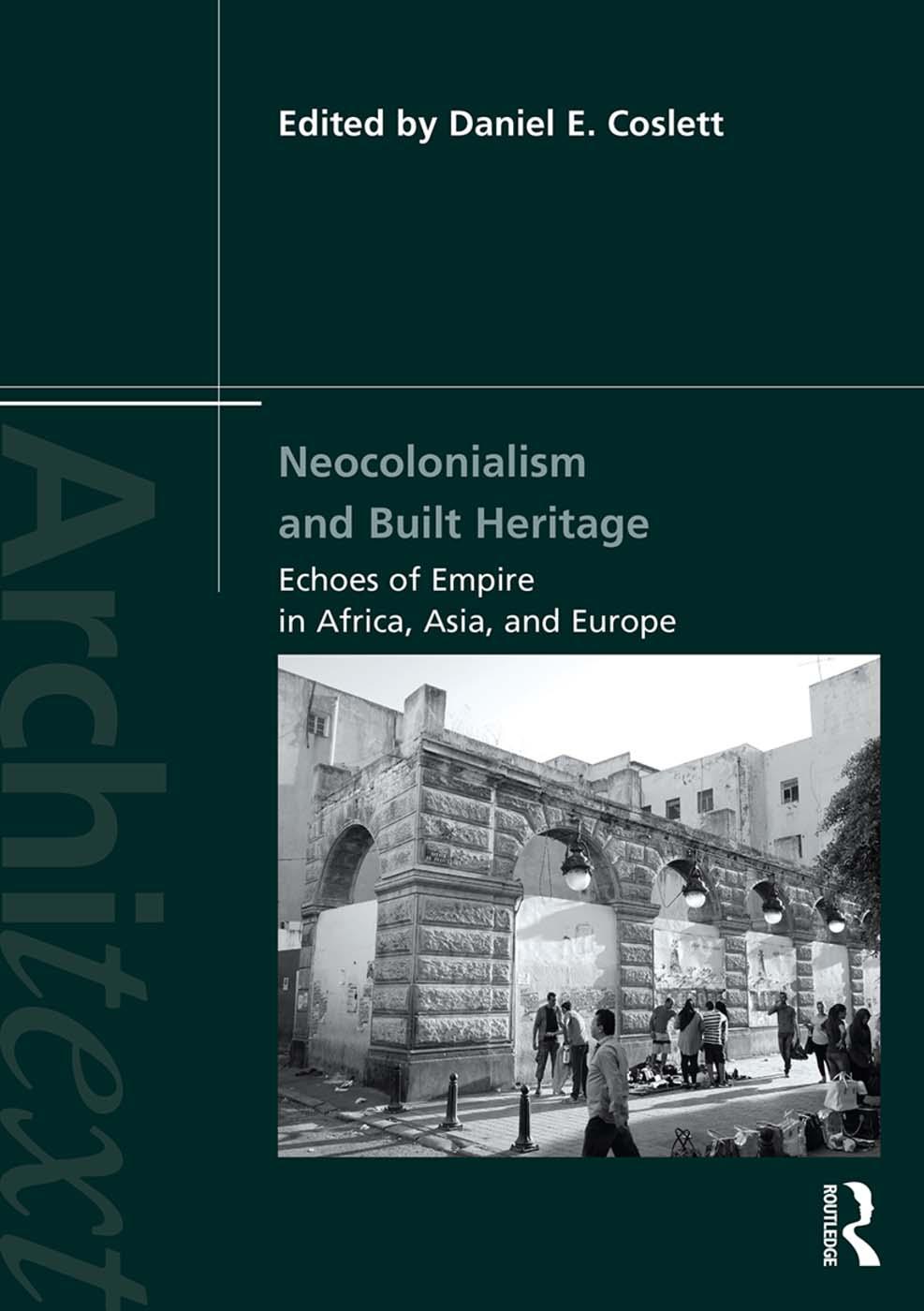
Architectural relics of nineteenth and twentieth-century colonialism dot cityscapes throughout our globalizing world, just as built traces of colonialism remain embedded within the urban fabric of many European capitals.
Neocolonialism and Built Heritage addresses the sustained presence and influence of historic built environments and processes inherited from colonialism within the contemporary lives of cities in Africa, Asia, and Europe. Novel in their focused consideration of ways in which these built environments reinforce neocolonialist connections among former colonies and colonizers, states and international organizations, the volume’s case studies engage highly relevant issues such as historic preservation, heritage management, tourism, toponymy, and cultural imperialism.
Interrogating the life of the past in the present, authors thus challenge readers to consider the roles played by a diversity of historic built environments in the ongoing asymmetrical balance of power and unequal distribution capital around the globe. They present buildings’ maintenance, management, reuse, and (re)interpretation, and in so doing they raise important questions, the ramifications of which transcend the specifics of the individual sites and architectural histories they present.
Betal enkelt med kort, Klarna, Apple Pay eller Google Pay. Ikke fornøyd? Du har alltid 14 dagers angrerett. Les mer i våre vilkår. Har du spørsmål, send oss en e-post på hello@memmo.org.
Memmo gjør det enklere å studere – uansett hvor du er i verden. Hos oss samler du pensumbøker og smarte studieverktøy på ett og samme sted: sammendrag, quizer, podkaster og flashcards. Og så Ted, din studiekompis som svarer på alt du lurer på. Over 50 000 studenter studerer allerede her – bygget for at du skal lære raskere og stresse mindre.