
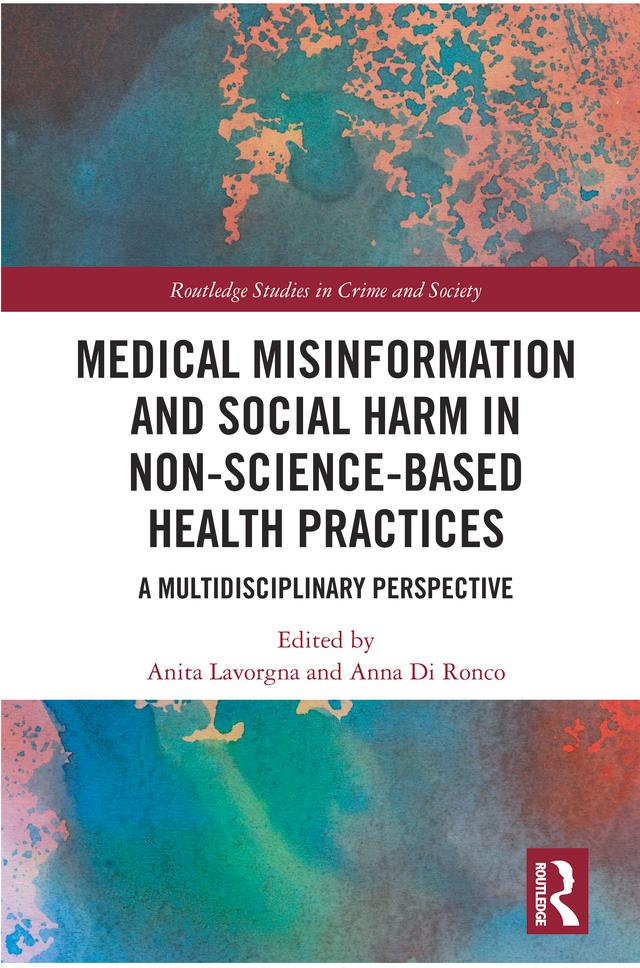
Fraudulent, harmful, or at best useless pharmaceutical and therapeutic approaches
developed outside science-based medicine have boomed in recent years, especially due to
the commercialisation of cyberspace. The latter has played a fundamental role in the rise
of false ‘health experts’, and in the creation of filter bubbles and echo chambers that have
contributed to the formation of highly polarised debates on non-science-based health
practices—online as well as offline.
By adopting a multidisciplinary approach, this edited book brings together
contributions of international academics and practitioners from criminology, digital
sociology, health psychology, medicine, law, physics, and journalism, where they critically
analyse different types of non-science-based health approaches. With this volume, we aim
to reconcile different scientific understandings of these practices, synthesising a variety
of empirical, theoretical and interpretative approaches, and exploring the challenges,
implications and potential remedies to the spread of dangerous and misleading health
information.
This edited book will offer some food for thought not only to students and academics
in the social sciences, health psychology and medicine among other disciplines, but also
to medical practitioners, science journalists, debunkers, policy makers and the general
public, as they might all benefit from a greater awareness and critical knowledge of the
harms caused by non-scientific health practices.
Betal enkelt med kort, Klarna, Apple Pay eller Google Pay. Ikke fornøyd? Du har alltid 14 dagers angrerett. Les mer i våre vilkår. Har du spørsmål, send oss en e-post på hello@memmo.org.
Memmo gjør det enklere å studere – uansett hvor du er i verden. Hos oss samler du pensumbøker og smarte studieverktøy på ett og samme sted: sammendrag, quizer, podkaster og flashcards. Og så Ted, din studiekompis som svarer på alt du lurer på. Over 50 000 studenter studerer allerede her – bygget for at du skal lære raskere og stresse mindre.