
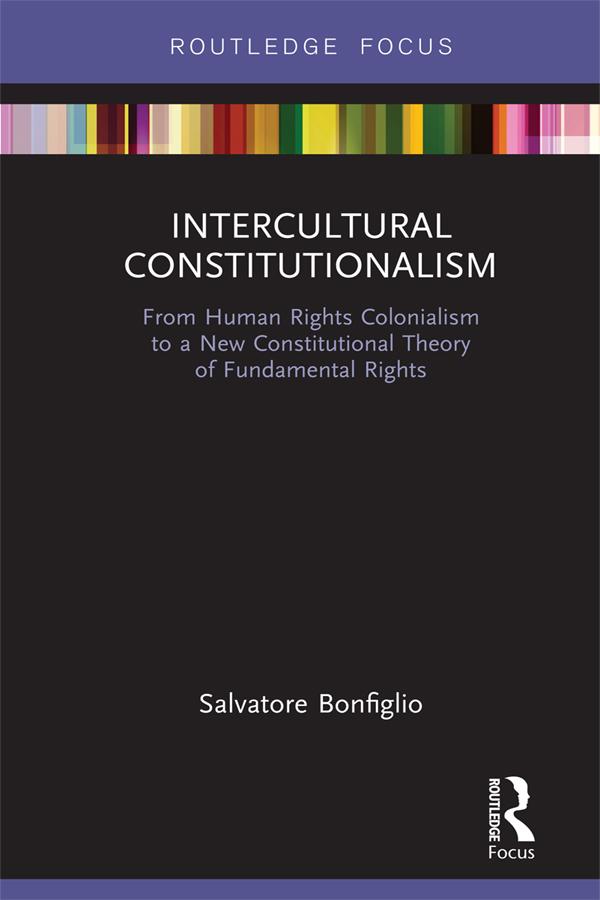
This book argues that the effective protection of fundamental rights in a contemporary, multicultural society requires not only tolerance and respect for others, but also an ethics of reciprocity and a pursuit of dialogue between different cultures of human rights. Nowadays, all cultures tend to claim an equitable arrangement that can be articulated in the terms of fundamental rights and in the multicultural organization of the State. Starting from the premise that every culture is and always was intercultural, this book elaborates a new, and more fundamentally, pluralist view of the relationship between rights and cultural identity. No culture is pure; from the perspective of an irreducible cultural contamination, this book argues, it is possible to formulate constitutional idea of diversity that is properly intercultural. This concept of intercultural constitutionalism is not, then, based on abstract principles, but nor is it bound to any particular cultural norm. Rather, intercultural constitutionalism allows the interpretation of rights, rules and legal principles, which are established in different contexts.
Betal enkelt med kort, Klarna, Apple Pay eller Google Pay. Ikke fornøyd? Du har alltid 14 dagers angrerett. Les mer i våre vilkår. Har du spørsmål, send oss en e-post på hello@memmo.org.
Memmo gjør det enklere å studere – uansett hvor du er i verden. Hos oss samler du pensumbøker og smarte studieverktøy på ett og samme sted: sammendrag, quizer, podkaster og flashcards. Og så Ted, din studiekompis som svarer på alt du lurer på. Over 50 000 studenter studerer allerede her – bygget for at du skal lære raskere og stresse mindre.