
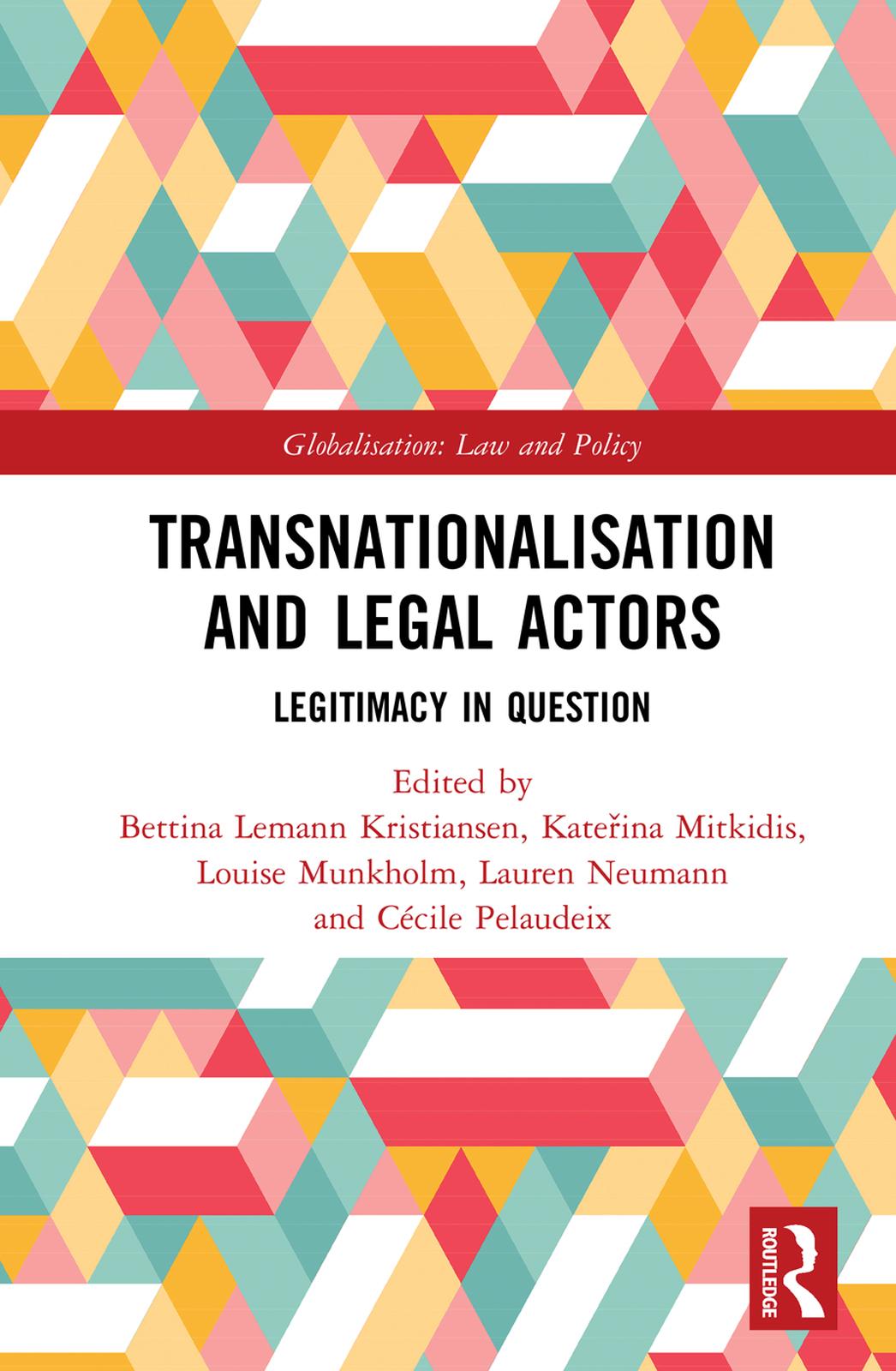
Transnational tendencies have led to a pluralistic legal environment in which emerging and established legal actors, regulatory levels and types of legal norms co-exist, compete and interact in complex ways. This challenges and changes not only how legal norms are created, applied and enforced but also when these actors, norms and processes are considered legitimate. The book investigates how states and non-state actors interact in transnational settings and pays attention to the understudied question of what effect transnational tendencies have on the legitimacy of legal actors, norms and processes. It seeks to confront three fundamental questions: Has legitimacy significantly changed? Who creates norms and with which consequences for legal procedures and norms? The book considers the question of legitimacy from a broad range of legal perspectives, including environmental law, human rights law and commercial law. It maps out the contours of legitimacy today with an emphasis on the reactions of central actors like states and courts to transnational tendencies. The book thereby provides a conceptually powerful structure within which to further debate the complexity of transnational tendencies in law and proposes innovative approaches to problem solving while designing pathways for further reflection on the development of law in a transnational context.
Betal enkelt med kort, Klarna, Apple Pay eller Google Pay. Ikke fornøyd? Du har alltid 14 dagers angrerett. Les mer i våre vilkår. Har du spørsmål, send oss en e-post på hello@memmo.org.
Memmo gjør det enklere å studere – uansett hvor du er i verden. Hos oss samler du pensumbøker og smarte studieverktøy på ett og samme sted: sammendrag, quizer, podkaster og flashcards. Og så Ted, din studiekompis som svarer på alt du lurer på. Over 50 000 studenter studerer allerede her – bygget for at du skal lære raskere og stresse mindre.