
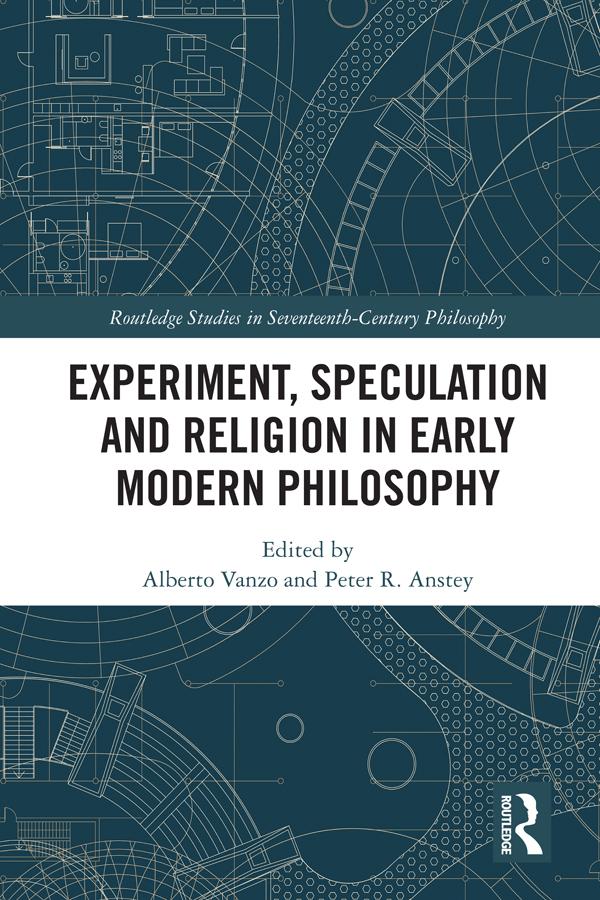
Experimental philosophy was an exciting and extraordinarily successful development in the study of nature in the seventeenth century. Yet experimental philosophy was not without its critics and was far from the only natural philosophical method on the scene. In particular, experimental philosophy was contrasted with and set against speculative philosophy and, in some quarters, was accused of tending to irreligion. This volume brings together ten scholars of early modern philosophy, history and science in order to shed new light on the complex relations between experiment, speculation and religion in early modern Europe.
The first six chapters of the book focus on the respective roles of experimental and speculative philosophy in individual seventeenth-century philosophers. They include Francis Bacon, Robert Boyle, Margaret Cavendish, Thomas Hobbes, John Locke and Isaac Newton. The next two chapters deal with the relation between experimental philosophy and religion with a special focus on hypotheses and natural religion. The penultimate chapter takes a broader European perspective and examines the paucity of concerns with religion among Italian natural philosophers of the period. Finally, the concluding chapter draws all these individuals and themes together to provide a critical appraisal of recent scholarship on experimental philosophy.
This book is the first collection of essays on the subject of early modern experimental philosophy. It will appeal to scholars and students of early modern philosophy, science and religion.
Betal enkelt med kort, Klarna, Apple Pay eller Google Pay. Ikke fornøyd? Du har alltid 14 dagers angrerett. Les mer i våre vilkår. Har du spørsmål, send oss en e-post på hello@memmo.org.
Memmo gjør det enklere å studere – uansett hvor du er i verden. Hos oss samler du pensumbøker og smarte studieverktøy på ett og samme sted: sammendrag, quizer, podkaster og flashcards. Og så Ted, din studiekompis som svarer på alt du lurer på. Over 50 000 studenter studerer allerede her – bygget for at du skal lære raskere og stresse mindre.