
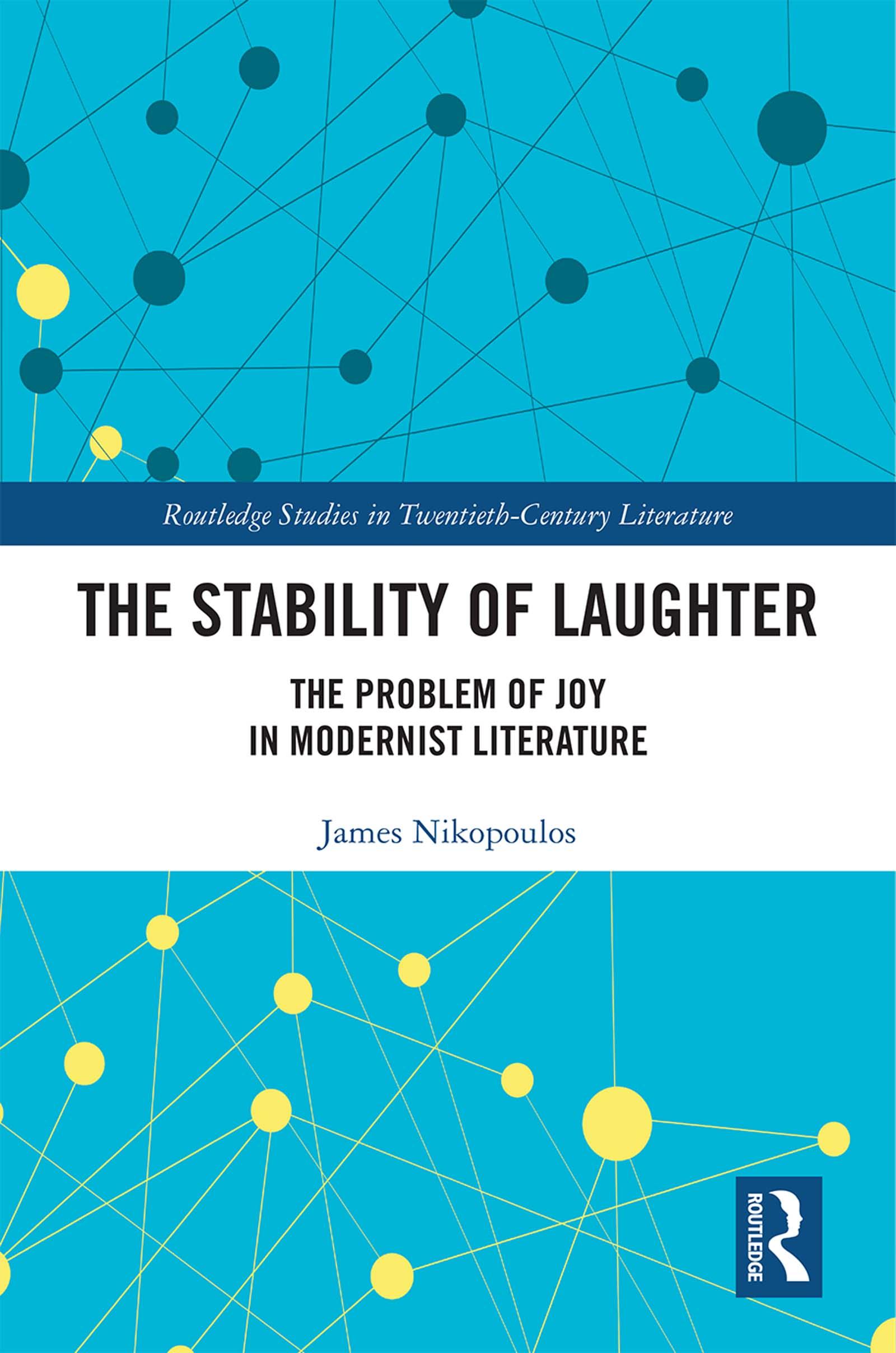
A "sad and corrupt" age, a period of "crisis" and "upheaval"—what T.S. Eliot famously summed up as "the panorama of futility and anarchy which is contemporary history." Modernism has always been characterized by its self-conscious sense of suffering. Why, then, was it so obsessed with laughter? From Baudelaire, Nietzsche, Bergson and Freud to Pirandello, Beckett, Hughes, Barnes, and Joyce, no moment in cultural history has written about laughter this much. James Nikopoulos investigates modernity’s paradoxical relationship with mirth. Why was the gesture we conventionally associate with happiness deemed the only sensible way of responding to a world, as Max Weber wrote, that had been "disenchanted of its gods?" In answering these questions, Nikopoulos also delves into our ongoing relationship with laughter. He looks to contemporary research in emotion and evolutionary theory, as well as to the two-thousand-plus-year history of the philosophy of humor, in order to propose a novel way of understanding laughter, humor, and their complicated relationships with modern life. The Stability of Laughter explores how art unsettles the simplifications we revert to in our attempts to make sense of human history and social interaction.
Betal enkelt med kort, Klarna, Apple Pay eller Google Pay. Ikke fornøyd? Du har alltid 14 dagers angrerett. Les mer i våre vilkår. Har du spørsmål, send oss en e-post på hello@memmo.org.
Memmo gjør det enklere å studere – uansett hvor du er i verden. Hos oss samler du pensumbøker og smarte studieverktøy på ett og samme sted: sammendrag, quizer, podkaster og flashcards. Og så Ted, din studiekompis som svarer på alt du lurer på. Over 50 000 studenter studerer allerede her – bygget for at du skal lære raskere og stresse mindre.