
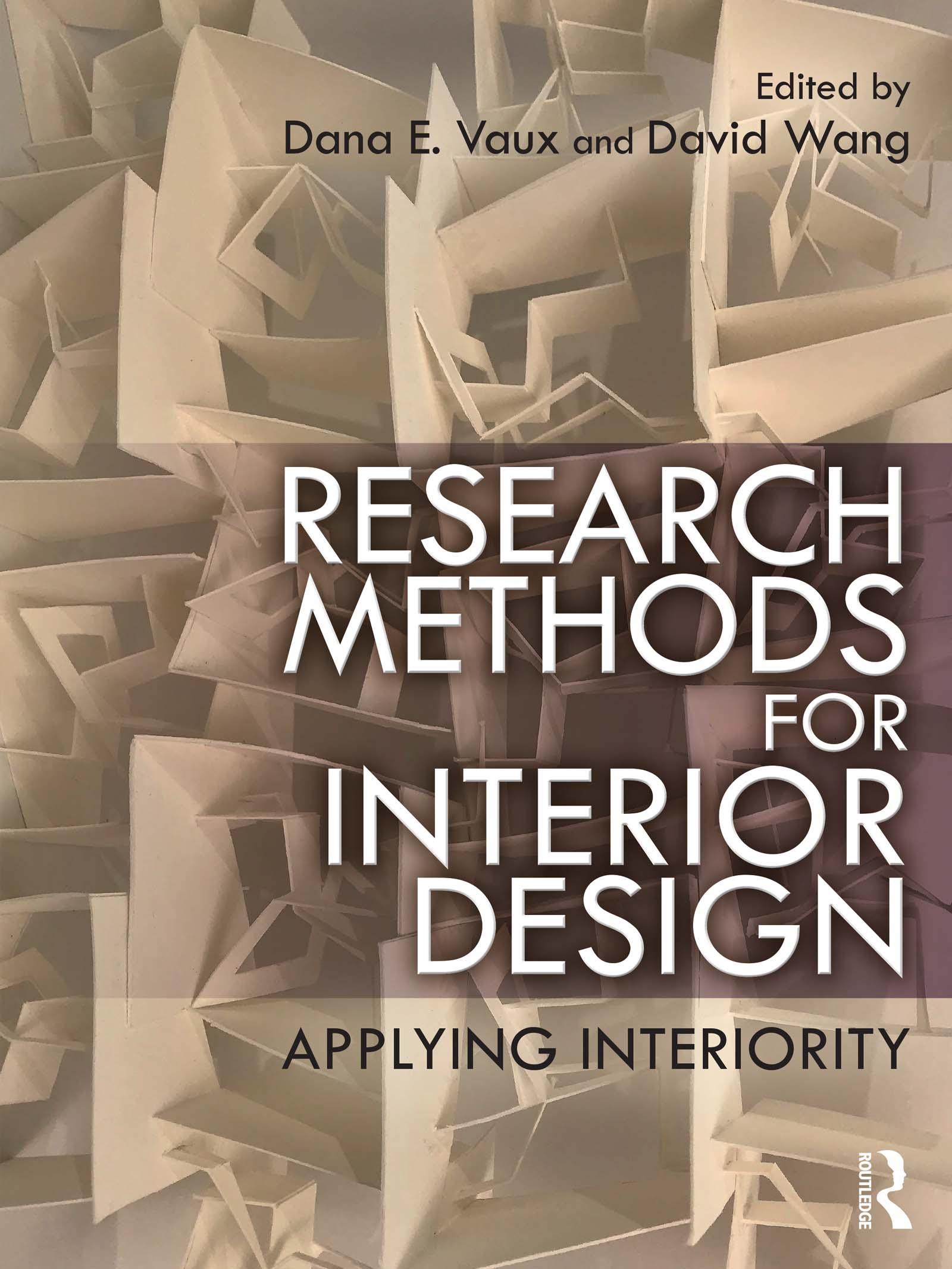
Interior design has shifted significantly in the past fifty years from a focus on home decoration within family and consumer sciences to a focus on the impact of health and safety within the interior environment. This shift has called for a deeper focus in evidence-based research for interior design education and practice.
Research Methods for Interior Design provides a broad range of qualitative and quantitative examples, each highlighted as a case of interior design research. Each chapter is supplemented with an in-depth introduction, additional questions, suggested exercises, and additional research references. The book’s subtitle, Applying Interiority, identifies one reason why the field of interior design is expanding, namely, all people wish to achieve a subjective sense of well-being within built environments, even when those environments are not defined by walls. The chapters of this book exemplify different ways to comprehend interiority through clearly defined research methodologies.
This book is a significant resource for interior design students, educators, and researchers in providing them with an expanded vision of what interior design research can encompass.
Betal enkelt med kort, Klarna, Apple Pay eller Google Pay. Ikke fornøyd? Du har alltid 14 dagers angrerett. Les mer i våre vilkår. Har du spørsmål, send oss en e-post på hello@memmo.org.
Memmo gjør det enklere å studere – uansett hvor du er i verden. Hos oss samler du pensumbøker og smarte studieverktøy på ett og samme sted: sammendrag, quizer, podkaster og flashcards. Og så Ted, din studiekompis som svarer på alt du lurer på. Over 50 000 studenter studerer allerede her – bygget for at du skal lære raskere og stresse mindre.