
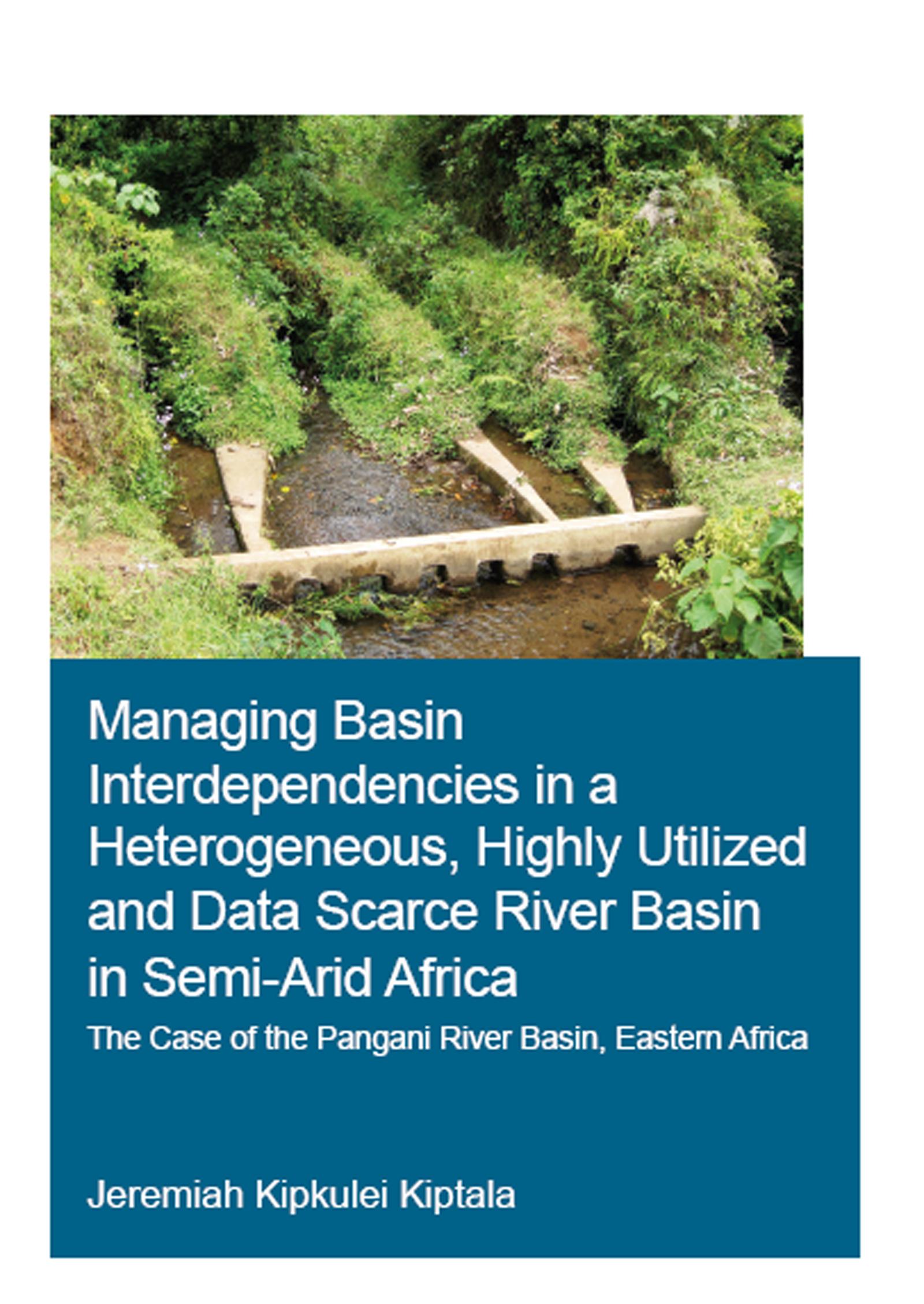
For integrated water resources management both blue and green water resources in a river basin and their spatial and temporal distribution have to be considered. This is because green and blue water uses are interdependent. In sub-Saharan Africa, the upper landscapes are often dominated by rainfed and supplementary irrigated agriculture that rely on green water resources. Downstream, most blue water uses are confined to the river channels, mainly for hydropower and the environment.
Over time and due to population growth and increased demands for food and energy, water use of both green and blue water has increased. This book provides a quantitative assessment of green-blue water use and their interactions. The book makes a novel contribution by developing a hydrological model that can quantify not only green but also blue water use by many smallholder farmers scattered throughout the landscape.
The book provides an innovative framework for mapping ecological productivity where gross returns from water consumed in agricultural and natural vegetation are quantified. The book provides a multi-objective optimization analysis involving green and blue water users, including the environment. The book also assesses the uncertainty levels of using remote sensing data in water resource management at river basin scale.
Betal enkelt med kort, Klarna, Apple Pay eller Google Pay. Ikke fornøyd? Du har alltid 14 dagers angrerett. Les mer i våre vilkår. Har du spørsmål, send oss en e-post på hello@memmo.org.
Memmo gjør det enklere å studere – uansett hvor du er i verden. Hos oss samler du pensumbøker og smarte studieverktøy på ett og samme sted: sammendrag, quizer, podkaster og flashcards. Og så Ted, din studiekompis som svarer på alt du lurer på. Over 50 000 studenter studerer allerede her – bygget for at du skal lære raskere og stresse mindre.