
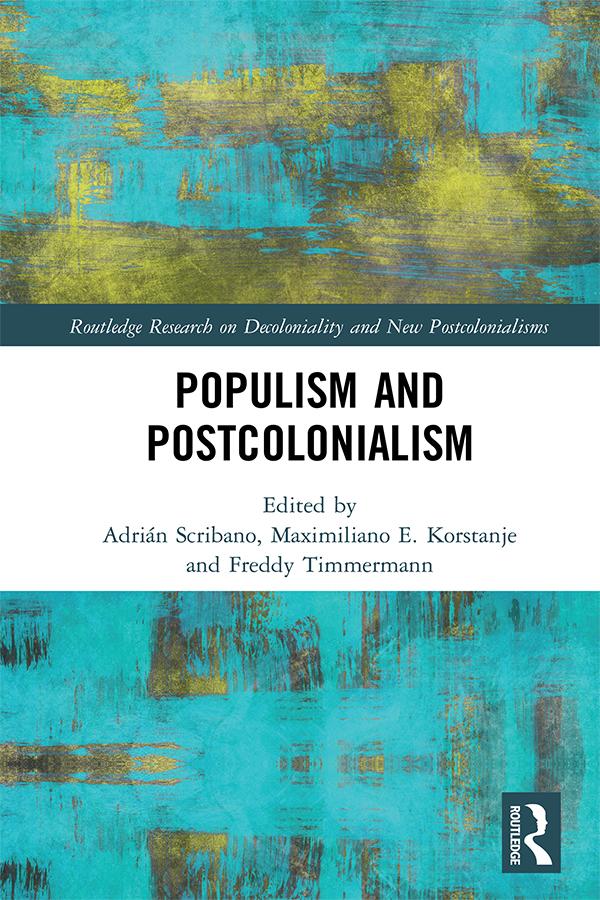
This book investigates the interconnections between populism and neoliberalism through the lens of postcolonialism. Its primary focus is to build a distinct understanding of the concept of populism as a political movement in the twenty-first century, interwoven with the lasting effects of colonialism.
This volume particularly aims to fill the gap in the current literature by establishing a clear-cut connection between populism and postcolonialism. It sees populism as a contemporary and collective political response to the international crisis of the nation-state’s limited capacity to deal with the burst of global capitalism into everyday life. Writings on Ecuador, Colombia, Chile, Brazil, Italy, France and Argentina offer regional perspectives which, in turn, provide the reader with a deepened global view of the main features of the multiple and complex relations between postcoloniality and populism.
This book will be of interest to sociologists, anthropologists and political scientists as well as postgraduate students who are interested in the problem of populism in the days of postcolonialism.
Betal enkelt med kort, Klarna, Apple Pay eller Google Pay. Ikke fornøyd? Du har alltid 14 dagers angrerett. Les mer i våre vilkår. Har du spørsmål, send oss en e-post på hello@memmo.org.
Memmo gjør det enklere å studere – uansett hvor du er i verden. Hos oss samler du pensumbøker og smarte studieverktøy på ett og samme sted: sammendrag, quizer, podkaster og flashcards. Og så Ted, din studiekompis som svarer på alt du lurer på. Over 50 000 studenter studerer allerede her – bygget for at du skal lære raskere og stresse mindre.