
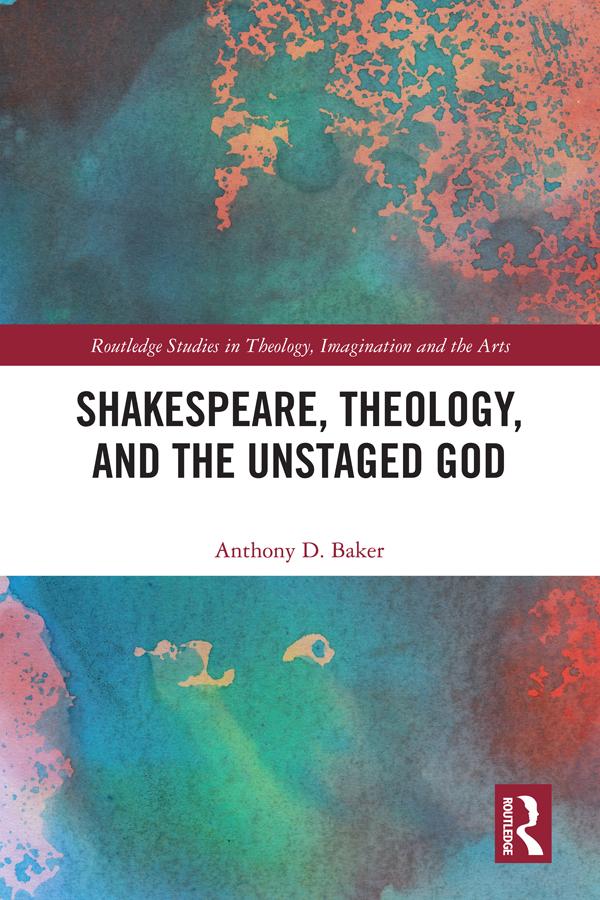
While many scholars in Shakespeare and Religious Studies assume a secularist viewpoint in their interpretation of Shakespeare’s works, there are others that allow for a theologically coherent reading. Located within the turn to religion in Shakespeare studies, this book goes beyond the claim that Shakespeare simply made artistic use of religious material in his drama. It argues that his plays inhabit a complex and rich theological atmosphere, individually, by genre and as a body of work.
The book begins by acknowledging that a plot-controlling God figure, or even a consistent theological dogma, is largely absent in the plays of Shakespeare. However, it argues that this absence is not necessarily a sign of secularization, but functions in a theologically generative manner. It goes on to suggest that the plays reveal a consistent, if variant, attention to the theological possibility of a divine "presence" mediated through human wit, both in gracious and malicious forms. Without any prejudice for divine intervention, the plots actually gesture on many turns toward a hidden supernatural "actor", or God.
Making bold claims about the artistic and theological of Shakespeare’s work, this book will be of interest to scholars of Theology and the Arts, Shakespeare and Literature more generally.
Betal enkelt med kort, Klarna, Apple Pay eller Google Pay. Ikke fornøyd? Du har alltid 14 dagers angrerett. Les mer i våre vilkår. Har du spørsmål, send oss en e-post på hello@memmo.org.
Memmo gjør det enklere å studere – uansett hvor du er i verden. Hos oss samler du pensumbøker og smarte studieverktøy på ett og samme sted: sammendrag, quizer, podkaster og flashcards. Og så Ted, din studiekompis som svarer på alt du lurer på. Over 50 000 studenter studerer allerede her – bygget for at du skal lære raskere og stresse mindre.