
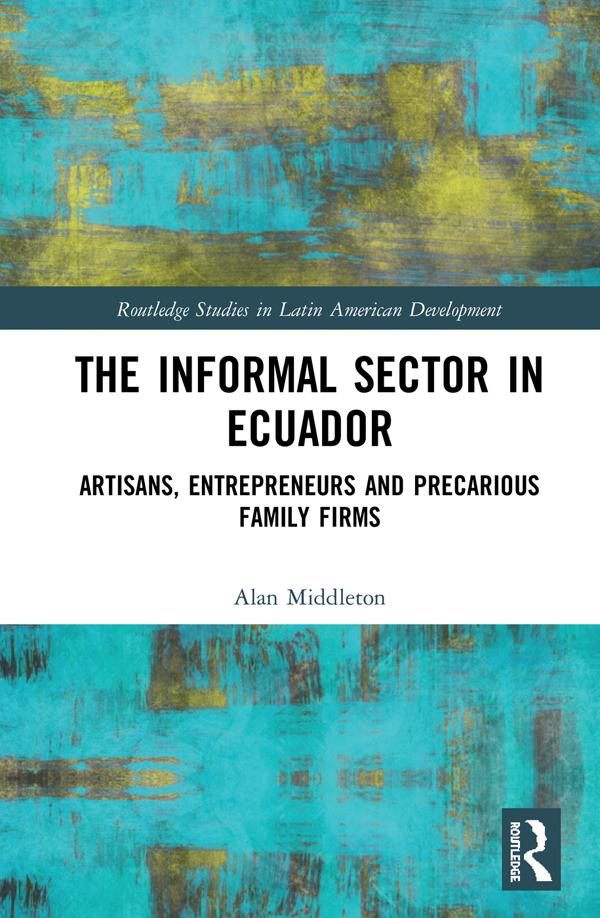
This book looks back over the last forty years of change and development in Ecuador, showing how macro level changes have impacted families and workplaces on the local level. Traditionally a dependent economy reliant on agricultural exports, the impact of neoliberalism and new sources of income from oil have transformed the informal and artisanal sectors in Ecuador. Exploring these dynamics using a combination of micro and macro analyses, this book demonstrates how the social relations of the sector are connected to the wider social, economic and political systems in which they operate.
The book dives into the links between micro-production and the wider economy, including the relationships between different types of artisanal enterprises and their customers, their connections to the private sector and the state, the importance of social networks and social capital and the relevance of finance capital in microenterprise development. Overall, the analysis investigates how artisans, entrepreneurs and family-based enterprises seek to protect their interests when faced with neoliberal policies and the impacts of globalisation.
This remarkable longitudinal study will be of considerable interest to researchers of development studies, economics, sociology, anthropology, geography and Latin American Studies.
Betal enkelt med kort, Klarna, Apple Pay eller Google Pay. Ikke fornøyd? Du har alltid 14 dagers angrerett. Les mer i våre vilkår. Har du spørsmål, send oss en e-post på hello@memmo.org.
Memmo gjør det enklere å studere – uansett hvor du er i verden. Hos oss samler du pensumbøker og smarte studieverktøy på ett og samme sted: sammendrag, quizer, podkaster og flashcards. Og så Ted, din studiekompis som svarer på alt du lurer på. Over 50 000 studenter studerer allerede her – bygget for at du skal lære raskere og stresse mindre.