
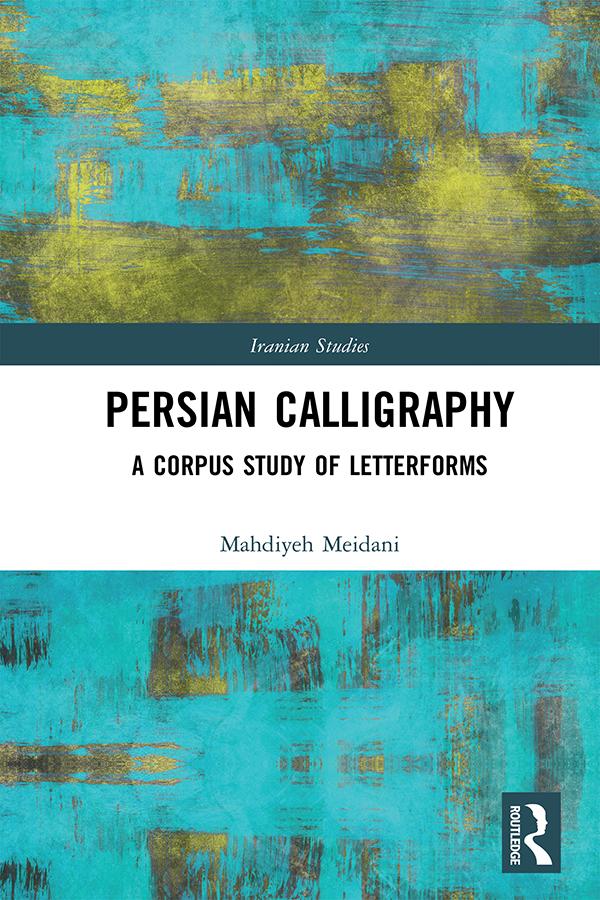
This book is an exploratory adventure to defamiliarize calligraphy, especially Persian Nastaliq calligraphic letterforms, and to look beyond the tradition that has always considered calligraphy as pursuant to and subordinate to linguistic practices.
Calligraphy can be considered a visual communicative system with different means of meaning-making or as a medium through which meaning is made and expression is conveyed via a complex grammar. This study looks at calligraphy as a systematic means in the field of visual communication, rather than as a one-dimensional and ad hoc means of providing visual beauty and aesthetic enjoyment. Revolving around different insights of multimodal social semiotics, the volume relies on the findings of a corpus study of Persian Nastaliq calligraphy. The research emphasizes the way in which letterforms, regardless of conventions in language, are applied as graphically meaningful forms that convey individual distinct meanings.
This volume on Persian Nastaliq calligraphy will be inspirational to visual artists, designers, calligraphers, writers, linguists, and visual communicators. With an introduction to social semiotics, this work will be of interest to students and scholars interested in visual arts, media and communication, and semiotics.
Betal enkelt med kort, Klarna, Apple Pay eller Google Pay. Ikke fornøyd? Du har alltid 14 dagers angrerett. Les mer i våre vilkår. Har du spørsmål, send oss en e-post på hello@memmo.org.
Memmo gjør det enklere å studere – uansett hvor du er i verden. Hos oss samler du pensumbøker og smarte studieverktøy på ett og samme sted: sammendrag, quizer, podkaster og flashcards. Og så Ted, din studiekompis som svarer på alt du lurer på. Over 50 000 studenter studerer allerede her – bygget for at du skal lære raskere og stresse mindre.