
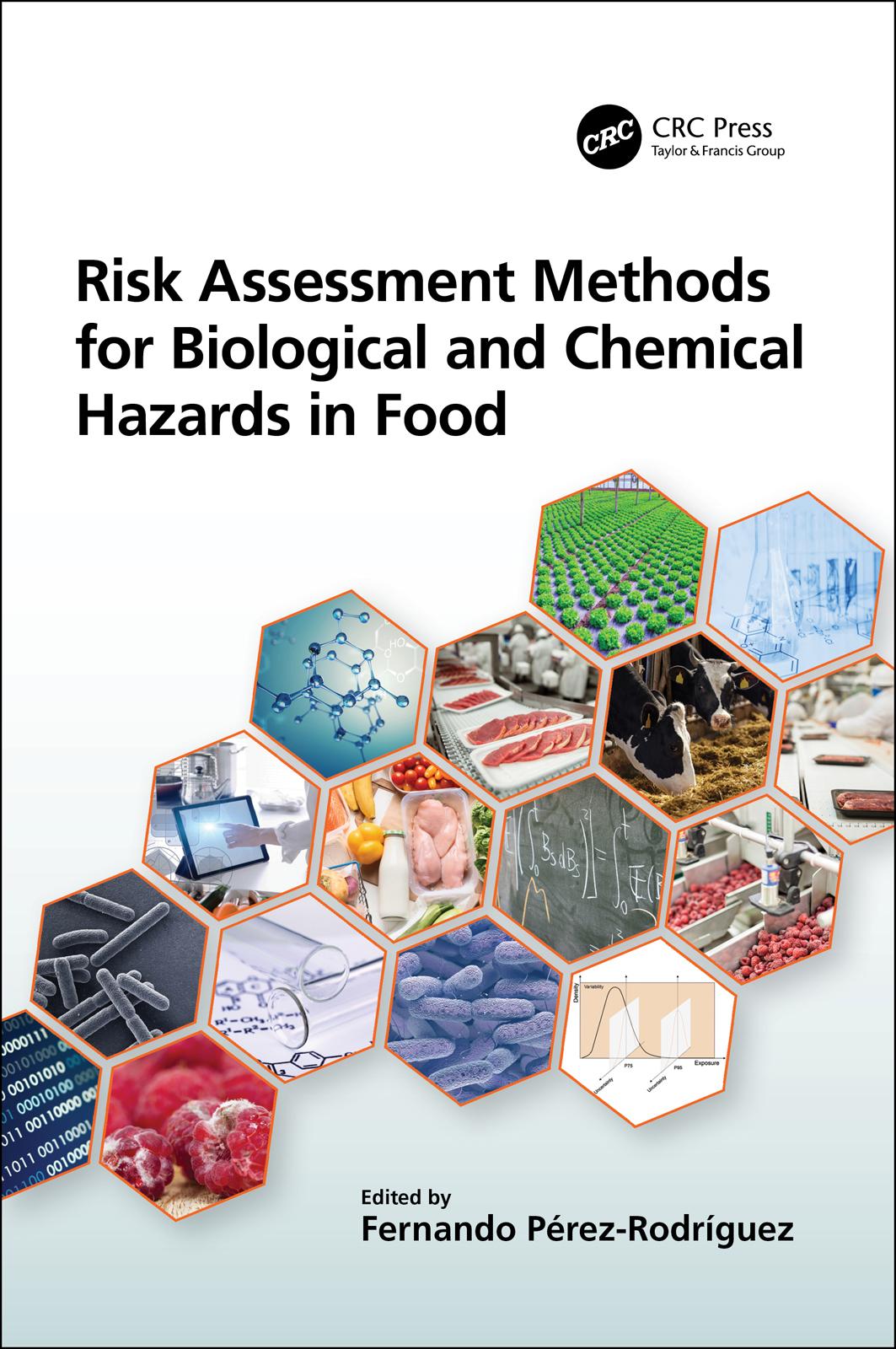
Risk assessment has been extensively developed in several scientific fields, such as environmental science, economics, and civil engineering, among others. In the aftermath of the SPS and GATT agreements on the use of risk analysis framework in food trade, signed in the 1990s, international organisations and governments adopted risk assessment as a science-based process to ensure food safety along the food chain. The food industry can also benefit from the use of this approach for food process optimisation and quality assurance.
Risk Assessment Methods for Biological and Chemical Hazards in Food introduces the reader to quantitative risk assessment methods encompassing general concepts to specific applications to biological and chemical hazards in foods. In the first section, the book presents food risk assessment as methodology and addresses, more specifically, new trends and approaches such as the development of risk rating methods, risk metrics, risk-benefit assessment studies and quality assessment methods.
Section II is dedicated to biological hazards. This section identifies the most relevant biological hazards along the food chain and provides an overview on the types of predictive microbiology models used to describe the microbial response along the food chain. Chapter 12 specifically deals with cross contamination and the quantitative methods that can be applied to describe this relevant microbial process. The development and application of dose-response models (i.e. mathematical function describing the relationship between pathogen dose and health response) are also covered in this section. In Section III, the book translates risk assessment concepts into the area of chemical hazards, defining the process steps to determine chemical risk and describing the uncertainty and variability sources associated with chemicals.
Key Features:
- Presents new trends and approaches in the field of risk assessment in foods
- Risk assessment concepts are illustrated by practical examples in the food sector
- Discusses how quantitative information and models are integrated in a quantitative risk asssment framework
- Provides examples of applications of quantitative chemical risk assessment in risk management
The book, written by renowned experts in their field, is a comprehensive collection of quantitative methods and approaches applied to risk assessment in foods. It can be used as an extensive guide for food safety practitioners and researchers to perform quantitative risk assessment in foods
Betal enkelt med kort, Klarna, Apple Pay eller Google Pay. Ikke fornøyd? Du har alltid 14 dagers angrerett. Les mer i våre vilkår. Har du spørsmål, send oss en e-post på hello@memmo.org.
Memmo gjør det enklere å studere – uansett hvor du er i verden. Hos oss samler du pensumbøker og smarte studieverktøy på ett og samme sted: sammendrag, quizer, podkaster og flashcards. Og så Ted, din studiekompis som svarer på alt du lurer på. Over 50 000 studenter studerer allerede her – bygget for at du skal lære raskere og stresse mindre.