
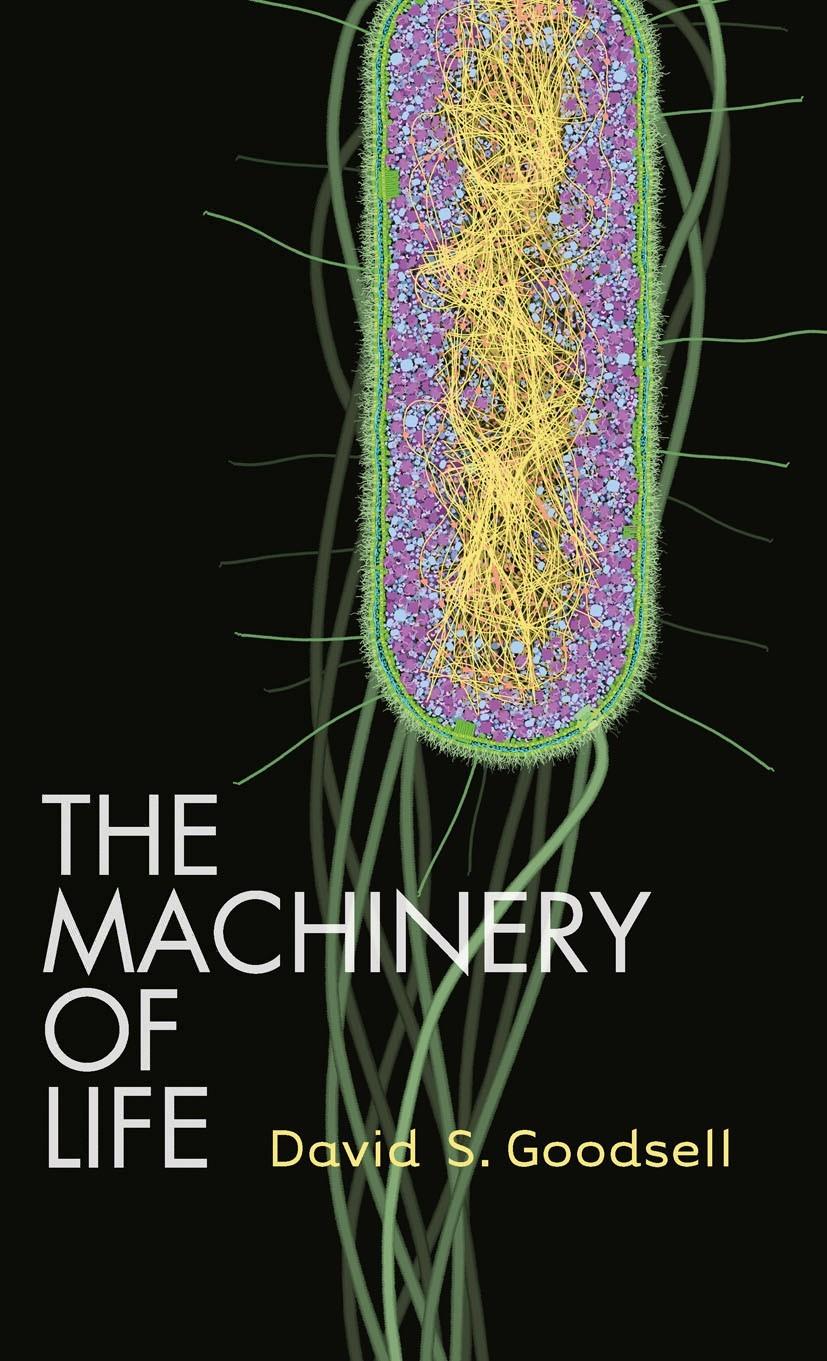
Imagine that we had some way to look directly at the molecules in a living organism. An x-ray microscope would do the trick, or since we’re dreaming, perhaps an Asimov-style nanosubmarine (unfortunately, neither is currently feasible). Think of the wonders we could witness firsthand: antibodies atta- ing a virus, electrical signals racing down nerve fibers, proteins building new strands of DNA. Many of the questions puzzling the current cadre of sci- tists would be answered at a glance. But the nanoscale world of molecules is separated from our everyday world of experience by a daunting million-fold difference in size, so the world of molecules is completely invisible. I created the illustrations in this book to help bridge this gulf and allow us to see the molecular structure of cells, if not directly, then in an artistic rendition. I have included two types of illustrations with this goal in mind: watercolor paintings which magnify a small portion of a living cell by one million times, showing the arrangement of molecules inside, and comput- generated pictures, which show the atomic details of individual molecules. In this second edition of The Machinery of Life, these illustrations are presented in full color, and they incorporate many of the exciting scientific advances of the 15 years since the first edition.
Betal enkelt med kort, Klarna, Apple Pay eller Google Pay. Ikke fornøyd? Du har alltid 14 dagers angrerett. Les mer i våre vilkår. Har du spørsmål, send oss en e-post på hello@memmo.org.
Memmo gjør det enklere å studere – uansett hvor du er i verden. Hos oss samler du pensumbøker og smarte studieverktøy på ett og samme sted: sammendrag, quizer, podkaster og flashcards. Og så Ted, din studiekompis som svarer på alt du lurer på. Over 50 000 studenter studerer allerede her – bygget for at du skal lære raskere og stresse mindre.