
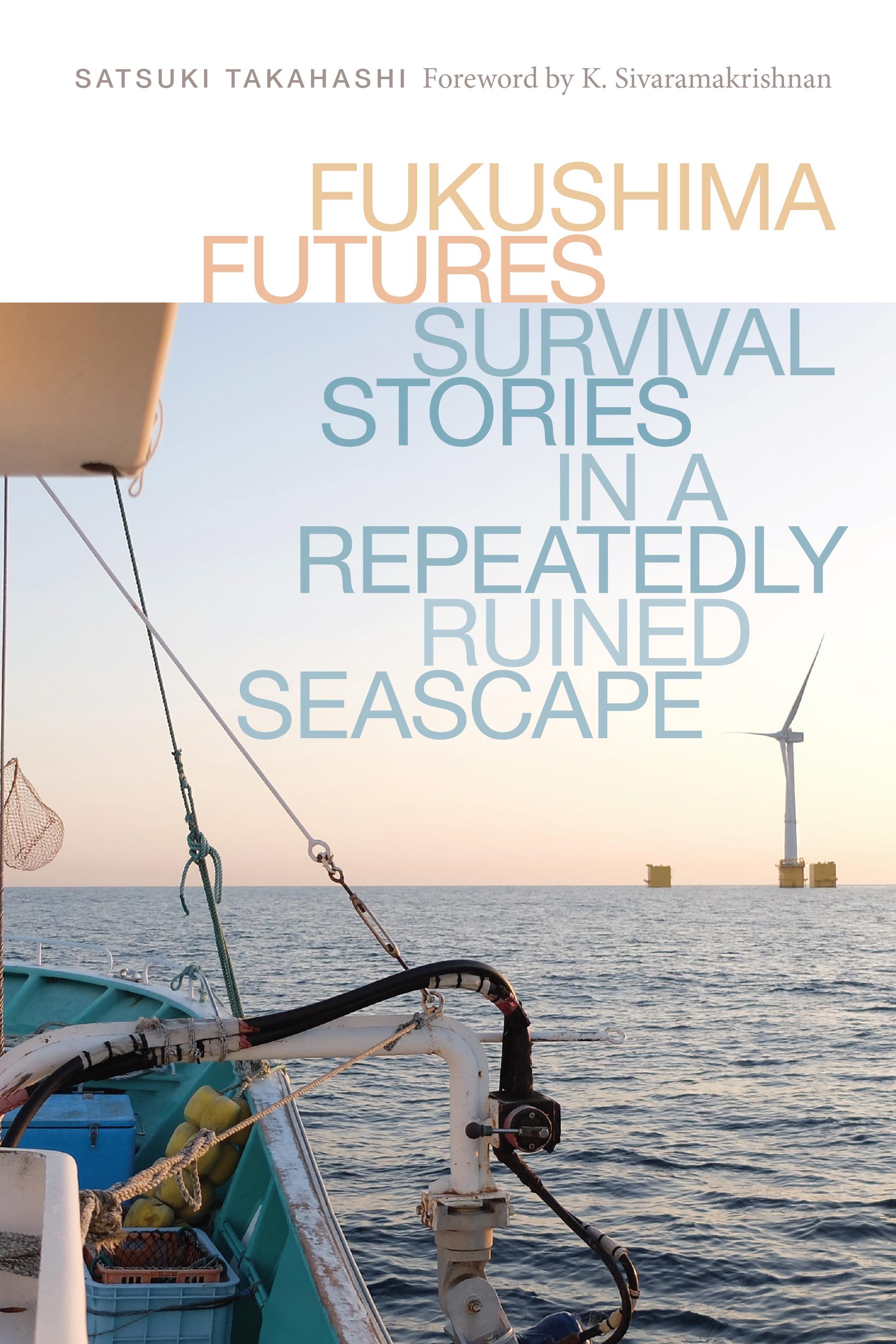
A probe of the environmental and sociocultural effects of industrialization and nuclear disaster on coastal livelihoods
Both before and after the 2011 "Triple Disaster" of earthquake, tidal wave, and consequent meltdown at the Fukushima Daiichi nuclear power plant, anthropologist Satsuki Takahashi visited nearby communities, collecting accounts of life and livelihoods along the industrialized seascape. The resulting environmental ethnography examines the complex relationship between commercial fishing families and the Joban Sea—once known for premium-quality fish and now notorious as the location of the world's worst nuclear catastrophe. Fukushima Futures follows postwar Japan's maritime modernization from the perspectives of those most entangled with its successes and failures. In response to unrelenting setbacks, including an earlier nuclear accident at neighboring Tokaimura and the oil spills of stranded tankers during typhoons, these communities have developed survival strategies shaped by the precarity they share with their marine ecosystem. The collaborative resilience that emerges against this backdrop of vulnerability and uncertainty challenges the progress-bound logic of futurism, bringing more hopeful possibilities for the future into sharper focus.
Betal enkelt med kort, Klarna, Apple Pay eller Google Pay. Ikke fornøyd? Du har alltid 14 dagers angrerett. Les mer i våre vilkår. Har du spørsmål, send oss en e-post på hello@memmo.org.
Memmo gjør det enklere å studere – uansett hvor du er i verden. Hos oss samler du pensumbøker og smarte studieverktøy på ett og samme sted: sammendrag, quizer, podkaster og flashcards. Og så Ted, din studiekompis som svarer på alt du lurer på. Over 50 000 studenter studerer allerede her – bygget for at du skal lære raskere og stresse mindre.