
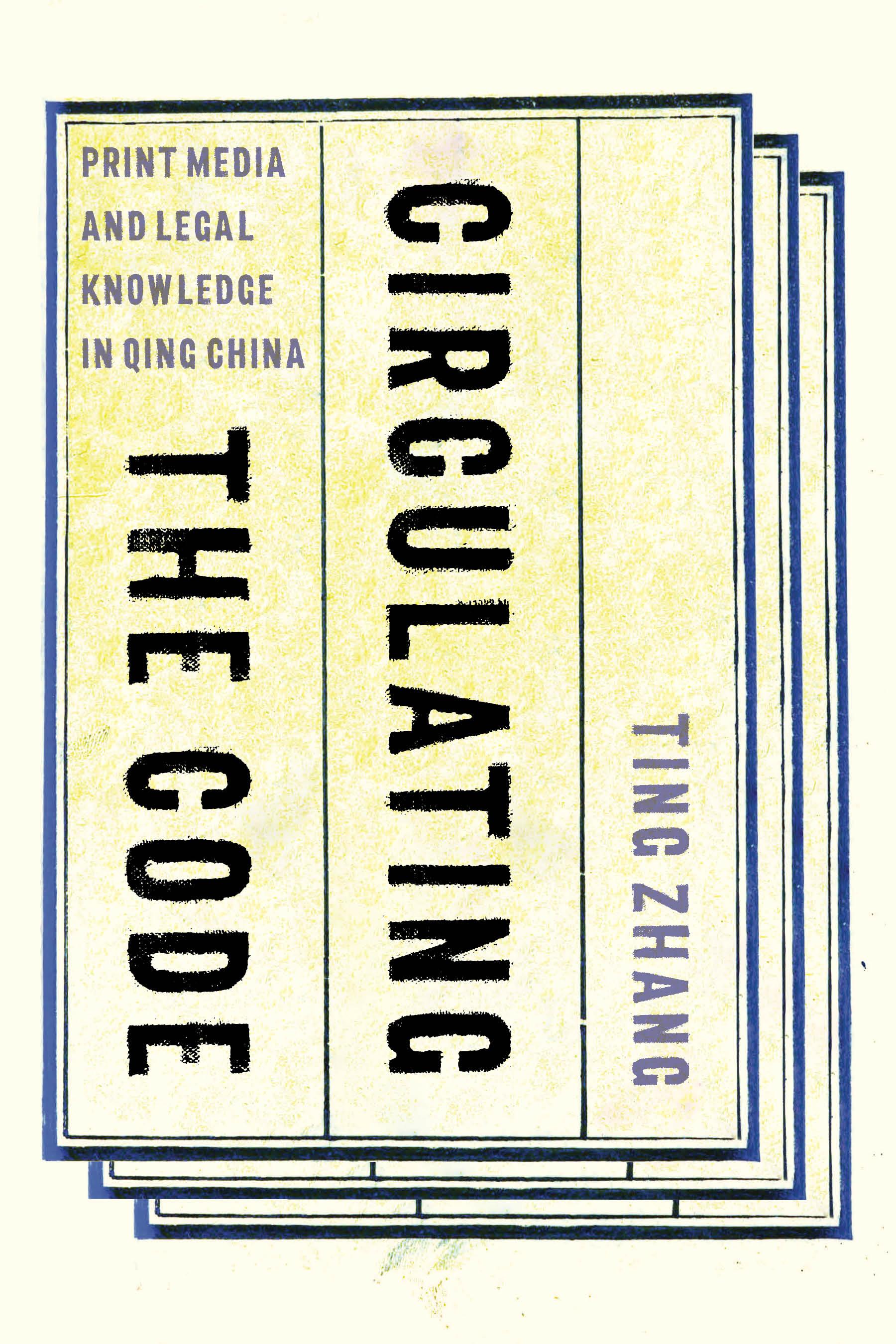
Contrary to longtime assumptions about the insular nature of imperial China’s legal system, Circulating the Code demonstrates that in the Qing dynasty (1644–1911) most legal books were commercially published and available to anyone who could afford to buy them. Publishers not only extended circulation of the dynastic code and other legal texts but also enhanced the judicial authority of case precedents and unofficial legal commentaries by making them more broadly available in convenient formats. As a result, the laws no longer represented privileged knowledge monopolized by the imperial state and elites. Trade in commercial legal imprints contributed to the formation of a new legal culture that included the free flow of accurate information, the rise of nonofficial legal experts, a large law-savvy population, and a high litigation rate.
Comparing different official and commercial editions of the Qing Code, popular handbooks for amateur legal practitioners, and manuals for community legal lectures, Ting Zhang demonstrates how the dissemination of legal information transformed Chinese law, judicial authority, and popular legal consciousness.
Betal enkelt med kort, Klarna, Apple Pay eller Google Pay. Ikke fornøyd? Du har alltid 14 dagers angrerett. Les mer i våre vilkår. Har du spørsmål, send oss en e-post på hello@memmo.org.
Memmo gjør det enklere å studere – uansett hvor du er i verden. Hos oss samler du pensumbøker og smarte studieverktøy på ett og samme sted: sammendrag, quizer, podkaster og flashcards. Og så Ted, din studiekompis som svarer på alt du lurer på. Over 50 000 studenter studerer allerede her – bygget for at du skal lære raskere og stresse mindre.