
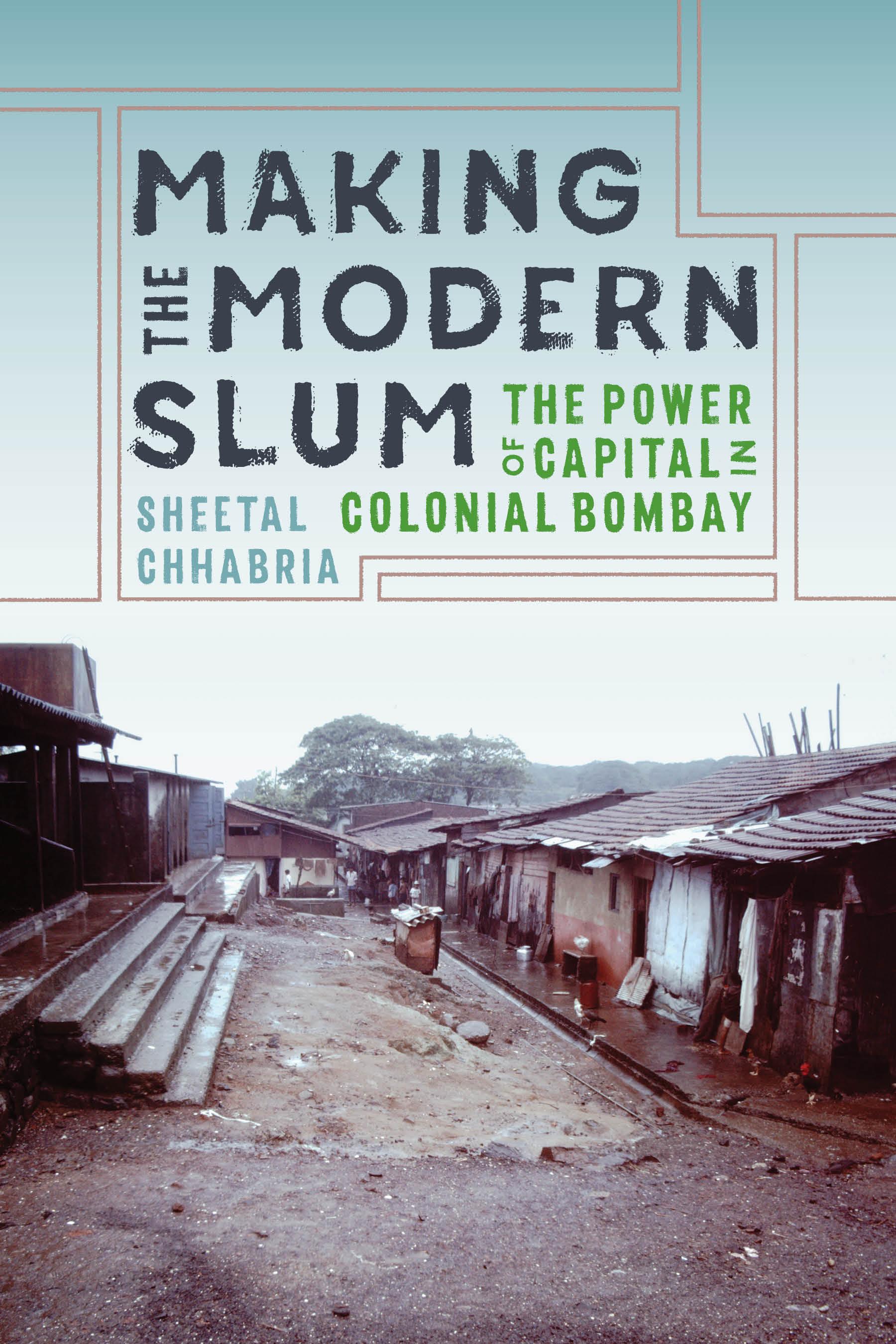
In the late nineteenth and early twentieth centuries, Bombay was beset by crises such as famine and plague. Yet, rather than halting the flow of capital, these crises served to secure it. In colonial Bombay, capitalists and governors, Indian and British alike, used moments of crisis to justify interventions that delimited the city as a distinct object and progressively excluded laborers and migrants from it. Town planners, financiers, and property developers joined forces to secure the city as a space for commerce and encoded shelter types as legitimate or illegitimate. By the early twentieth century, the slum emerged as a particularly useful category of stigmatization that would animate city-making projects in subsequent decades.
Sheetal Chhabria locates the origins of Bombay’s now infamous “slum problem” in the broader histories of colonialism and capitalism. She not only challenges assumptions about colonial urbanization and cities in the global south, but also provides a new analytical approach to urban history. Making the Modern Slum shows how the wellbeing of the city–rather than of its people–became an increasingly urgent goal of government, positioning agrarian distress, famished migrants, and the laboring poor as threats to be contained or excluded.
Betal enkelt med kort, Klarna, Apple Pay eller Google Pay. Ikke fornøyd? Du har alltid 14 dagers angrerett. Les mer i våre vilkår. Har du spørsmål, send oss en e-post på hello@memmo.org.
Memmo gjør det enklere å studere – uansett hvor du er i verden. Hos oss samler du pensumbøker og smarte studieverktøy på ett og samme sted: sammendrag, quizer, podkaster og flashcards. Og så Ted, din studiekompis som svarer på alt du lurer på. Over 50 000 studenter studerer allerede her – bygget for at du skal lære raskere og stresse mindre.