
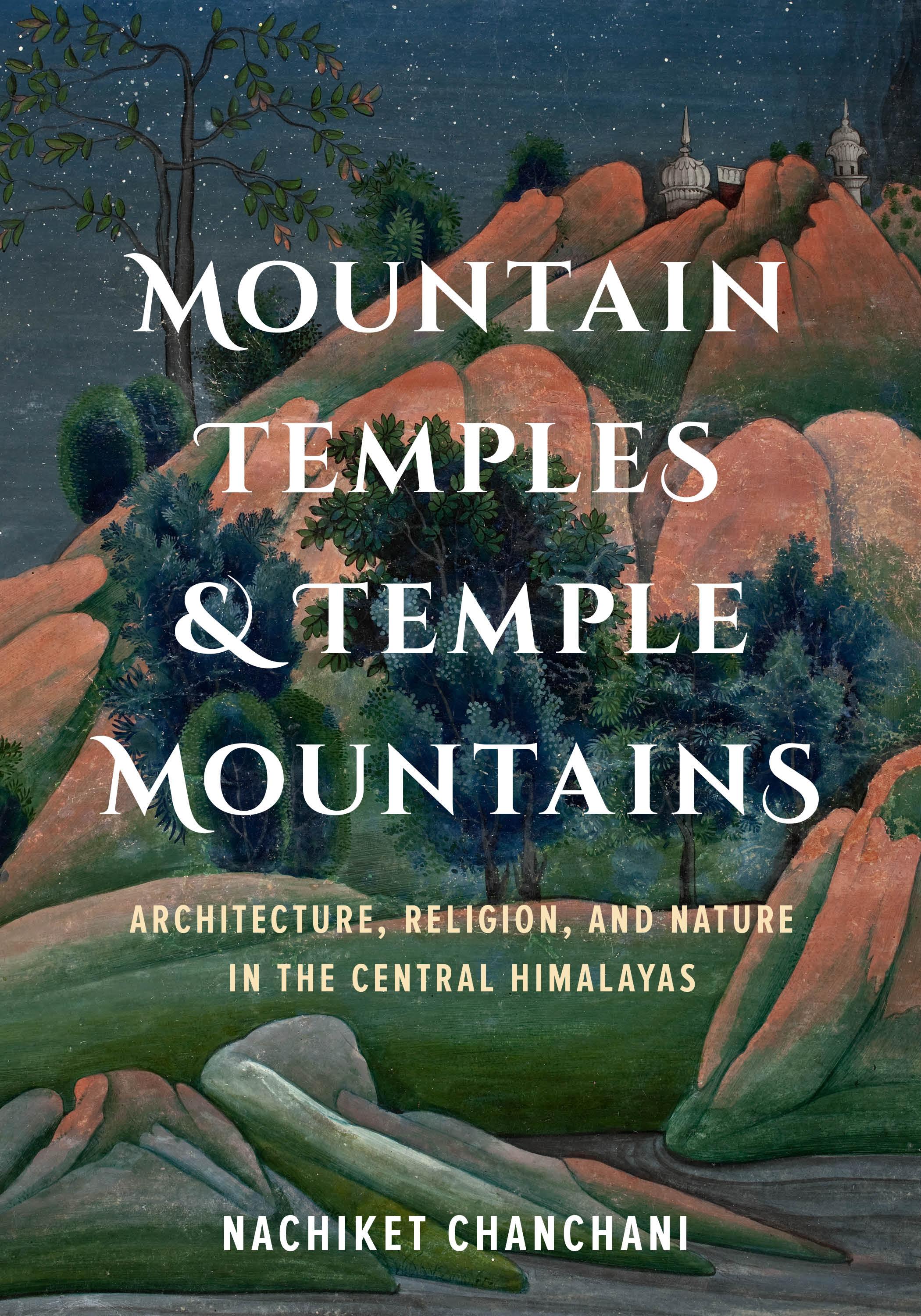
From approximately the third century BCE through the thirteenth century CE, the remote mountainous landscape around the glacial sources of the Ganga (Ganges) River in the Central Himalayas in northern India was transformed into a region encoded with deep meaning, one approached by millions of Hindus as a primary locus of pilgrimage.
Nachiket Chanchani’s innovative study explores scores of stone edifices and steles that were erected in this landscape. Through their forms, locations, interactions with the natural environment, and sociopolitical context, these lithic ensembles evoked legendary worlds, embedded historical memories in the topography, changed the mountain range’s appearance, and shifted its semiotic effect. Mountain Temples and Temple Mountains also alters our understanding of the transmission of architectural knowledge and provides new evidence of how an enduring idea of India emerged in the subcontinent.
Art History Publication Initiative. For more information, visit http://arthistorypi.org/books/mountain-temples-and-temple-mountains
Betal enkelt med kort, Klarna, Apple Pay eller Google Pay. Ikke fornøyd? Du har alltid 14 dagers angrerett. Les mer i våre vilkår. Har du spørsmål, send oss en e-post på hello@memmo.org.
Memmo gjør det enklere å studere – uansett hvor du er i verden. Hos oss samler du pensumbøker og smarte studieverktøy på ett og samme sted: sammendrag, quizer, podkaster og flashcards. Og så Ted, din studiekompis som svarer på alt du lurer på. Over 50 000 studenter studerer allerede her – bygget for at du skal lære raskere og stresse mindre.