
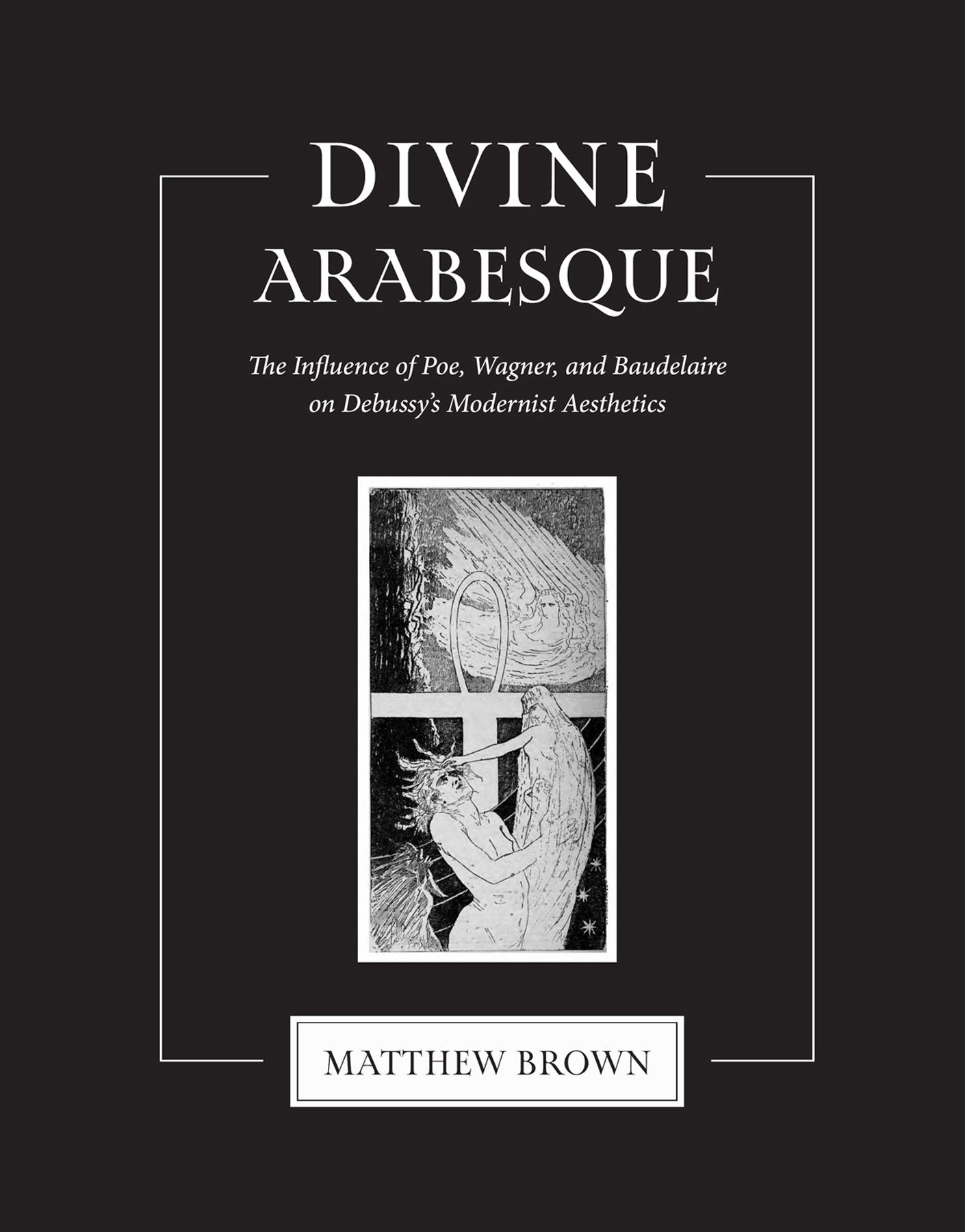
The arabesque, a crucial component of nineteenth-century aesthetics characterized by recurring patterns of interlocking geometric and floral ornamentation, was found in a wide range of forms of artistic expression and played a pivotal role in the music of Claude Debussy. Divine Arabesque explores the arabesque in Debussy's music and reveals its profound influence on his musical repertoire and on the works of other Symbolist artists and writers.
Taking as his starting point a discussion of the short manifesto Debussy published in "La Revue blanche" in 1901, author Matthew Brown embarks on a thorough and comprehensive analysis of Debussy's works across all phases of his career and genres—from his early songs and piano pieces to mature orchestral compositions and late works. Along the way, Brown unveils the intertextual connections between Debussy's compositions and the works of such Symbolist artists as Edgar Allan Poe, Richard Wagner, Charles Baudelaire, Stéphane Mellarmé, Vaslav Nijinsky, and others.
Featuring a rich collection of music examples and illustrations, Divine Arabesque sheds new light on the full range of Debussy's musical output and establishes his critical role in ushering in the age of Modernism.
Betal enkelt med kort, Klarna, Apple Pay eller Google Pay. Ikke fornøyd? Du har alltid 14 dagers angrerett. Les mer i våre vilkår. Har du spørsmål, send oss en e-post på hello@memmo.org.
Memmo gjør det enklere å studere – uansett hvor du er i verden. Hos oss samler du pensumbøker og smarte studieverktøy på ett og samme sted: sammendrag, quizer, podkaster og flashcards. Og så Ted, din studiekompis som svarer på alt du lurer på. Over 50 000 studenter studerer allerede her – bygget for at du skal lære raskere og stresse mindre.