
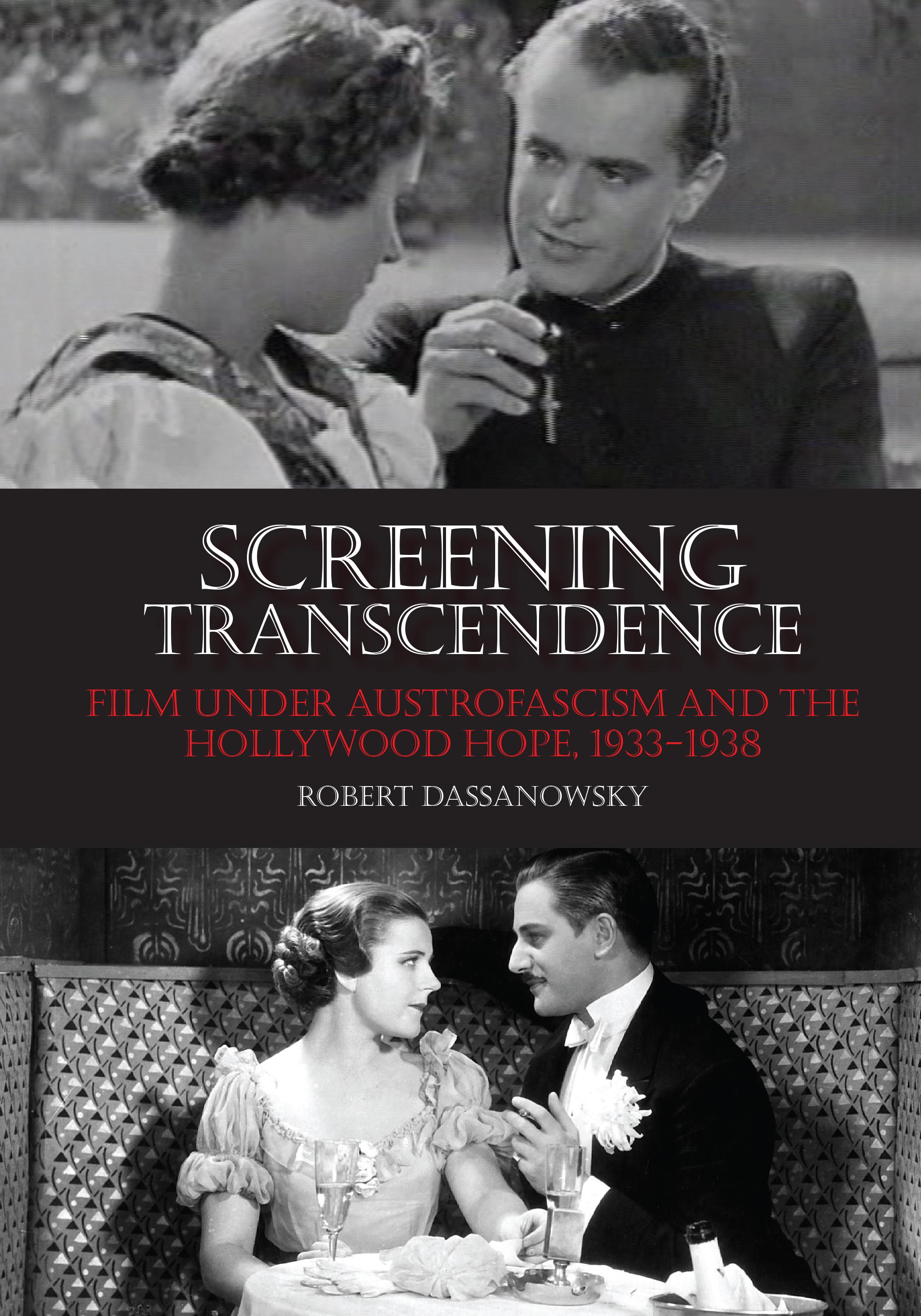
During the 1930s, Austrian film production companies developed a process to navigate the competing demands of audiences in Nazi Germany and those found in broader Western markets. In Screening Transcendence, film historian Robert Dassanowsky explores how Austrian filmmakers during the Austrofascist period (1933–1938) developed two overlapping industries: "Aryanized" films for distribution in Germany, its largest market, and "Emigrantenfilm," which employed émigré and Jewish talent that appealed to international audiences.
Through detailed archival research in both Vienna and the United States, Dassanowsky reveals what was culturally, socially, and politically at stake in these two simultaneous and overlapping film industries. Influenced by French auteurism, admired by Italian cinephiles, and ardently remade by Hollywood, these period Austrian films demonstrate a distinctive regional style mixed with transnational influences.
Combining brilliant close readings of individual films with thoroughly informed historical and cultural observations, Dassanowsky presents the story of a nation and an industry mired in politics, power, and intrigue on the brink of Nazi occupation.
Betal enkelt med kort, Klarna, Apple Pay eller Google Pay. Ikke fornøyd? Du har alltid 14 dagers angrerett. Les mer i våre vilkår. Har du spørsmål, send oss en e-post på hello@memmo.org.
Memmo gjør det enklere å studere – uansett hvor du er i verden. Hos oss samler du pensumbøker og smarte studieverktøy på ett og samme sted: sammendrag, quizer, podkaster og flashcards. Og så Ted, din studiekompis som svarer på alt du lurer på. Over 50 000 studenter studerer allerede her – bygget for at du skal lære raskere og stresse mindre.