
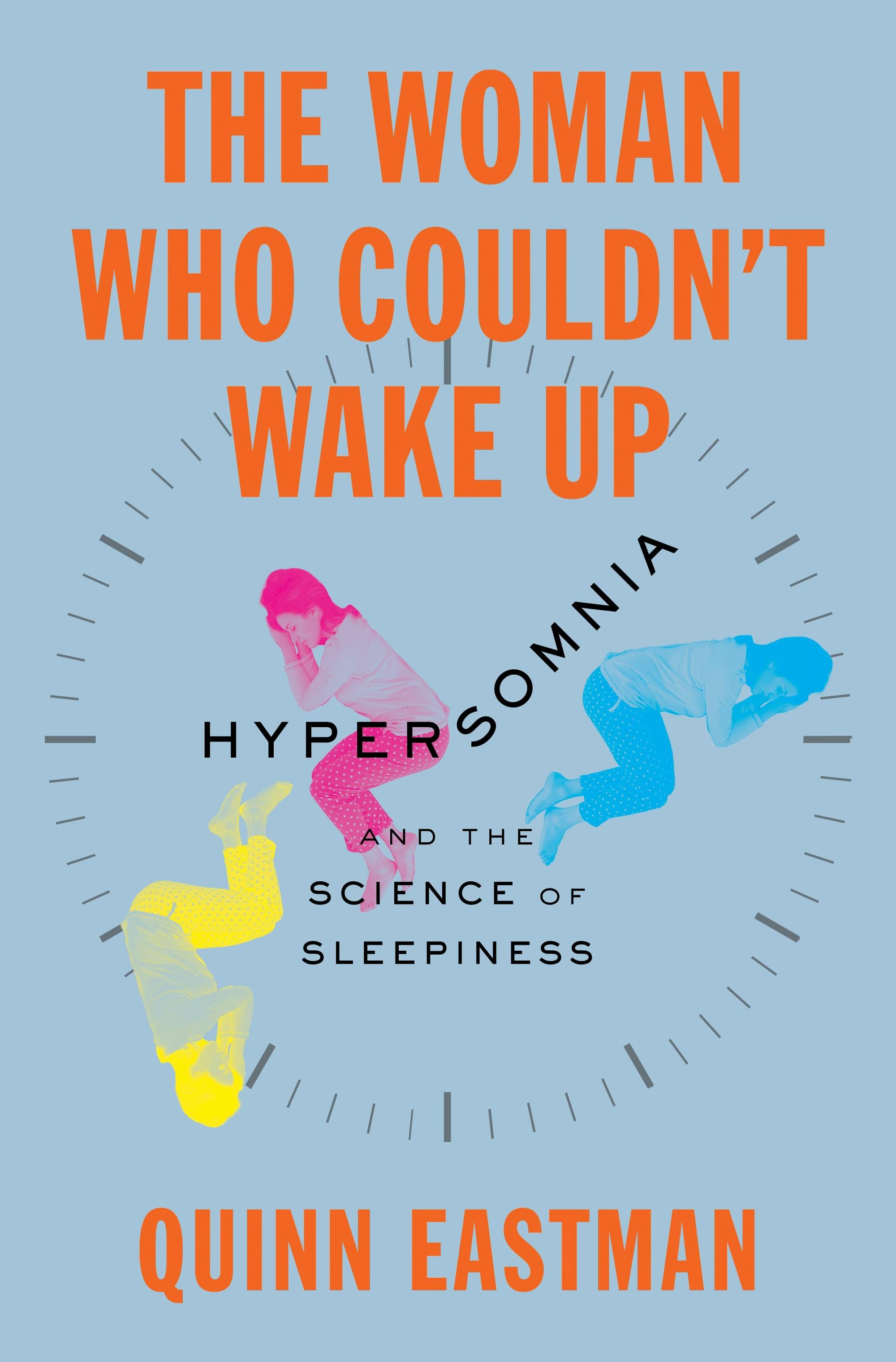
Sleep was taking over Anna’s life. Despite multiple alarm clocks and powerful stimulants, the young Atlanta lawyer could sleep for thirty or even fifty hours at a stretch. She stopped working and began losing weight because she couldn’t stay awake long enough to eat. Anna’s doctors didn't know how to help her until they tried an oddball drug, connected with a hunch that something produced by her body was putting her to sleep.
The Woman Who Couldn’t Wake Up tells Anna’s story—and the broader story of her diagnosis, idiopathic hypersomnia (IH), a shadowy sibling of narcolepsy that has emerged as a focus of sleep research and patient advocacy. Quinn Eastman explores the science around sleepiness, recounting how researchers have been searching for more than a century for the substances that tip the brain into slumber. He argues that investigation of IH could unlock new understandings of how sleep is regulated and controlled. Eastman foregrounds the experiences of people with IH, relating how publicity around Anna’s successful treatment helped others form a community. He shows how a group of patients who felt neglected or dismissed united to steer research toward their little-known disorder.
Sharing emerging science and powerful stories, this book testifies to the significance of underrecognized diseases and sheds new light on how our brains function, day and night. It is essential reading for anyone interested in sleep and sleep disorders, including those affected by or seeking to treat them.
Betal enkelt med kort, Klarna, Apple Pay eller Google Pay. Ikke fornøyd? Du har alltid 14 dagers angrerett. Les mer i våre vilkår. Har du spørsmål, send oss en e-post på hello@memmo.org.
Memmo gjør det enklere å studere – uansett hvor du er i verden. Hos oss samler du pensumbøker og smarte studieverktøy på ett og samme sted: sammendrag, quizer, podkaster og flashcards. Og så Ted, din studiekompis som svarer på alt du lurer på. Over 50 000 studenter studerer allerede her – bygget for at du skal lære raskere og stresse mindre.