
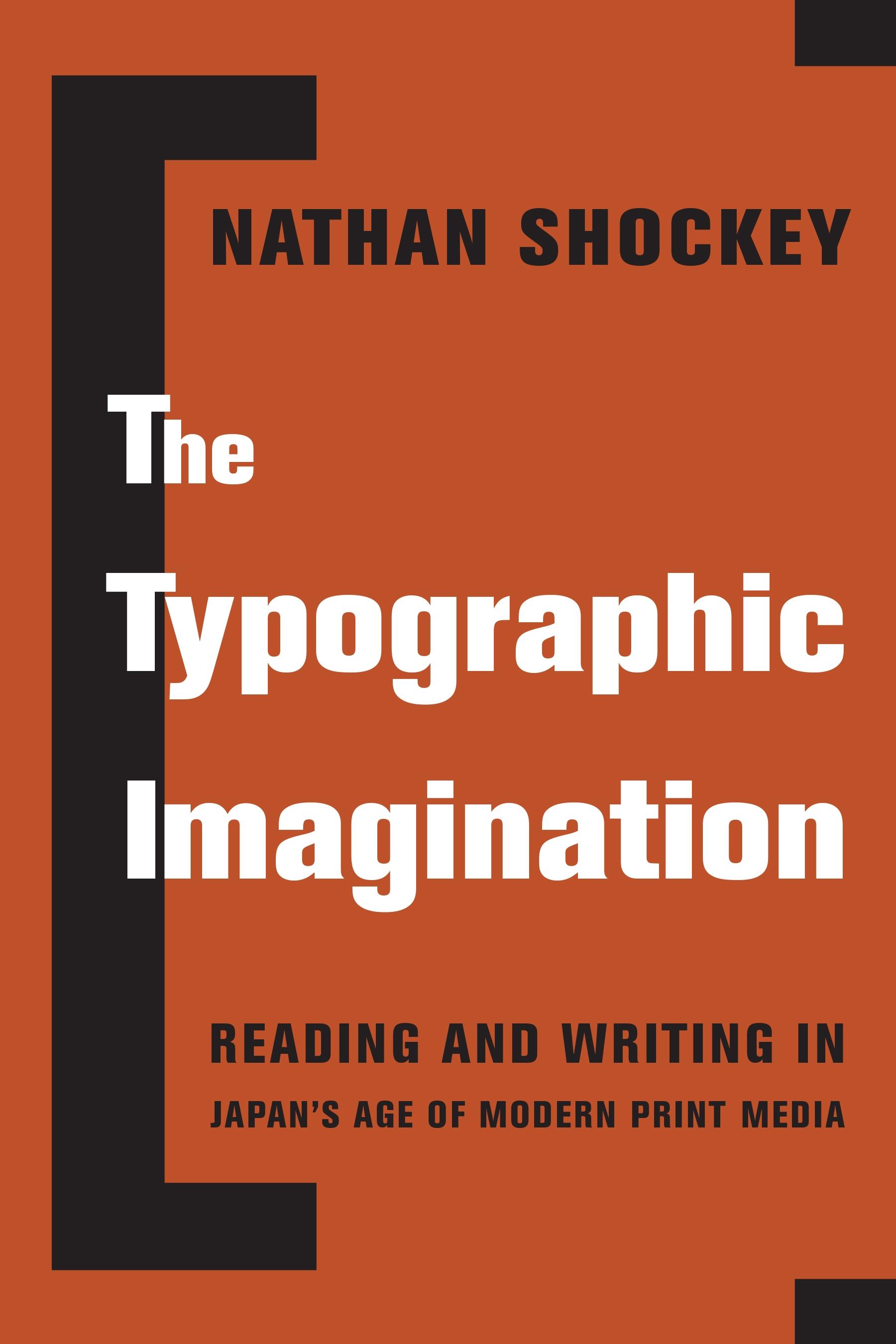
In the early twentieth century, Japan was awash with typographic text and mass-produced print. Over the short span of a few decades, affordable books and magazines became a part of everyday life, and a new generation of writers and thinkers considered how their world could be reconstructed through the circulation of printed language as a mass-market commodity. The Typographic Imagination explores how this commercial print revolution transformed Japan’s media ecology and traces the possibilities and pitfalls of type as a force for radical social change.
Nathan Shockey examines the emergence of new forms of reading, writing, and thinking in Japan from the last years of the nineteenth century through the first decades of the twentieth. Charting the relationships among prose, politics, and print capitalism, he considers the meanings and functions of print as a staple commodity and as a ubiquitous and material medium for discourse and thought. Drawing on extensive archival research, The Typographic Imagination brings into conversation a wide array of materials, including bookseller trade circulars, language reform debates, works of experimental fiction, photo gazetteers, socialist periodicals, Esperanto primers, declassified censorship documents, and printing press strike bulletins. Combining the rigorous close analysis of Japanese literary studies with transdisciplinary methodologies from media studies, book history, and intellectual history, The Typographic Imagination presents a multivalent vision of the rise of mass print media and the transformations of modern Japanese literature, language, and culture.
Betal enkelt med kort, Klarna, Apple Pay eller Google Pay. Ikke fornøyd? Du har alltid 14 dagers angrerett. Les mer i våre vilkår. Har du spørsmål, send oss en e-post på hello@memmo.org.
Memmo gjør det enklere å studere – uansett hvor du er i verden. Hos oss samler du pensumbøker og smarte studieverktøy på ett og samme sted: sammendrag, quizer, podkaster og flashcards. Og så Ted, din studiekompis som svarer på alt du lurer på. Over 50 000 studenter studerer allerede her – bygget for at du skal lære raskere og stresse mindre.