
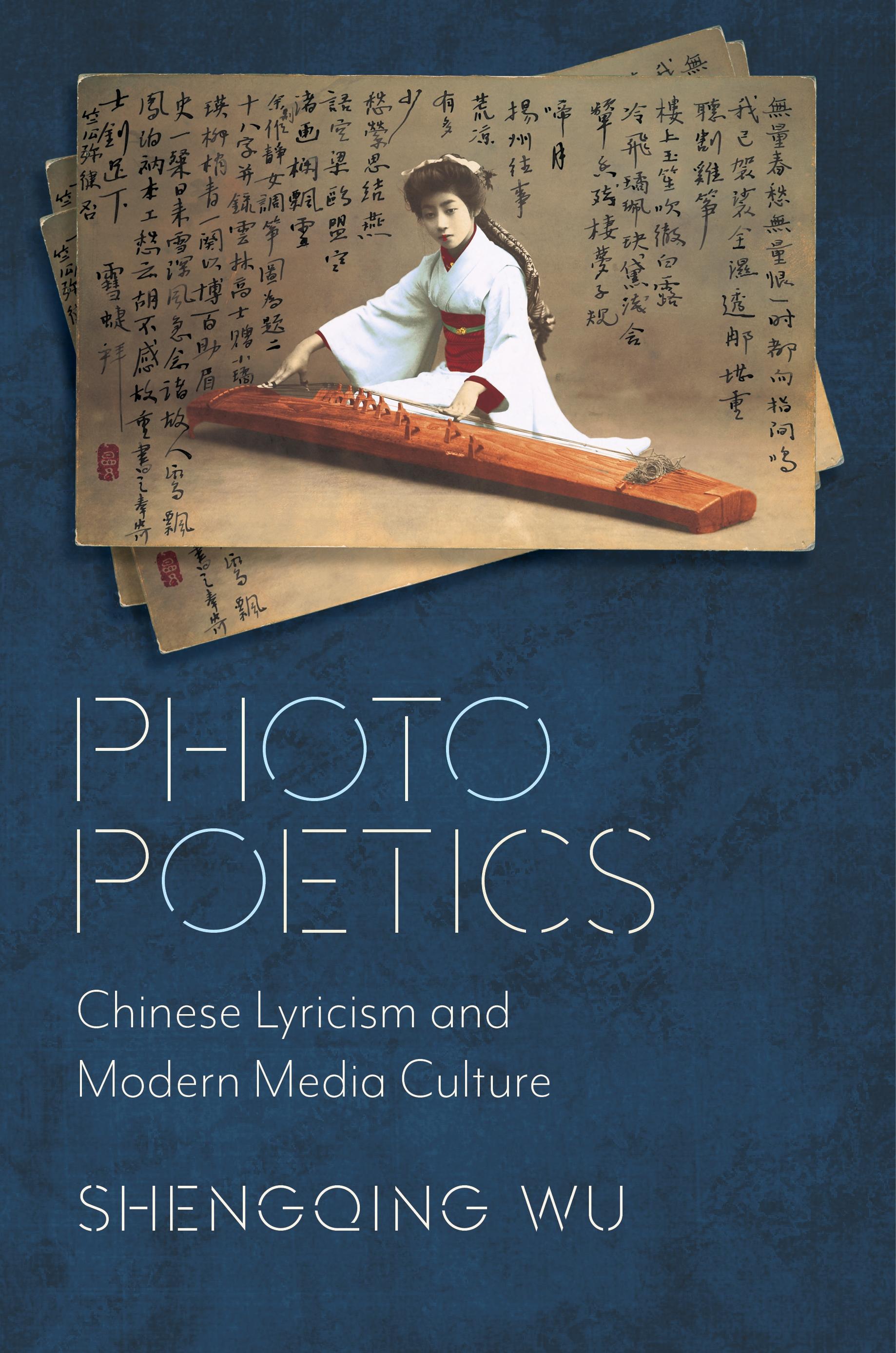
Chinese poetry has a long history of interaction with the visual arts. Classical aesthetic thought held that painting, calligraphy, and poetry were cross-fertilizing and mutually enriching. What happened when the Chinese poetic tradition encountered photography, a transformative technology and presumably realistic medium that reshaped seeing and representing the world?
Shengqing Wu explores how the new medium of photography was transformed by Chinese aesthetic culture. She details the complex negotiations between poetry and photography in the late Qing and early Republican eras, examining the ways traditional textual forms collaborated with the new visual culture. Drawing on extensive archival research into illustrated magazines, poetry collections, and vintage photographs, Photo Poetics analyzes a wide range of practices and genres, including self-representation in portrait photography; gifts of inscribed photographs; mass-media circulation of images of beautiful women; and photography of ghosts, immortals, and imagined landscapes. Wu argues that the Chinese lyrical tradition provided rich resources for artistic creativity, self-expression, and embodied experience in the face of an increasingly technological and image-oriented society. An interdisciplinary study spanning literary studies, visual culture, and media history, Photo Poetics is an original account of media culture in early twentieth-century China and the formation of Chinese literary and visual modernities.
Betal enkelt med kort, Klarna, Apple Pay eller Google Pay. Ikke fornøyd? Du har alltid 14 dagers angrerett. Les mer i våre vilkår. Har du spørsmål, send oss en e-post på hello@memmo.org.
Memmo gjør det enklere å studere – uansett hvor du er i verden. Hos oss samler du pensumbøker og smarte studieverktøy på ett og samme sted: sammendrag, quizer, podkaster og flashcards. Og så Ted, din studiekompis som svarer på alt du lurer på. Over 50 000 studenter studerer allerede her – bygget for at du skal lære raskere og stresse mindre.