
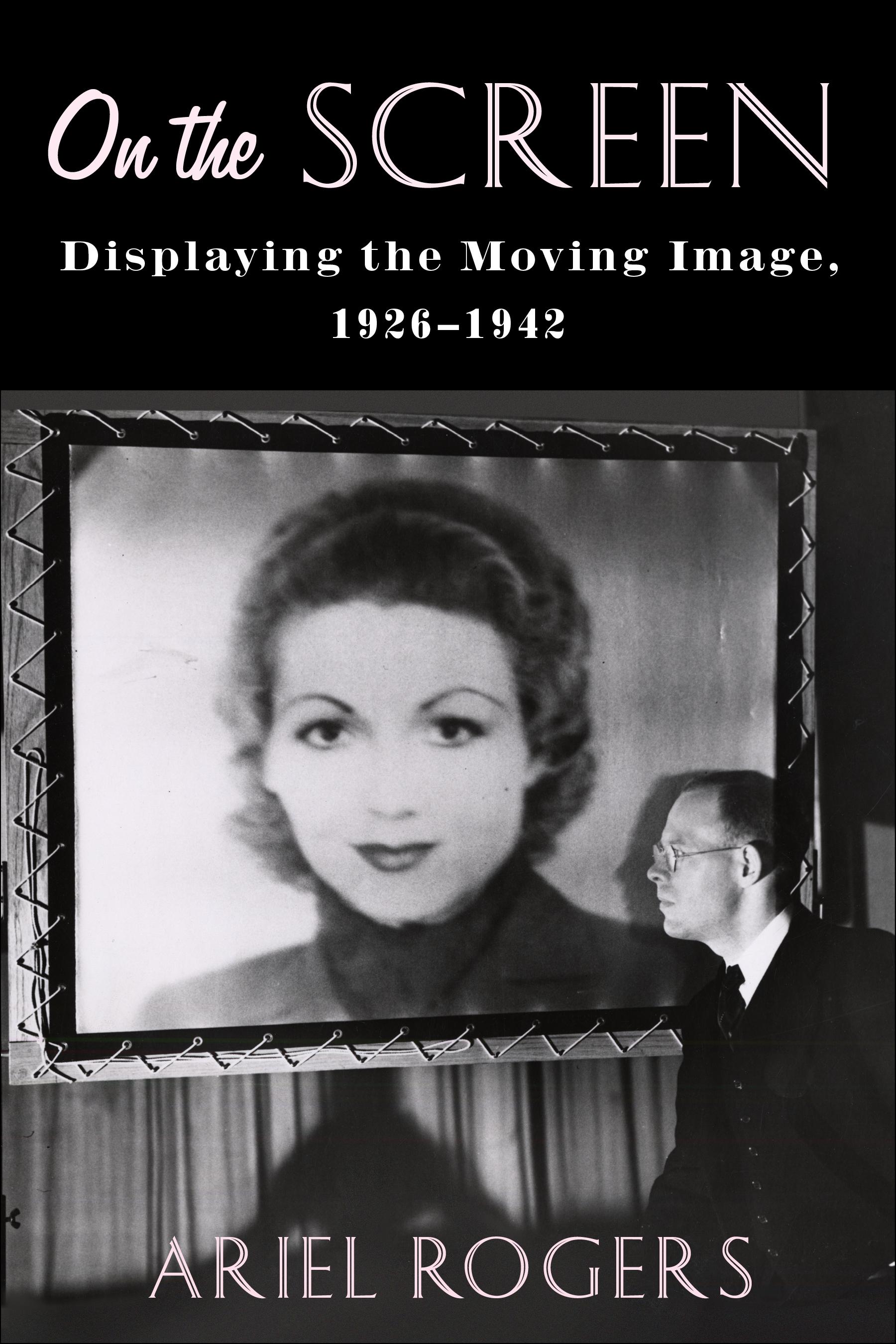
Today, in a world of smartphones, tablets, and computers, screens are a pervasive part of daily life. Yet a multiplicity of screens has been integral to the media landscape since cinema’s golden age. In On the Screen, Ariel Rogers rethinks the history of moving images by exploring how experiments with screen technologies in and around the 1930s changed the way films were produced, exhibited, and experienced.
Marshalling extensive archival research, Rogers reveals the role screens played at the height of the era of “classical” Hollywood cinema. She shows how filmmakers, technicians, architects, and exhibitors employed a variety of screens within diverse spaces, including studio soundstages, theaters, homes, stores, and train stations. Far from inert, screens served as means of structuring mediated space and time, contributing to the transformations of modern culture. On the Screen demonstrates how particular approaches to the use of screens traversed production and exhibition, theatrical and extratheatrical practice, mainstream and avant-garde modes, and even cinema and television. Rogers’s history challenges conventional narratives about the novelty of the twenty-first-century multiscreen environment, showing how attention to the variety of historical screen practices opens up new ways to understand contemporary media.
Betal enkelt med kort, Klarna, Apple Pay eller Google Pay. Ikke fornøyd? Du har alltid 14 dagers angrerett. Les mer i våre vilkår. Har du spørsmål, send oss en e-post på hello@memmo.org.
Memmo gjør det enklere å studere – uansett hvor du er i verden. Hos oss samler du pensumbøker og smarte studieverktøy på ett og samme sted: sammendrag, quizer, podkaster og flashcards. Og så Ted, din studiekompis som svarer på alt du lurer på. Over 50 000 studenter studerer allerede her – bygget for at du skal lære raskere og stresse mindre.