
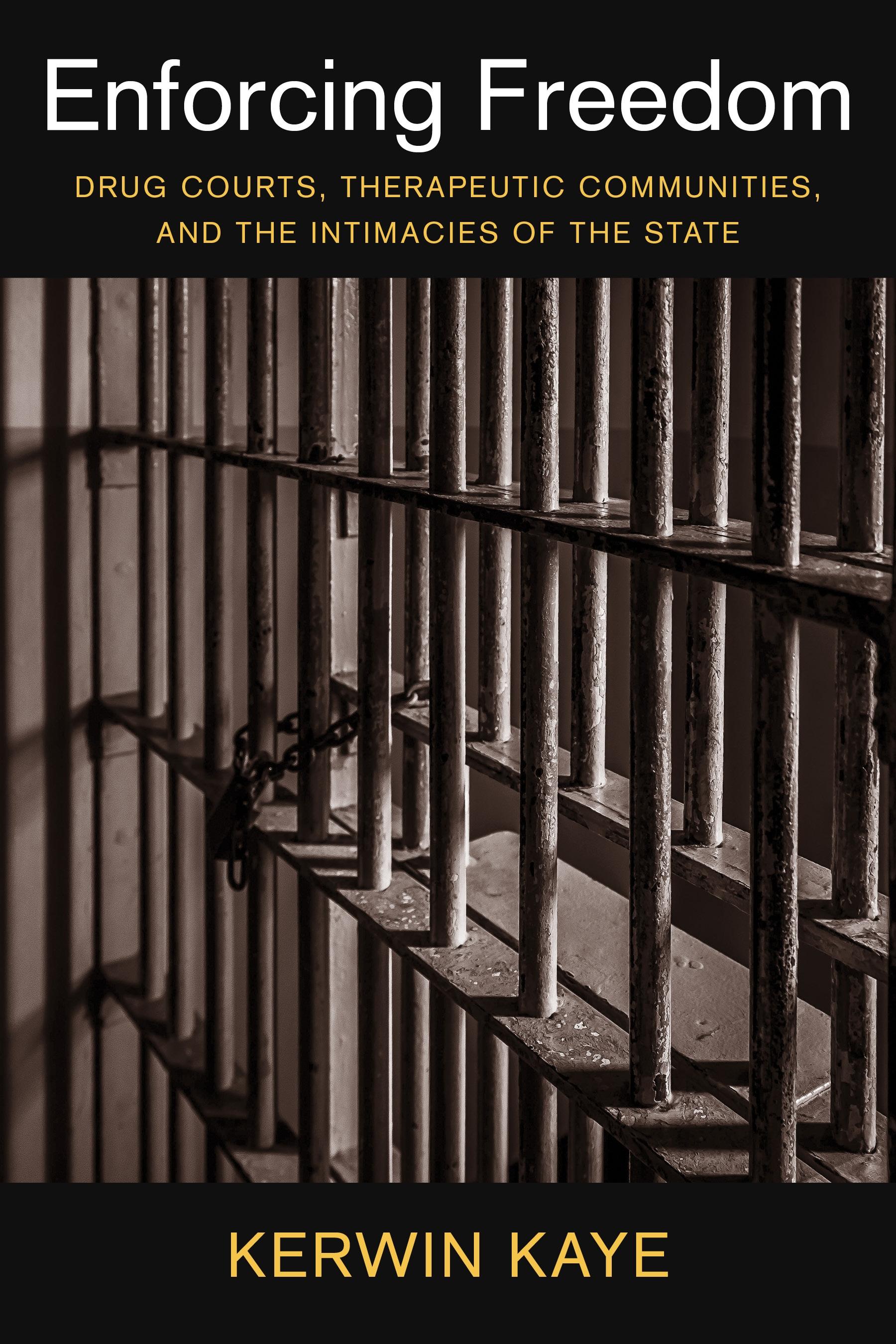
In 1989, the first drug-treatment court was established in Florida, inaugurating an era of state-supervised rehabilitation. Such courts have frequently been seen as a humane alternative to incarceration and the war on drugs. Enforcing Freedom offers an ethnographic account of drug courts and mandatory treatment centers as a system of coercion, demonstrating how the state uses notions of rehabilitation as a means of social regulation.
Situating drug courts in a long line of state projects of race and class control, Kerwin Kaye details the ways in which the violence of the state is framed as beneficial for those subjected to it. He explores how courts decide whether to release or incarcerate participants using nominally colorblind criteria that draw on racialized imagery. Rehabilitation is defined as preparation for low-wage labor and the destruction of community ties with “bad influences,” a process that turns participants against one another. At the same time, Kaye points toward the complex ways in which participants negotiate state control in relation to other forms of constraint in their lives, sometimes embracing the state’s salutary violence as a means of countering their impoverishment. Simultaneously sensitive to ethnographic detail and theoretical implications, Enforcing Freedom offers a critical perspective on the punitive side of criminal-justice reform and points toward alternative paths forward.
Betal enkelt med kort, Klarna, Apple Pay eller Google Pay. Ikke fornøyd? Du har alltid 14 dagers angrerett. Les mer i våre vilkår. Har du spørsmål, send oss en e-post på hello@memmo.org.
Memmo gjør det enklere å studere – uansett hvor du er i verden. Hos oss samler du pensumbøker og smarte studieverktøy på ett og samme sted: sammendrag, quizer, podkaster og flashcards. Og så Ted, din studiekompis som svarer på alt du lurer på. Over 50 000 studenter studerer allerede her – bygget for at du skal lære raskere og stresse mindre.