
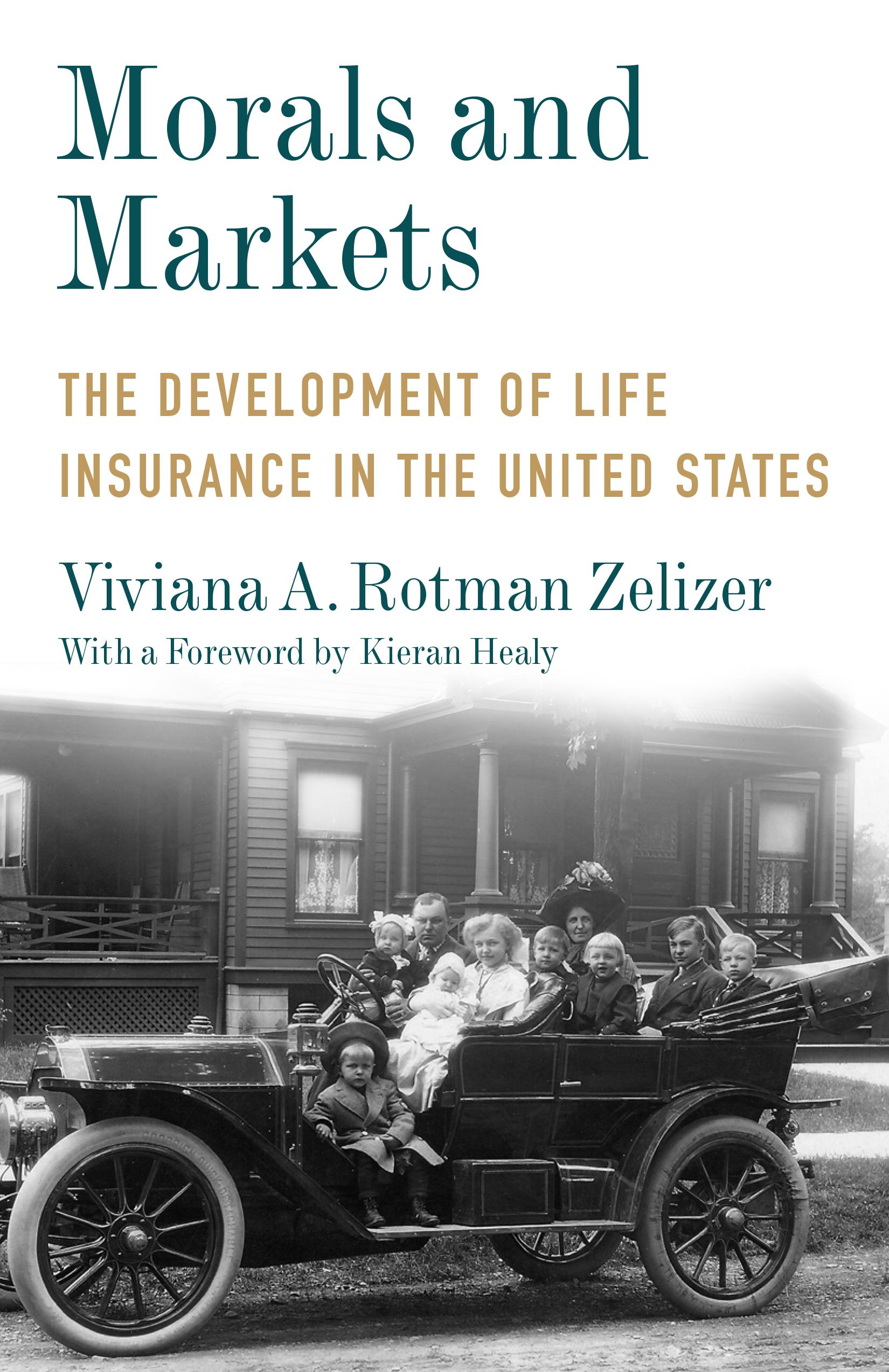
Life insurance—the promise of an insurer to pay a sum upon a person's death in exchange for a regular premium—is a bizarre enterprise. How can we monetize human life? Should we? What statistics do we use, what assumptions do we make, and what behavioral factors do we consider? First published in 1979, Morals and Markets Is a pathbreaking study exploring the development of life insurance in the United States. Viviana A. Rotman Zelizer combines economic history and a sociological perspective to advance a novel interpretation of the life insurance industry. The book pioneered a cultural approach to the analysis of morally controversial markets.
Zelizer begins in the mid-nineteenth century with the rise of the life insurance industry, a contentious chapter in the history of American business. Life insurance was stigmatized at first, denounced in newspapers and condemned by religious leaders as an immoral and sacrilegious gamble on human life. Over time, the business became a widely praised arrangement to secure a family's future. How did life insurance overcome cultural barriers? As Zelizer shows, the evolution of the industry in the United States matched evolving attitudes toward death, money, family relations, property, and personal legacy.
Betal enkelt med kort, Klarna, Apple Pay eller Google Pay. Ikke fornøyd? Du har alltid 14 dagers angrerett. Les mer i våre vilkår. Har du spørsmål, send oss en e-post på hello@memmo.org.
Memmo gjør det enklere å studere – uansett hvor du er i verden. Hos oss samler du pensumbøker og smarte studieverktøy på ett og samme sted: sammendrag, quizer, podkaster og flashcards. Og så Ted, din studiekompis som svarer på alt du lurer på. Over 50 000 studenter studerer allerede her – bygget for at du skal lære raskere og stresse mindre.