
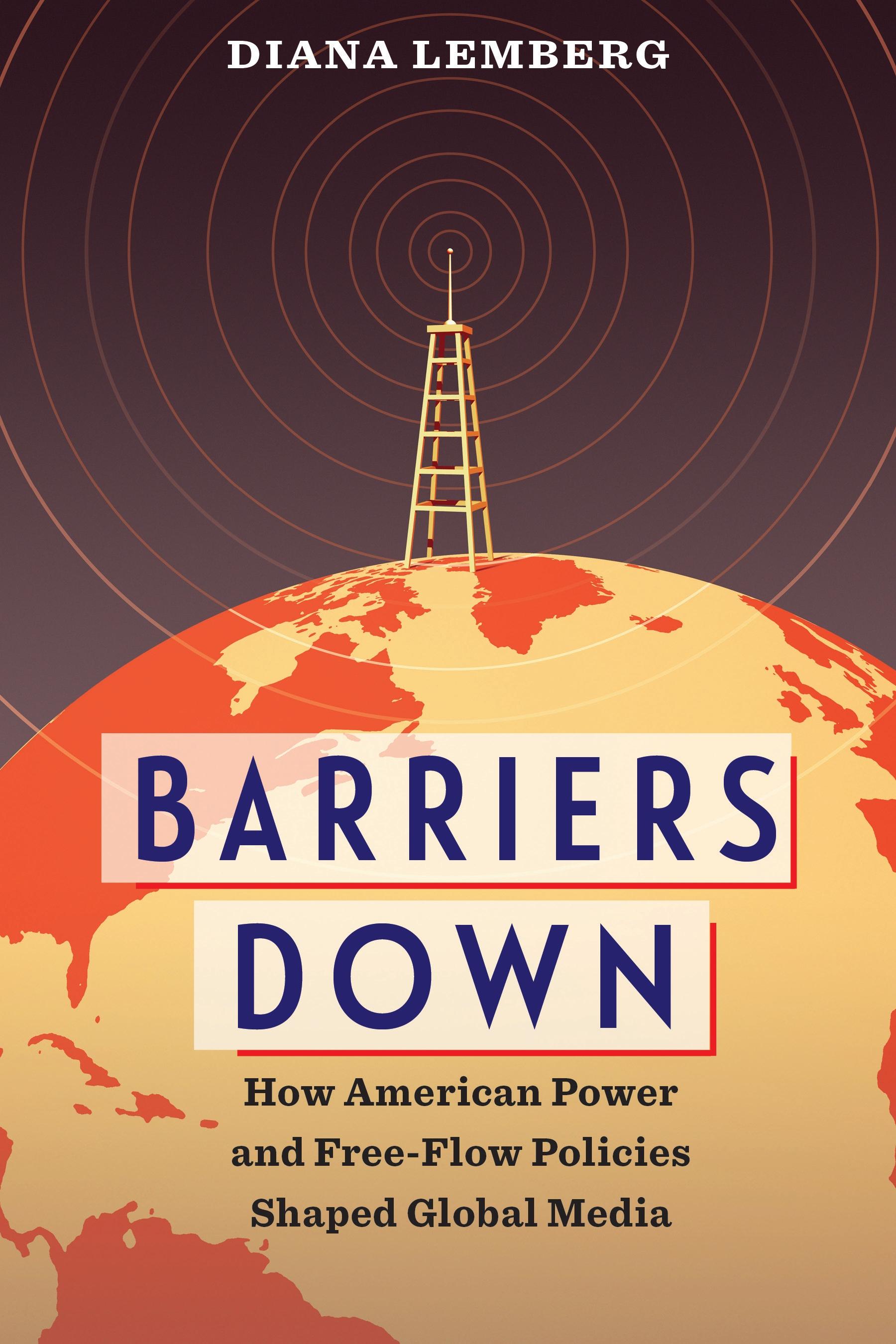
Freedom of information is a principle commonly associated with the United States’ First Amendment traditions or digital-era technology boosters. Barriers Down reveals its unexpected origins in political, economic, and cultural battles over analog media in the mid-twentieth century. Diana Lemberg traces how the United States shaped media around the world after 1945 under the banner of the “free flow of information,” showing how the push for global media access acted as a vehicle for American power.
Barriers Down considers debates over civil liberties and censorship in Nazi Germany, the Soviet Union, and elsewhere alongside Americans’ efforts to circumvent foreign regulatory systems in the quest to expand markets and bring their ideas to new publics. Lemberg shows how in the decades following the Second World War American free-flow policies reshaped the world’s information landscape, though not always as intended. Through burgeoning information diplomacy and development aid, Washington diffused new media ranging from television and satellite broadcasting to global English. But these actions also spurred overseas actors to articulate alternative understandings of information freedom and of how information flows might be regulated. Bridging the historiographies of the United States in the world, human rights, decolonization and development, and media and technology, Barriers Down excavates the analog roots of digital-age debates over the politics and ethics of transnational information flows.
Betal enkelt med kort, Klarna, Apple Pay eller Google Pay. Ikke fornøyd? Du har alltid 14 dagers angrerett. Les mer i våre vilkår. Har du spørsmål, send oss en e-post på hello@memmo.org.
Memmo gjør det enklere å studere – uansett hvor du er i verden. Hos oss samler du pensumbøker og smarte studieverktøy på ett og samme sted: sammendrag, quizer, podkaster og flashcards. Og så Ted, din studiekompis som svarer på alt du lurer på. Over 50 000 studenter studerer allerede her – bygget for at du skal lære raskere og stresse mindre.