
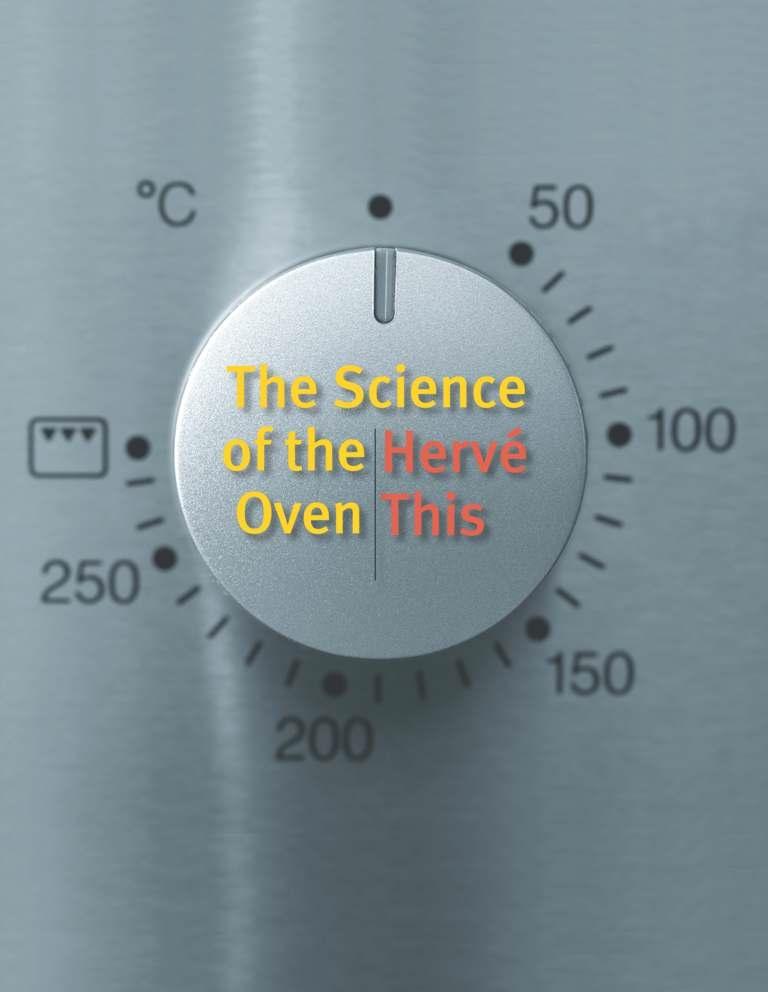
Mayonnaise "takes" when a series of liquids form a semisolid consistency. Eggs, a liquid, become solid as they are heated, whereas, under the same conditions, solids melt. When meat is roasted, its surface browns and it acquires taste and texture. What accounts for these extraordinary transformations?
The answer: chemistry and physics. With his trademark eloquence and wit, Hervé This launches a wry investigation into the chemical art of cooking. Unraveling the science behind common culinary technique and practice, Hervé This breaks food down to its molecular components and matches them to cooking's chemical reactions. He translates the complex processes of the oven into everyday knowledge for professional chefs and casual cooks, and he demystifies the meaning of taste and the making of flavor. He describes the properties of liquids, salts, sugars, oils, and fats and defines the principles of culinary practice, which endow food with sensual as well as nutritional value.
For fans of Hervé This's popular volumes and for those new to his celebrated approach, The Science of the Oven expertly expands the possibilities of the kitchen, fusing the physiology of taste with the molecular structure of bodies and food.
Betal enkelt med kort, Klarna, Apple Pay eller Google Pay. Ikke fornøyd? Du har alltid 14 dagers angrerett. Les mer i våre vilkår. Har du spørsmål, send oss en e-post på hello@memmo.org.
Memmo gjør det enklere å studere – uansett hvor du er i verden. Hos oss samler du pensumbøker og smarte studieverktøy på ett og samme sted: sammendrag, quizer, podkaster og flashcards. Og så Ted, din studiekompis som svarer på alt du lurer på. Over 50 000 studenter studerer allerede her – bygget for at du skal lære raskere og stresse mindre.