
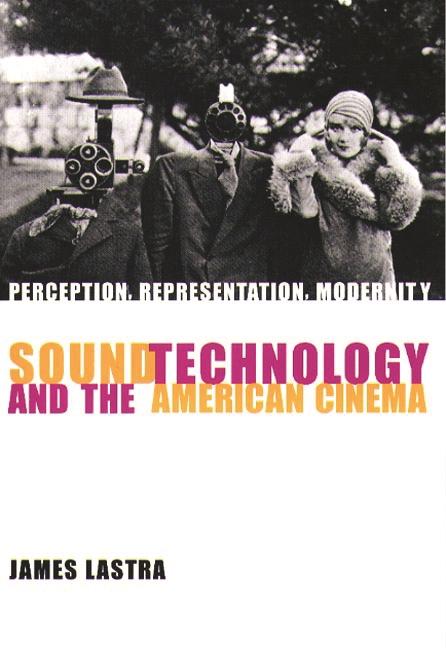
Representational technologies including photography, phonography, and the cinema have helped define modernity itself. Since the nineteenth century, these technologies have challenged our trust of sensory perception, given the ephemeral unprecedented parity with the eternal, and created profound temporal and spatial displacements. But current approaches to representational and cultural history often neglect to examine these technologies. James Lastra seeks to remedy this neglect.
Lastra argues that we are nowhere better able to track the relations between capital, science, and cultural practice than in photography, phonography, and the cinema. In particular, he maps the development of sound recording from its emergence to its confrontation with and integration into the Hollywood film.
Reaching back into the late eighteenth century, to natural philosophy, stenography, automata, and human physiology, Lastra follows the shifting relationships between our senses, technology, and representation.
Betal enkelt med kort, Klarna, Apple Pay eller Google Pay. Ikke fornøyd? Du har alltid 14 dagers angrerett. Les mer i våre vilkår. Har du spørsmål, send oss en e-post på hello@memmo.org.
Memmo gjør det enklere å studere – uansett hvor du er i verden. Hos oss samler du pensumbøker og smarte studieverktøy på ett og samme sted: sammendrag, quizer, podkaster og flashcards. Og så Ted, din studiekompis som svarer på alt du lurer på. Over 50 000 studenter studerer allerede her – bygget for at du skal lære raskere og stresse mindre.