
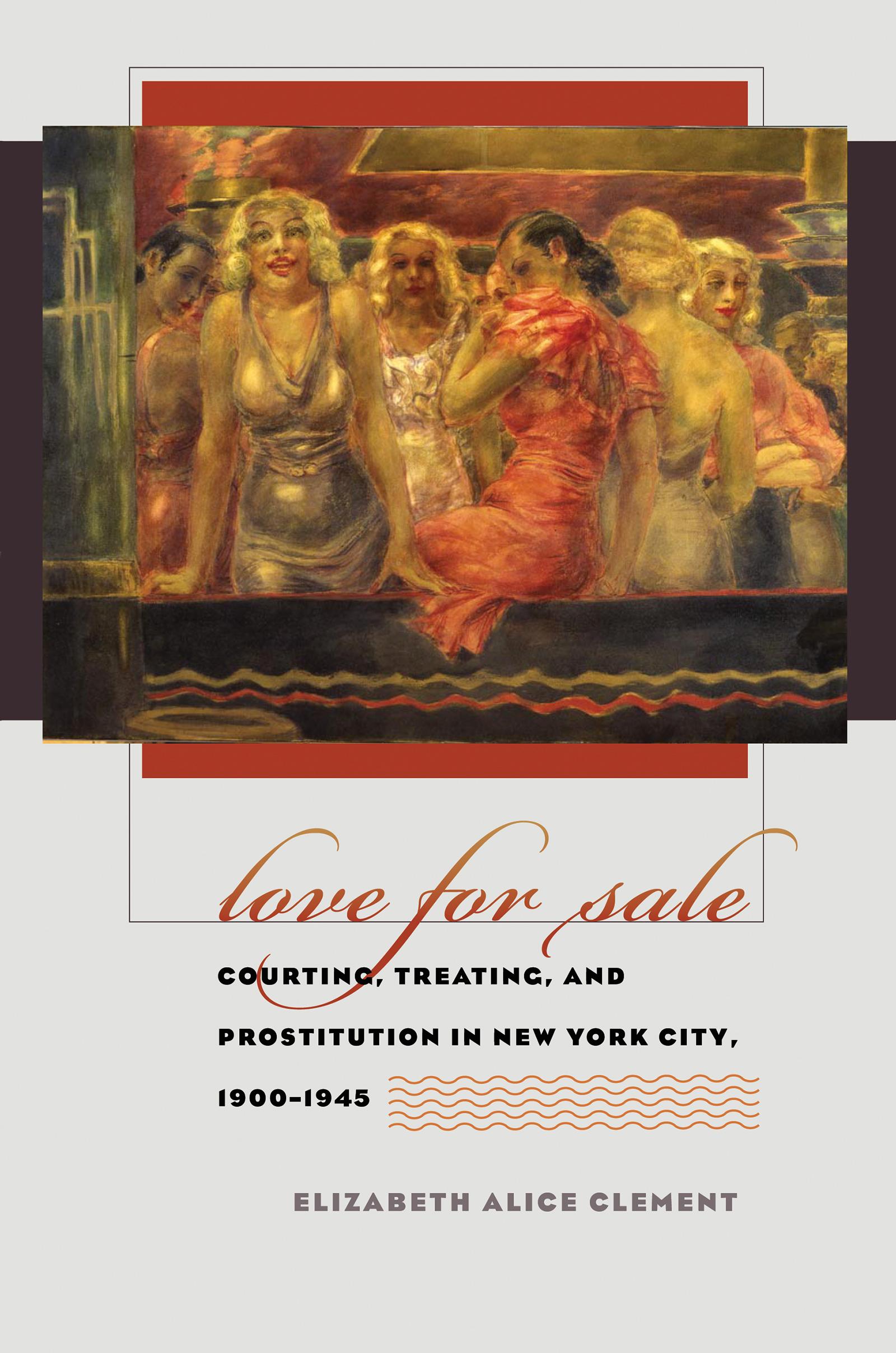
The intense urbanization and industrialization of America’s largest city from the turn of the twentieth century to World War II was accompanied by profound shifts in sexual morality, sexual practices, and gender roles. Comparing prostitution and courtship with a new working-class practice of heterosexual barter called “treating,” Elizabeth Alice Clement examines changes in sexual morality and sexual and economic practices.
Women “treated” when they exchanged sexual favors for dinner and an evening’s entertainment or, more tangibly, for stockings, shoes, and other material goods. These “charity girls” created for themselves a moral space between prostitution and courtship that preserved both sexual barter and respectability. Although treating, as a clearly articulated language and identity, began to disappear after the 1920s and 1930s, Clement argues that it still had significant, lasting effects on modern sexual norms. She demonstrates how treating shaped courtship and dating practices, the prevalence and meaning of premarital sex, and America’s developing commercial sex industry. Even further, her study illuminates the ways in which sexuality and morality interact and contribute to our understanding of the broader social categories of race, gender, and class.
Women “treated” when they exchanged sexual favors for dinner and an evening’s entertainment or, more tangibly, for stockings, shoes, and other material goods. These “charity girls” created for themselves a moral space between prostitution and courtship that preserved both sexual barter and respectability. Although treating, as a clearly articulated language and identity, began to disappear after the 1920s and 1930s, Clement argues that it still had significant, lasting effects on modern sexual norms. She demonstrates how treating shaped courtship and dating practices, the prevalence and meaning of premarital sex, and America’s developing commercial sex industry. Even further, her study illuminates the ways in which sexuality and morality interact and contribute to our understanding of the broader social categories of race, gender, and class.
Betaal eenvoudig met kaart, Klarna, Apple Pay of Google Pay. Niet tevreden? Je hebt altijd 14 dagen bedenktijd. Lees meer in onze voorwaarden. Heb je vragen, mail ons dan via hello@memmo.org.
Memmo maakt studeren makkelijker – waar je ook bent ter wereld. Wij brengen je cursusboeken en slimme studietools samen op één plek: samenvattingen, quizzen, podcasts en flashcards. En Ted, je studievriend die antwoord geeft op alles wat je je afvraagt. Meer dan 50.000 studenten studeren hier al – gebouwd om je sneller te laten leren en minder stress te geven.
Misschien vind je dit ook leuk
Koop het boek0