
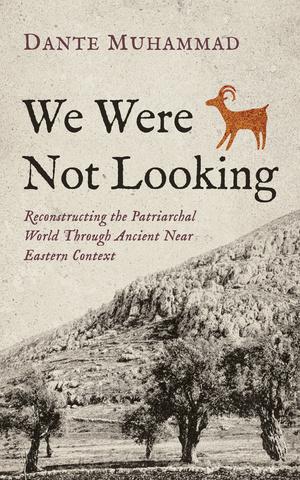
What happens when the patriarchal narratives are examined through the actual geography of the ancient Near East?
We Were Not Looking reconstructs the world of Abraham, Isaac, Jacob, Joseph, and their extended kin by returning their stories to the physical and political landscape that shaped them.
Rather than treating geography as background scenery, Dante Muhammad asks what becomes visible when terrain, hydrology, movement corridors, settlement patterns, territorial boundaries, kinship networks, and political authority are treated as part of the historical evidence.
Set against the environmental realities of the Middle Bronze Age Near East, familiar narratives begin to look different. Wells become more than water sources; they become territorial claims. Migration routes reveal patterns of movement and survival. Ridges, valleys, watersheds, and frontier zones help explain where people travel, where households settle, why conflicts emerge, and how political boundaries shape the stories remembered about them.
Drawing on historical geography, ancient Near Eastern context, hydrology, land law, tribal anthropology, archaeology, and comparative textual analysis, We Were Not Looking reconstructs the material world beneath the patriarchal traditions.
The book also places the Torah and Qur'an in conversation as distinct textual witnesses preserving memories of land, movement, kinship, covenant, displacement, and political authority. Their differences are not erased or forced into agreement. Instead, they are examined against the shared historical environment in which the traditions locate many of the same ancestral figures.
The result is a historical-geographical investigation of the patriarchal world: a landscape governed by water scarcity, seasonal movement, territorial negotiation, environmental pressure, and the political geography of the ancient Levant.
The prophets did not move through empty space.
They moved through real landscapes, crossed real corridors, depended on real water systems, encountered real political boundaries, and lived within societies shaped by the demands of land and survival.
We Were Not Looking invites readers to recover that world.
Written for readers of biblical history and culture, ancient history, comparative religion, biblical archaeology, Qur'anic studies, and the ancient Near East, the book offers a material framework for understanding how geography can illuminate traditions often approached primarily through theology or literature.
You know the stories. Now look at the world beneath them.
Betaal eenvoudig met kaart, Klarna, Apple Pay of Google Pay. Niet tevreden? Je hebt altijd 14 dagen bedenktijd. Lees meer in onze voorwaarden. Heb je vragen, mail ons dan via hello@memmo.org.
Memmo maakt studeren makkelijker – waar je ook bent ter wereld. Wij brengen je cursusboeken en slimme studietools samen op één plek: samenvattingen, quizzen, podcasts en flashcards. En Ted, je studievriend die antwoord geeft op alles wat je je afvraagt. Meer dan 50.000 studenten studeren hier al – gebouwd om je sneller te laten leren en minder stress te geven.
Misschien vind je dit ook leuk
Koop het boek0