
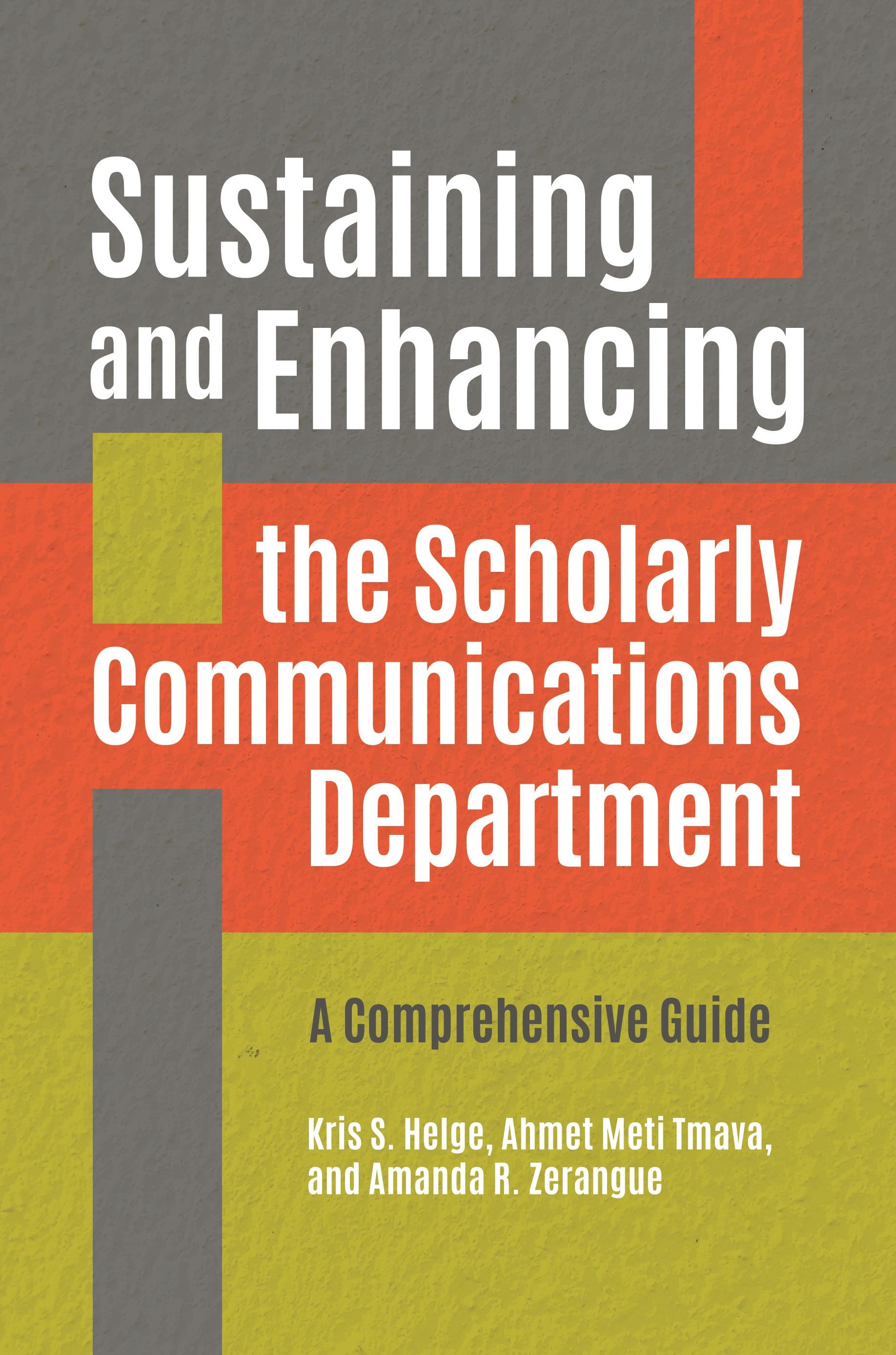
Learn how to develop, manage, and maintain a scholarly communications department.
More and more academic libraries are being asked to provide scholarly communications services to their campuses, ranging from general information about copyright law to instruction for creating and hosting digital repositories and publishing services. To support academic librarians and information specialists in starting their own scholarly communications departments, Sustaining and Enhancing the Scholarly Communications Department begins by introducing key scholarly communications concepts, including copyright, Creative Commons licenses, author rights, open access, open educational resources, open-access e-journals, and institutional repositories.
Authors Helge, Tmava, and Zerangue explain how to develop, manage, market, and maintain a scholarly communications department. They define specific tasks and tools for which many scholarly communications departments are responsible, including intellectual property, licensing issues, promoting open access, data management, and plagiarism conundrums. They also discuss strategies for collaborating with key campus stakeholders and convey which academic degrees benefit and may be necessary for personnel in a scholarly communications department. Finally, the authors offer managerial and leadership techniques to increase employee productivity, efficiency, retention, motivation, and happiness within the scholarly communications department.
More and more academic libraries are being asked to provide scholarly communications services to their campuses, ranging from general information about copyright law to instruction for creating and hosting digital repositories and publishing services. To support academic librarians and information specialists in starting their own scholarly communications departments, Sustaining and Enhancing the Scholarly Communications Department begins by introducing key scholarly communications concepts, including copyright, Creative Commons licenses, author rights, open access, open educational resources, open-access e-journals, and institutional repositories.
Authors Helge, Tmava, and Zerangue explain how to develop, manage, market, and maintain a scholarly communications department. They define specific tasks and tools for which many scholarly communications departments are responsible, including intellectual property, licensing issues, promoting open access, data management, and plagiarism conundrums. They also discuss strategies for collaborating with key campus stakeholders and convey which academic degrees benefit and may be necessary for personnel in a scholarly communications department. Finally, the authors offer managerial and leadership techniques to increase employee productivity, efficiency, retention, motivation, and happiness within the scholarly communications department.
Betaal eenvoudig met kaart, Klarna, Apple Pay of Google Pay. Niet tevreden? Je hebt altijd 14 dagen bedenktijd. Lees meer in onze voorwaarden. Heb je vragen, mail ons dan via hello@memmo.org.
Memmo maakt studeren makkelijker – waar je ook bent ter wereld. Wij brengen je cursusboeken en slimme studietools samen op één plek: samenvattingen, quizzen, podcasts en flashcards. En Ted, je studievriend die antwoord geeft op alles wat je je afvraagt. Meer dan 50.000 studenten studeren hier al – gebouwd om je sneller te laten leren en minder stress te geven.