
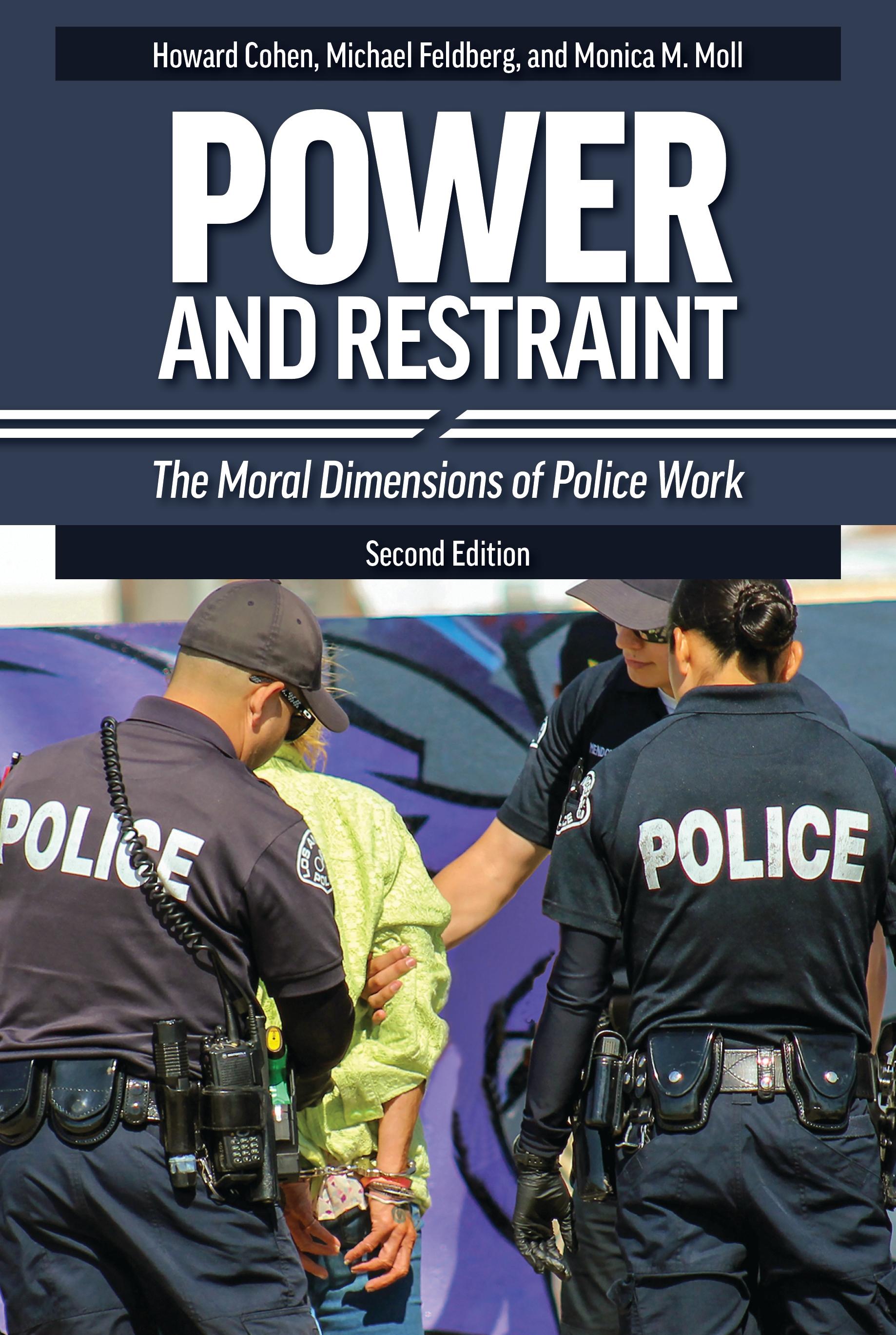
Thoroughly revised and updated, this edition of the classic casebook on police ethics explores the moral complexities of situations faced by law enforcement officers every day across the United States.
This updated edition of Power and Restraint maintains its place as a leading set of standards for evaluating police behavior. It extends our understanding of the basis of police accountability by grounding it in principles of the social contract and constitutional democracy. It applies the standards of fair access, public trust, public safety first, role discipline, and neutral professionalism to a variety of modern policing situations that help identify best practices and increase understanding of the challenges of policing in 21st-century America.
Power and Restraint first locates itself in the context of other significant studies by scholars from various disciplines on moral issues in police work. Next, it establishes a foundation for moral evaluation of police work grounded in social contract theory as expressed in the U.S. Constitution and Declaration of Independence. Third, the authors generate five standards derived from the social contract for judging the actions of police. In the second half of the book, the reader is asked to apply these standards to a variety of typical but morally ambiguous policing situations.
This updated edition of Power and Restraint maintains its place as a leading set of standards for evaluating police behavior. It extends our understanding of the basis of police accountability by grounding it in principles of the social contract and constitutional democracy. It applies the standards of fair access, public trust, public safety first, role discipline, and neutral professionalism to a variety of modern policing situations that help identify best practices and increase understanding of the challenges of policing in 21st-century America.
Power and Restraint first locates itself in the context of other significant studies by scholars from various disciplines on moral issues in police work. Next, it establishes a foundation for moral evaluation of police work grounded in social contract theory as expressed in the U.S. Constitution and Declaration of Independence. Third, the authors generate five standards derived from the social contract for judging the actions of police. In the second half of the book, the reader is asked to apply these standards to a variety of typical but morally ambiguous policing situations.
Pagina's: 160
Categorie: Juridik
e-ISBN: 9798216131014
Verzendgewicht: 1.2 kg
Verzending binnen: 1-2 dagen
Betaal eenvoudig met kaart, Klarna, Apple Pay of Google Pay. Niet tevreden? Je hebt altijd 14 dagen bedenktijd. Lees meer in onze voorwaarden. Heb je vragen, mail ons dan via hello@memmo.org.
Memmo maakt studeren makkelijker – waar je ook bent ter wereld. Wij brengen je cursusboeken en slimme studietools samen op één plek: samenvattingen, quizzen, podcasts en flashcards. En Ted, je studievriend die antwoord geeft op alles wat je je afvraagt. Meer dan 50.000 studenten studeren hier al – gebouwd om je sneller te laten leren en minder stress te geven.