
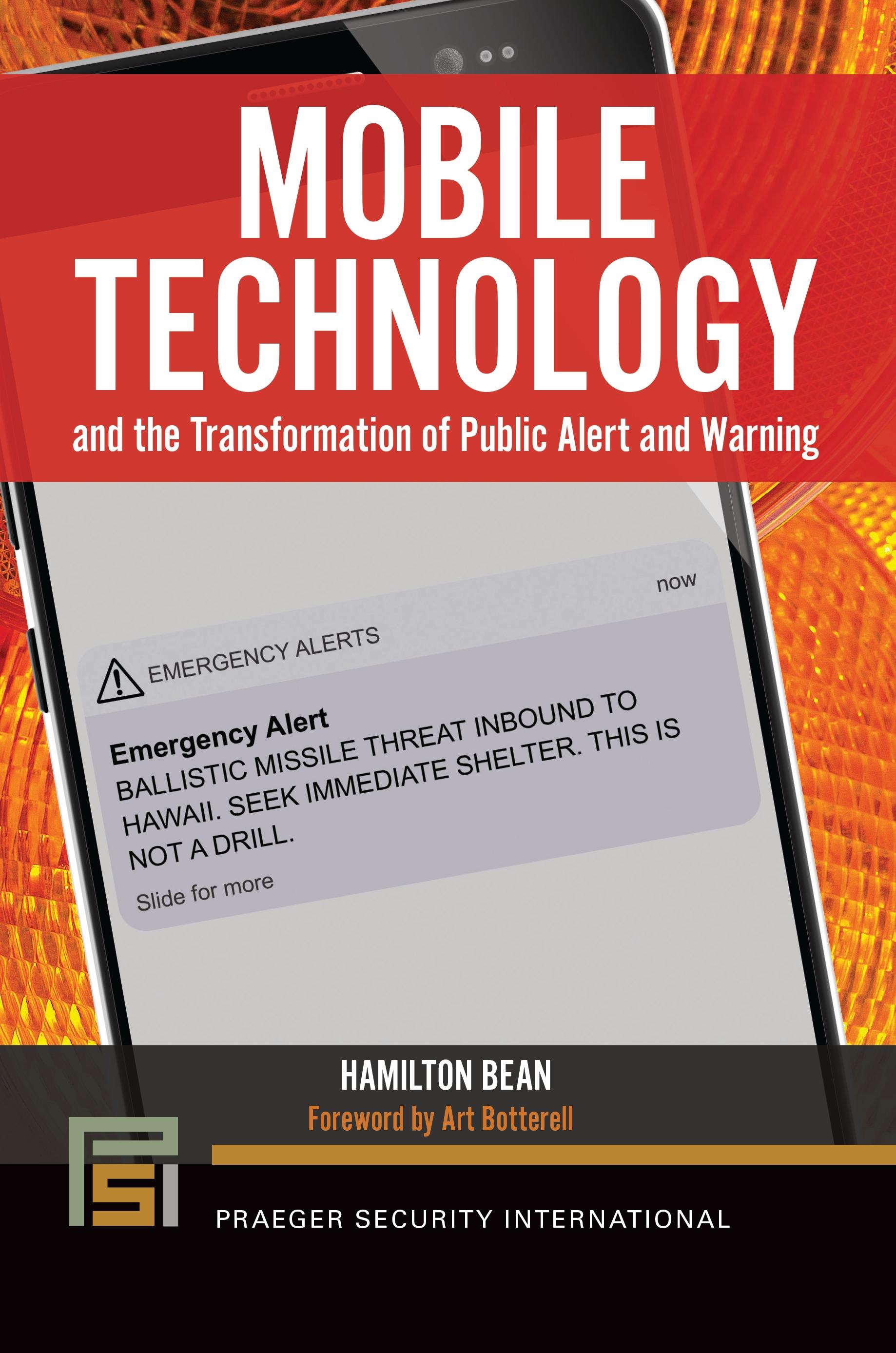
This timely book provides the inside story of the development of mobile public alert and warning technology in the United States and addresses similar systems being used in Australia, Canada, Japan, and the Netherlands.
This book provides a comprehensive account of how mobile-smartphone systems are transforming the practice of public alert and warning in the United States. Recent events have vaulted mobile alert and warning technology to the forefront of public debates concerning the hazards of the digital age. False alarms of ballistic missile attacks on Hawaii and Japan, the non-use of mobile alerts during the Northern California wildfires, and the role this technology plays in supporting police manhunts and counterterrorism efforts have prompted reconsideration of how these systems are used.
Drawing upon interviews with officials, executives, experts, and citizens, the book provides an in-depth analysis of the events and contexts influencing the trajectory of mobile public alert and warning and charts a course for its improvement. The book first introduces readers to the high stakes involved in the transformation of public alert and warning, explaining how new research is revealing the benefits, limitations, and risks of mobile technology in the disaster communication context. Three case studies then illustrate issues of risk, trust, and appropriateness in mobile public alert and warning.
This book provides a comprehensive account of how mobile-smartphone systems are transforming the practice of public alert and warning in the United States. Recent events have vaulted mobile alert and warning technology to the forefront of public debates concerning the hazards of the digital age. False alarms of ballistic missile attacks on Hawaii and Japan, the non-use of mobile alerts during the Northern California wildfires, and the role this technology plays in supporting police manhunts and counterterrorism efforts have prompted reconsideration of how these systems are used.
Drawing upon interviews with officials, executives, experts, and citizens, the book provides an in-depth analysis of the events and contexts influencing the trajectory of mobile public alert and warning and charts a course for its improvement. The book first introduces readers to the high stakes involved in the transformation of public alert and warning, explaining how new research is revealing the benefits, limitations, and risks of mobile technology in the disaster communication context. Three case studies then illustrate issues of risk, trust, and appropriateness in mobile public alert and warning.
Betaal eenvoudig met kaart, Klarna, Apple Pay of Google Pay. Niet tevreden? Je hebt altijd 14 dagen bedenktijd. Lees meer in onze voorwaarden. Heb je vragen, mail ons dan via hello@memmo.org.
Memmo maakt studeren makkelijker – waar je ook bent ter wereld. Wij brengen je cursusboeken en slimme studietools samen op één plek: samenvattingen, quizzen, podcasts en flashcards. En Ted, je studievriend die antwoord geeft op alles wat je je afvraagt. Meer dan 50.000 studenten studeren hier al – gebouwd om je sneller te laten leren en minder stress te geven.