
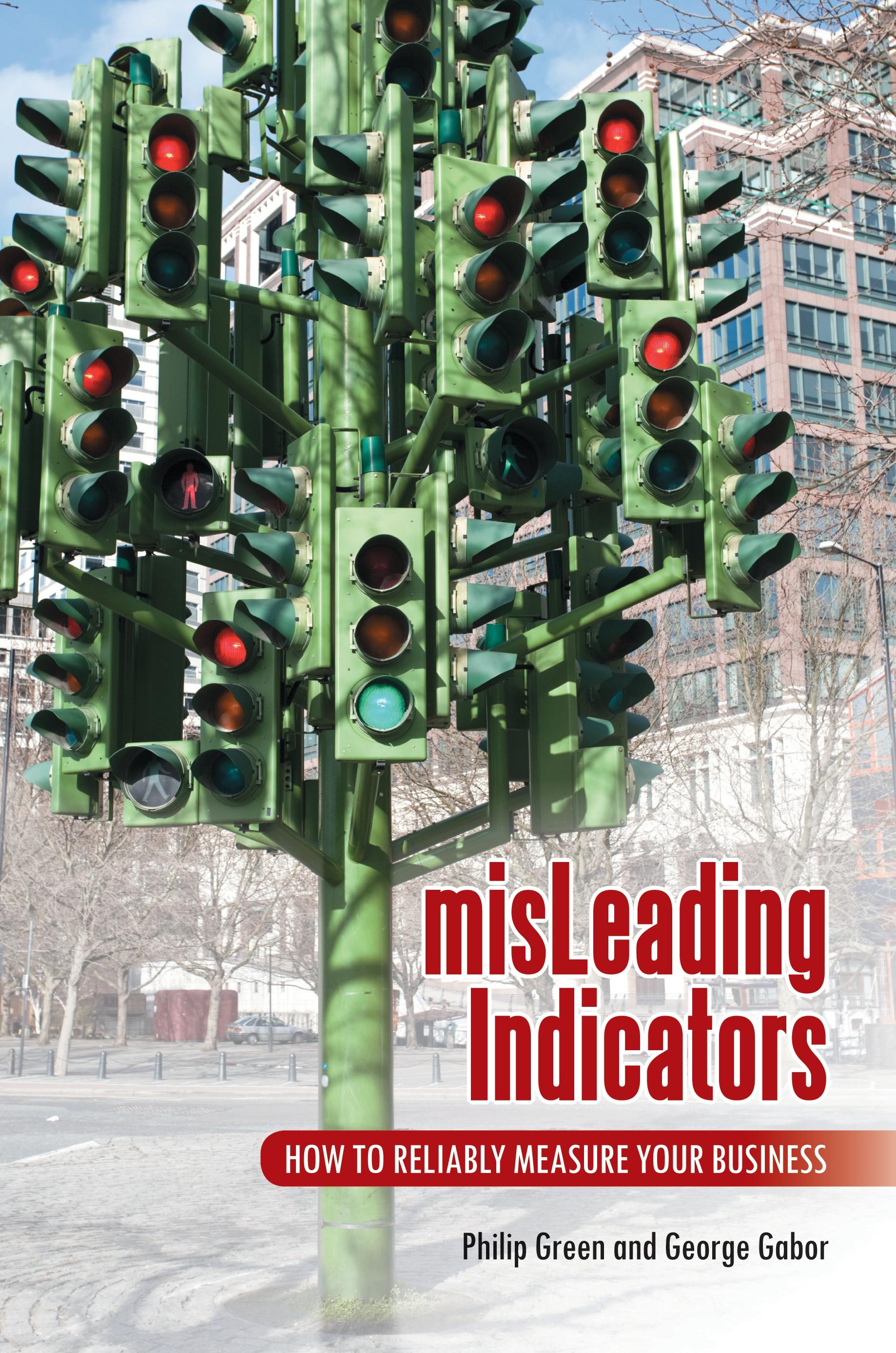
This book reveals the hidden and potentially misleading nature of measurements, empowering readers to avoid making critical business decisions that are harmful, unreasonable, unwarranted, or plain wrong.
Decision makers in business and government are more reliant than ever on measurements, such as business performance indicators, bond ratings, Six-Sigma indicators, stock ratings, opinion polls, and market research. Yet many popular statistical and business books and courses relating to measurement are based on flawed principles, leading managers to the wrong conclusions—and ultimately, the wrong decisions. misLeading Indicators: How to Reliably Measure Your Business provides something unique and invaluable: trustworthy tools for judging measurements.
Each chapter illustrates the four key principles for reliable measurements: sufficient background information, accuracy and precision, reasonable inferences, and reality checks in different situations. After the three fundamental methods of measuring are defined, the authors expand to the application and interpretation of measurements in specific areas, including business performance, risk management, process, control, finance, and economics. This book supplies essential information for managers in business and government who depend on accurate information to run their organizations, as well as the consultants who advise them.
Decision makers in business and government are more reliant than ever on measurements, such as business performance indicators, bond ratings, Six-Sigma indicators, stock ratings, opinion polls, and market research. Yet many popular statistical and business books and courses relating to measurement are based on flawed principles, leading managers to the wrong conclusions—and ultimately, the wrong decisions. misLeading Indicators: How to Reliably Measure Your Business provides something unique and invaluable: trustworthy tools for judging measurements.
Each chapter illustrates the four key principles for reliable measurements: sufficient background information, accuracy and precision, reasonable inferences, and reality checks in different situations. After the three fundamental methods of measuring are defined, the authors expand to the application and interpretation of measurements in specific areas, including business performance, risk management, process, control, finance, and economics. This book supplies essential information for managers in business and government who depend on accurate information to run their organizations, as well as the consultants who advise them.
Betaal eenvoudig met kaart, Klarna, Apple Pay of Google Pay. Niet tevreden? Je hebt altijd 14 dagen bedenktijd. Lees meer in onze voorwaarden. Heb je vragen, mail ons dan via hello@memmo.org.
Memmo maakt studeren makkelijker – waar je ook bent ter wereld. Wij brengen je cursusboeken en slimme studietools samen op één plek: samenvattingen, quizzen, podcasts en flashcards. En Ted, je studievriend die antwoord geeft op alles wat je je afvraagt. Meer dan 50.000 studenten studeren hier al – gebouwd om je sneller te laten leren en minder stress te geven.