
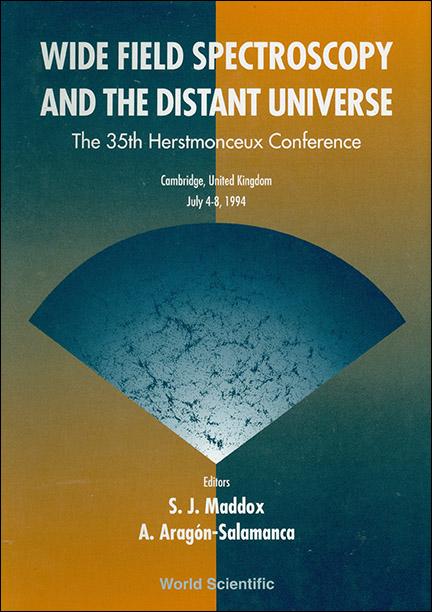
Galaxies represent the most readily visible fabric of the cosmos. Their morphological types, luminosities and environmental surroundings contain valuable clues as to their origin and evolution. Locally, a strong correlation is seen between galaxy morphology and environmental location; this may have been molded at surprisingly modest redshifts. Spectroscopic and photometric studies of deep fields also suggest remarkably recent changes in the galaxy population. The associated growth of structure during the same interval can be tracked via X-ray studies of distant clusters of galaxies.Very recently, impressive observational facilities have been completed, each of which has extended the astronomers' dataset to look-back times where such evolutionary effects can be studied.This volume discusses surveys which share a common theme — the need for a large number of ground-based spectra. It focuses on the various approaches via a single theme concerned with the evolution of galaxies and their distribution. In the near future, impressive new observational facilities will be able to generate large statistical spectroscopic surveys, and the aim of this volume is to assess the scientific impact that ongoing and future spectroscopic surveys can make. Emphasis is placed on the role of non-optical and satellite facilities and the co-ordination of international efforts.
Betaal eenvoudig met kaart, Klarna, Apple Pay of Google Pay. Niet tevreden? Je hebt altijd 14 dagen bedenktijd. Lees meer in onze voorwaarden. Heb je vragen, mail ons dan via hello@memmo.org.
Memmo maakt studeren makkelijker – waar je ook bent ter wereld. Wij brengen je cursusboeken en slimme studietools samen op één plek: samenvattingen, quizzen, podcasts en flashcards. En Ted, je studievriend die antwoord geeft op alles wat je je afvraagt. Meer dan 50.000 studenten studeren hier al – gebouwd om je sneller te laten leren en minder stress te geven.
Misschien vind je dit ook leuk
Koop het boek0