
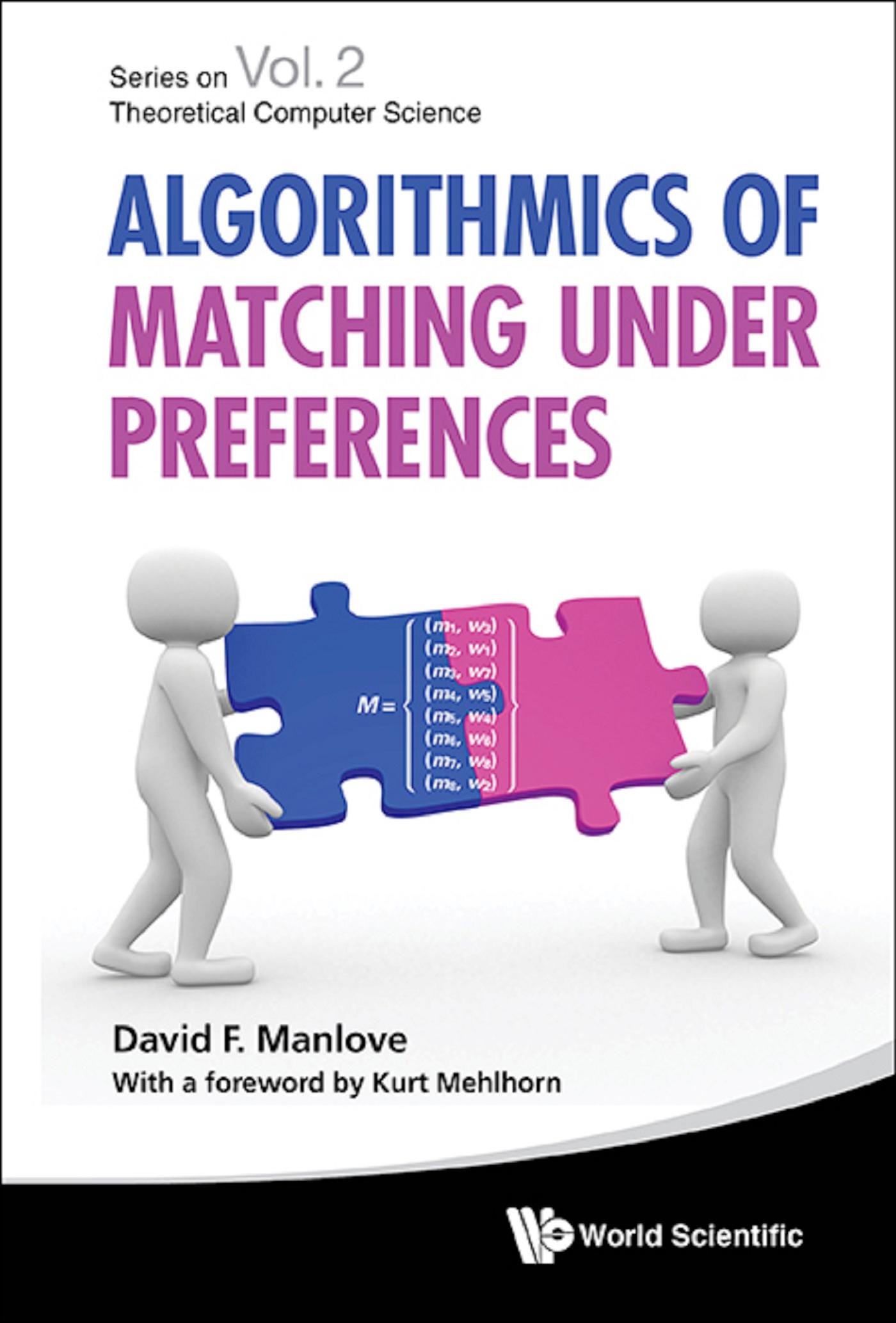
Matching problems with preferences are all around us: they arise when agents seek to be allocated to one another on the basis of ranked preferences over potential outcomes. Efficient algorithms are needed for producing matchings that optimise the satisfaction of the agents according to their preference lists.In recent years there has been a sharp increase in the study of algorithmic aspects of matching problems with preferences, partly reflecting the growing number of applications of these problems worldwide. The importance of the research area was recognised in 2012 through the award of the Nobel Prize in Economic Sciences to Alvin Roth and Lloyd Shapley.This book describes the most important results in this area, providing a timely update to The Stable Marriage Problem: Structure and Algorithms (D Gusfield and R W Irving, MIT Press, 1989) in connection with stable matching problems, whilst also broadening the scope to include matching problems with preferences under a range of alternative optimality criteria.
Betaal eenvoudig met kaart, Klarna, Apple Pay of Google Pay. Niet tevreden? Je hebt altijd 14 dagen bedenktijd. Lees meer in onze voorwaarden. Heb je vragen, mail ons dan via hello@memmo.org.
Memmo maakt studeren makkelijker – waar je ook bent ter wereld. Wij brengen je cursusboeken en slimme studietools samen op één plek: samenvattingen, quizzen, podcasts en flashcards. En Ted, je studievriend die antwoord geeft op alles wat je je afvraagt. Meer dan 50.000 studenten studeren hier al – gebouwd om je sneller te laten leren en minder stress te geven.
Misschien vind je dit ook leuk
Koop het boek0