
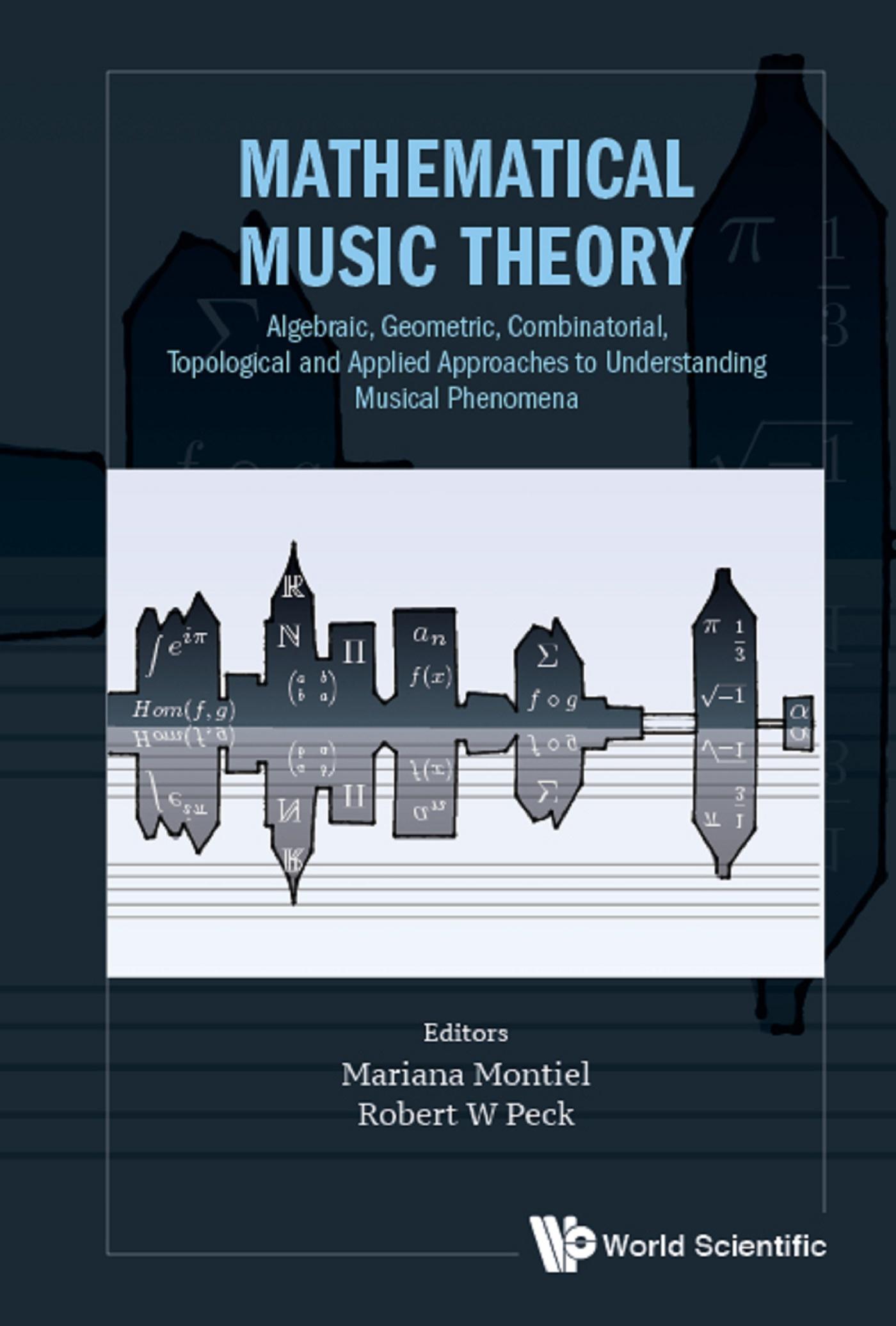
Questions about variation, similarity, enumeration, and classification of musical structures have long intrigued both musicians and mathematicians. Mathematical models can be found from theoretical analysis to actual composition or sound production. Increasingly in the last few decades, musical scholarship has incorporated modern mathematical content. One example is the application of methods from Algebraic Combinatorics, or Topology and Graph Theory, to the classification of different musical objects. However, these applications of mathematics in the understanding of music have also led to interesting open problems in mathematics itself.The reach and depth of the contributions on mathematical music theory presented in this volume is significant. Each contribution is in a section within these subjects: (i) Algebraic and Combinatorial Approaches; (ii) Geometric, Topological, and Graph-Theoretical Approaches; and (iii) Distance and Similarity Measures in Music.
Betaal eenvoudig met kaart, Klarna, Apple Pay of Google Pay. Niet tevreden? Je hebt altijd 14 dagen bedenktijd. Lees meer in onze voorwaarden. Heb je vragen, mail ons dan via hello@memmo.org.
Memmo maakt studeren makkelijker – waar je ook bent ter wereld. Wij brengen je cursusboeken en slimme studietools samen op één plek: samenvattingen, quizzen, podcasts en flashcards. En Ted, je studievriend die antwoord geeft op alles wat je je afvraagt. Meer dan 50.000 studenten studeren hier al – gebouwd om je sneller te laten leren en minder stress te geven.
Misschien vind je dit ook leuk
Koop het boek0