
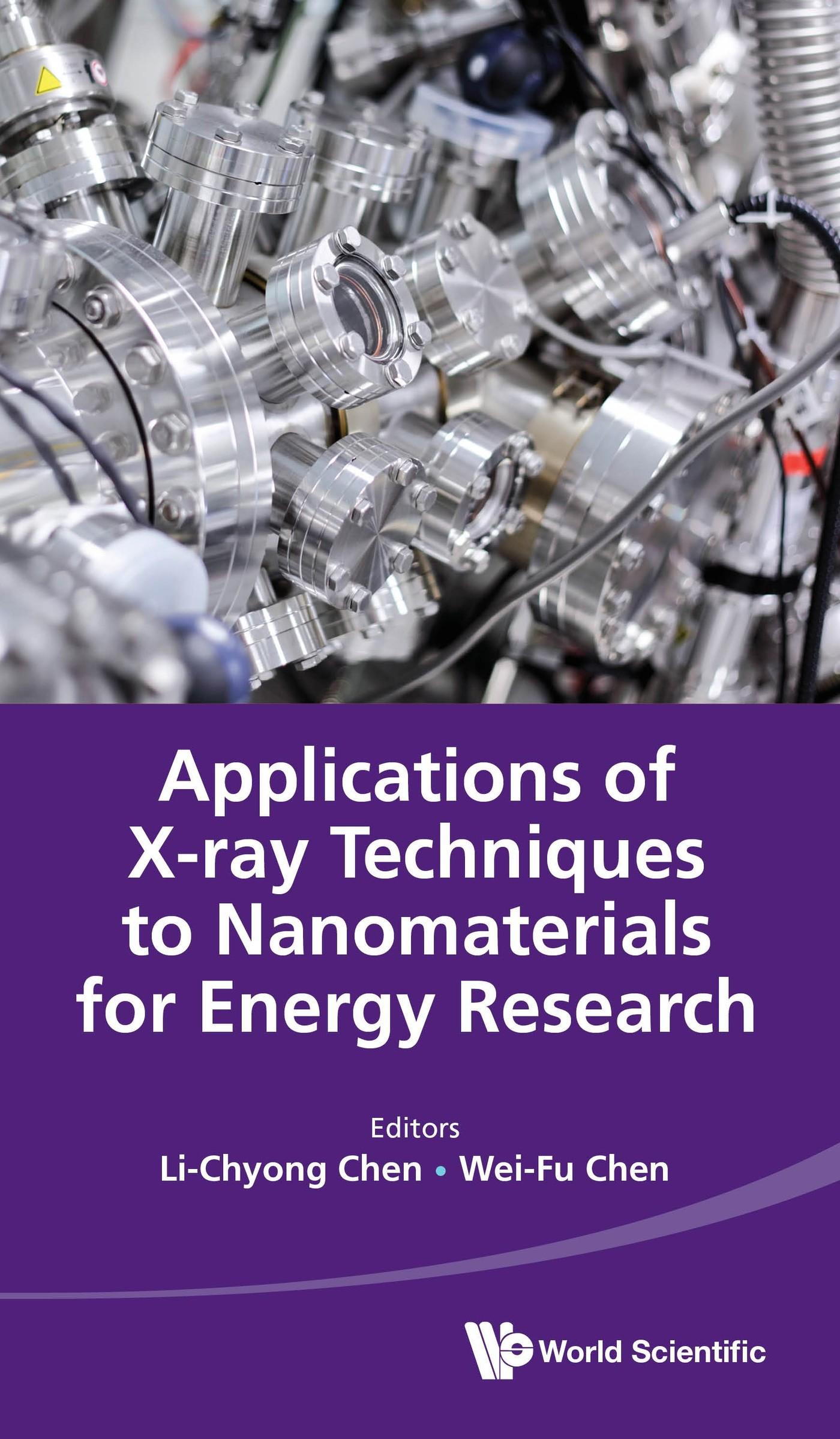
Nanomaterials have become a key component for energy-related applications. Their design principle, synthesis and applications are well discussed in various scientific and engineering books, but a gap remains in discussions regarding the application of cutting-edge X-ray techniques to these materials. This volume provides insights from the latest development of X-ray techniques to investigate nanomaterials in specific energy fields, bridging the gap between X-ray analytical scientists and material researchers.
We aim to provide researchers with a tool to choose suitable X-ray techniques, carry them out with the right procedure, and analyze the data to give the best reliable results. The approach is microscopic and specific. Among the applications emphasized by the chapters in this book are x-ray techniques in heterogeneous catalysis, electrocatalysis for fuel cells, photocatalysis for water splitting and carbon dioxide reduction, organic photovoltaics, and other energy-related applications.
Contents:
- Application of X-ray Techniques in Heterogeneous Catalysis (Wenqian Xu, Siyu Yao and Xiaofang Yang)
- In situ X-ray Absorption Spectroscopic Studies of Nanostructured Electrocatalysts for Fuel Cells (Kotaro Sasaki, Nebojsa Marinkovic and Radoslav R Adzic)
- Bimetallic Nanocatalysts Characterized by Synchrotron-based X-ray Absorption Spectroscopy (Bing Joe Hwang, Loka Subramanyam Sarma, Bathinapatla Sravani, Chung Jern Pan and Meng-Che Tsai)
- Synchrotron X-ray Spectroscopies on Photocatalysts for Water Splitting (Liang-Ching Hsu and Yan-Gu Lin)
- Application of X-ray Spectroscopy in Carbon Dioxide Reduction (Indrajit Shown, Wei-Fu Chen, Kuei-Hsien Chen and Li-Chyong Chen)
- Application of X-ray Spectroscopies for Structural Characterization of Organic Based Solar Cells (Wei-Fang Su, Cheng-Si Tsao, Chun-Yu Chang, Yu-Ching Huang and Chia-Feng Li)
- Application of Scanning Transmission X-ray Microscopy to Energy Research
Readership: Advanced undergraduates, graduate students, researchers and scientists in chemical, material, battery and energy industries.
Key Features:
- Fills an important research gap in the field of nanomaterials by giving scientists new options to investigate nanomaterials for energy research
- Technical, detailed yet concise; suitable for quick application in the field
Betaal eenvoudig met kaart, Klarna, Apple Pay of Google Pay. Niet tevreden? Je hebt altijd 14 dagen bedenktijd. Lees meer in onze voorwaarden. Heb je vragen, mail ons dan via hello@memmo.org.
Memmo maakt studeren makkelijker – waar je ook bent ter wereld. Wij brengen je cursusboeken en slimme studietools samen op één plek: samenvattingen, quizzen, podcasts en flashcards. En Ted, je studievriend die antwoord geeft op alles wat je je afvraagt. Meer dan 50.000 studenten studeren hier al – gebouwd om je sneller te laten leren en minder stress te geven.