
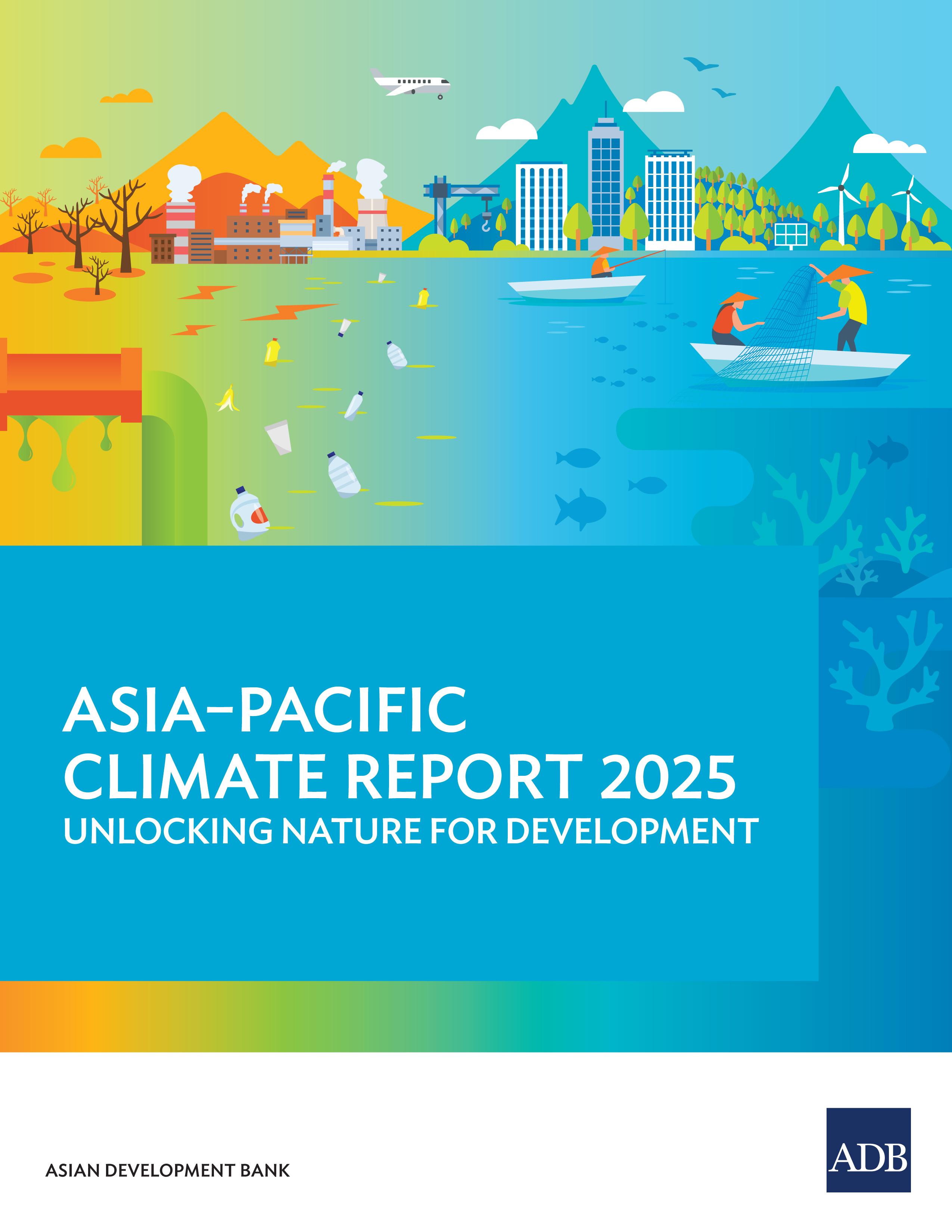
About 75% of GDP in Asia and the Pacific depends on nature, but it remains overlooked in economic planning. Healthy ecosystems support public health, livelihoods, fiscal stability, and climate resilience. Scaling nature finance requires upgraded governance, policies, and data.
Nature is a core economic asset in Asia and the Pacific, with around 75% of GDP directly or indirectly tied to nature through sectors like agriculture, fisheries, and tourism. Yet, nature remains largely invisible in economic planning. When ecosystems degrade, economies face higher health and disaster costs, reduced productivity, shrinking fiscal revenues, and weakened debt sustainability.
The report highlights that ecosystem services—such as pollination, water purification, and climate regulation—provide multiple benefits, underpinning food security, public health, livelihoods and climate resilience. Healthy ecosystems are important for economic stability and growth, making investing in nature a compelling development strategy.
Governments and private companies are beginning to integrate nature in their decision frameworks, making this a pivotal moment. Finance can play a key role in driving nature-positive transformation, but under the right enabling conditions. Scaling nature finance depends on upgrading the “operating system” of governance, policy, and data. This upgrade will address market failures and policy distortions, and help markets reflect costs of environmental damage and benefits of restoration in prices, policies, and investments. Both public and private finance are necessary: public finance helps create enabling conditions and reduces early-stage risks, while private capital can bring innovation, efficiency, and scale.
Across Asia and the Pacific, many promising initiatives remain at the pilot stage—not for lack of ideas, but because they are not structured to attract capital. Strengthening financial literacy among conservation actors and ecological awareness among investors is important for scaling these efforts. Spatial scale also matters, as ecosystems don’t function in isolation. The landscape approach, which connects actions across ecological and economic systems, can amplify benefits, and underscores the need for regional cooperation in managing shared ecosystems.
The report lays out a 10-year roadmap for countries at all stages of development to embed nature into their economic systems and leverage environmental performance as competitive economic advantage.
The Asia–Pacific Climate Report 2025 draws on 15 background papers prepared by leading experts in environment, economics, data, finance, and policy.
Betaal eenvoudig met kaart, Klarna, Apple Pay of Google Pay. Niet tevreden? Je hebt altijd 14 dagen bedenktijd. Lees meer in onze voorwaarden. Heb je vragen, mail ons dan via hello@memmo.org.
Memmo maakt studeren makkelijker – waar je ook bent ter wereld. Wij brengen je cursusboeken en slimme studietools samen op één plek: samenvattingen, quizzen, podcasts en flashcards. En Ted, je studievriend die antwoord geeft op alles wat je je afvraagt. Meer dan 50.000 studenten studeren hier al – gebouwd om je sneller te laten leren en minder stress te geven.
Misschien vind je dit ook leuk
Koop het boek0