
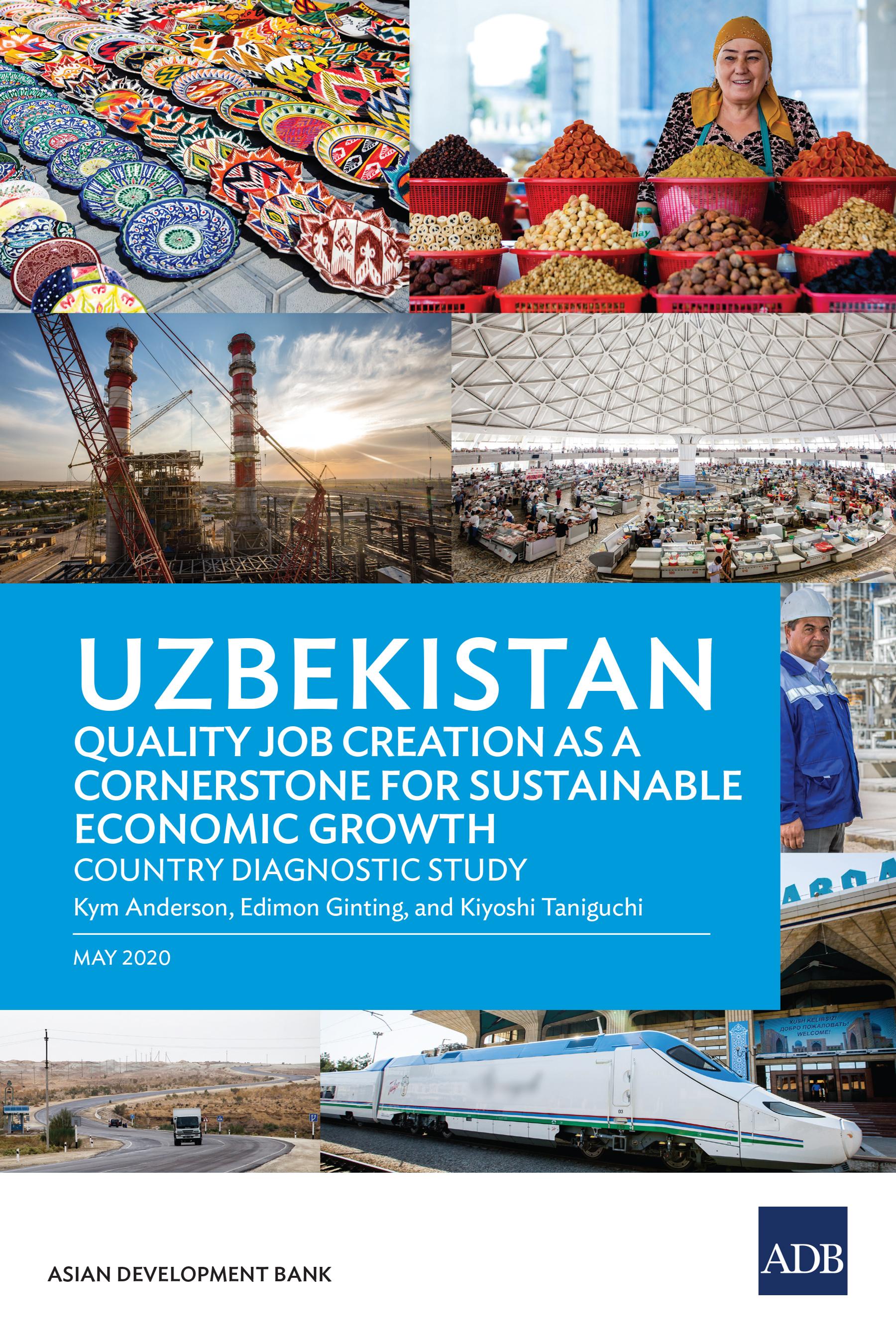
Uzbekistan has achieved sustained growth through its gradual transition to a market-based economy through cautious economic policy reforms. Despite its gradual approach to development challenges, the country experienced the smallest output decline among former Soviet economies and enjoyed high rates of economic growth from 2004 to 2015, largely driven by the high prices of its major export commodities. However, the drop in the global prices of many key commodities in recent years have severely impacted Uzbekistan's economy. Under these circumstances, the new government introduced major reforms. The pace of reform is unprecedented. The government has formulated its long-term economic strategy in its Vision 2030, which aims to double the country's gross domestic product by 2030 through a program of economic diversification. This book analyzes how Uzbekistan can boost sustainable economic growth to create more and better jobs. It considers how the country can consolidate achievements from recent policy reforms and maintain reform efforts to accelerate sustainable growth. Policy recommendations cover fostering macroeconomic stability, increasing investment in physical infrastructure, enhancing human capital, improving firms' access to finance, and lowering barriers to international trade and foreign investment inflows.
Betaal eenvoudig met kaart, Klarna, Apple Pay of Google Pay. Niet tevreden? Je hebt altijd 14 dagen bedenktijd. Lees meer in onze voorwaarden. Heb je vragen, mail ons dan via hello@memmo.org.
Memmo maakt studeren makkelijker – waar je ook bent ter wereld. Wij brengen je cursusboeken en slimme studietools samen op één plek: samenvattingen, quizzen, podcasts en flashcards. En Ted, je studievriend die antwoord geeft op alles wat je je afvraagt. Meer dan 50.000 studenten studeren hier al – gebouwd om je sneller te laten leren en minder stress te geven.
Misschien vind je dit ook leuk
Koop het boek0