
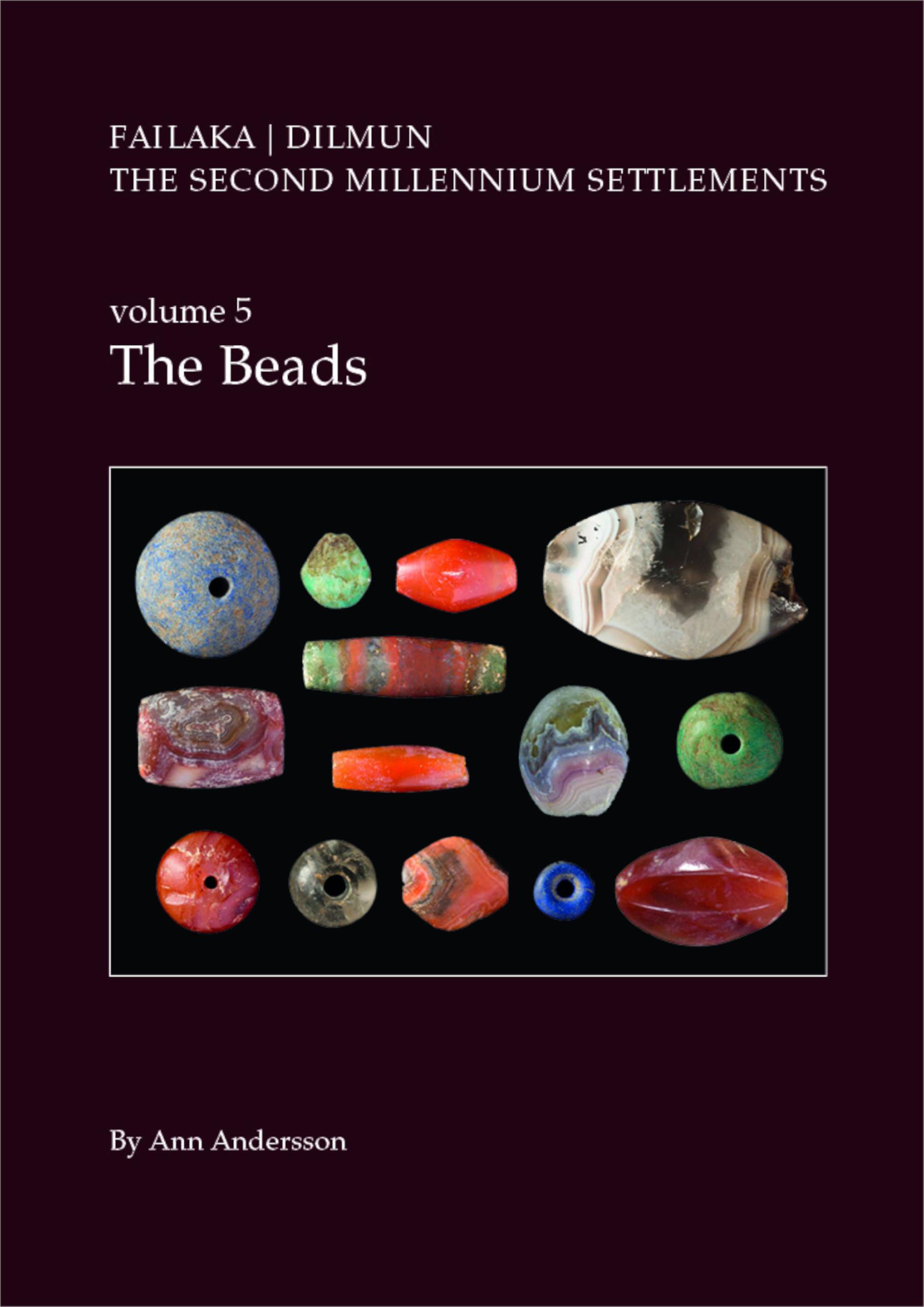
Excavations in 1958-1963 on the island of Failaka in Kuwait uncovered a small community of Dilmun traders from the second millennium BC. Prominent among the finds were 629 beads, most of them made of semi-precious stone, such as different varieties of chalcedony (agate, carnelian, jasper, and moss agate) and quartz (rock crystal, milky quartz, and smoky quartz), and a range of other stone types, such as calcite, chlorite, lapis lazuli, turquoise and porphyry. Additionally, part of the beads was made of glass: a new prestige material of the second millennium.
The study consists of a typology, a classification of materials and an analysis of the dating and distribution of the beads. Manufacturing techniques, including perforation and use-wear, are also considered. In a final discussion, the bead corpus from Failaka is compared with similar material from contemporary sites on Failaka and in Bahrain, along with some thoughts on connections and trade relations, which may be inferred from the materials and forms in the bead assemblage. The study proposes far-reaching connections with the Indus in the east and the Aegean in the west.
Betaal eenvoudig met kaart, Klarna, Apple Pay of Google Pay. Niet tevreden? Je hebt altijd 14 dagen bedenktijd. Lees meer in onze voorwaarden. Heb je vragen, mail ons dan via hello@memmo.org.
Memmo maakt studeren makkelijker – waar je ook bent ter wereld. Wij brengen je cursusboeken en slimme studietools samen op één plek: samenvattingen, quizzen, podcasts en flashcards. En Ted, je studievriend die antwoord geeft op alles wat je je afvraagt. Meer dan 50.000 studenten studeren hier al – gebouwd om je sneller te laten leren en minder stress te geven.
Misschien vind je dit ook leuk
Koop het boek0