
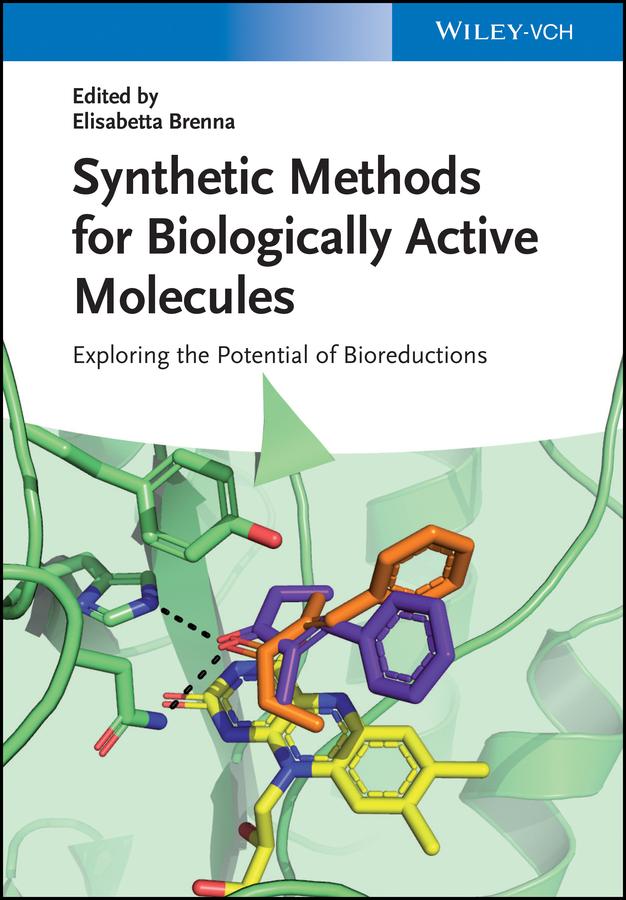
This useful reference focuses on the currently available toolbox of bio-catalysed reductions of C=O, C=C and formal C=N bonds to show which transformations can be reliably used in manufacturing processes and which still require improvements.
Following an introductory chapter, chapters 2-4 present the synthetic strategies that are currently available for the reduction of C=C and C=O bonds and for reductive amination, by means of whole-cell catalysts and isolated enzymes. Chapters 5-7 go on to describe the improvements achieved thus far, illustrating the current versatility of enzymes in organic synthesis. Chapters 8-12 present the improvements brought about by the optimization of reaction conditions, and the use of particular synthetic sequences. The final chapter describes practical applications of bio-reductions for the synthesis of active pharmaceutical ingredients.
With its excellent and comprehensive overview, this book will be of great interest to those working in academia and industry.
From the contents:
* Development of Sustainable Biocatalyzed Reduction Processes for Organic Chemists
* Reductases: From Natural Diversity to Biocatalysis and Emerging Enzymatic Activities.
* Synthetic Strategies Based on C=C Bioreductions
* Synthetic Strategies Based on C=O Bioreductions
* Development of Novel Enzymes for the Improved Reduction of C=C Double Bonds
* Development of Novel Enzymes for the Improved Reduction of C=O Double Bonds
* Synthetic Applications of Aminotransferases
* Strategies for Cofactor Regeneration in Biocatalyzed Reductions
* Effects of Solvent System and Substrate Loading in Bioreduction
* Perspectives in the Use of In-Situ Product Removal (ISPR) Techniques in Bioreductions
* Multi-Enzymatic Cascade Reactions Based on Reduction Processes
* Relevant Practical Applications of Bioreduction Processes in the Synthesis of Active Pharmaceutical Ingredients
Following an introductory chapter, chapters 2-4 present the synthetic strategies that are currently available for the reduction of C=C and C=O bonds and for reductive amination, by means of whole-cell catalysts and isolated enzymes. Chapters 5-7 go on to describe the improvements achieved thus far, illustrating the current versatility of enzymes in organic synthesis. Chapters 8-12 present the improvements brought about by the optimization of reaction conditions, and the use of particular synthetic sequences. The final chapter describes practical applications of bio-reductions for the synthesis of active pharmaceutical ingredients.
With its excellent and comprehensive overview, this book will be of great interest to those working in academia and industry.
From the contents:
* Development of Sustainable Biocatalyzed Reduction Processes for Organic Chemists
* Reductases: From Natural Diversity to Biocatalysis and Emerging Enzymatic Activities.
* Synthetic Strategies Based on C=C Bioreductions
* Synthetic Strategies Based on C=O Bioreductions
* Development of Novel Enzymes for the Improved Reduction of C=C Double Bonds
* Development of Novel Enzymes for the Improved Reduction of C=O Double Bonds
* Synthetic Applications of Aminotransferases
* Strategies for Cofactor Regeneration in Biocatalyzed Reductions
* Effects of Solvent System and Substrate Loading in Bioreduction
* Perspectives in the Use of In-Situ Product Removal (ISPR) Techniques in Bioreductions
* Multi-Enzymatic Cascade Reactions Based on Reduction Processes
* Relevant Practical Applications of Bioreduction Processes in the Synthesis of Active Pharmaceutical Ingredients
Betaal eenvoudig met kaart, Klarna, Apple Pay of Google Pay. Niet tevreden? Je hebt altijd 14 dagen bedenktijd. Lees meer in onze voorwaarden. Heb je vragen, mail ons dan via hello@memmo.org.
Memmo maakt studeren makkelijker – waar je ook bent ter wereld. Wij brengen je cursusboeken en slimme studietools samen op één plek: samenvattingen, quizzen, podcasts en flashcards. En Ted, je studievriend die antwoord geeft op alles wat je je afvraagt. Meer dan 50.000 studenten studeren hier al – gebouwd om je sneller te laten leren en minder stress te geven.