
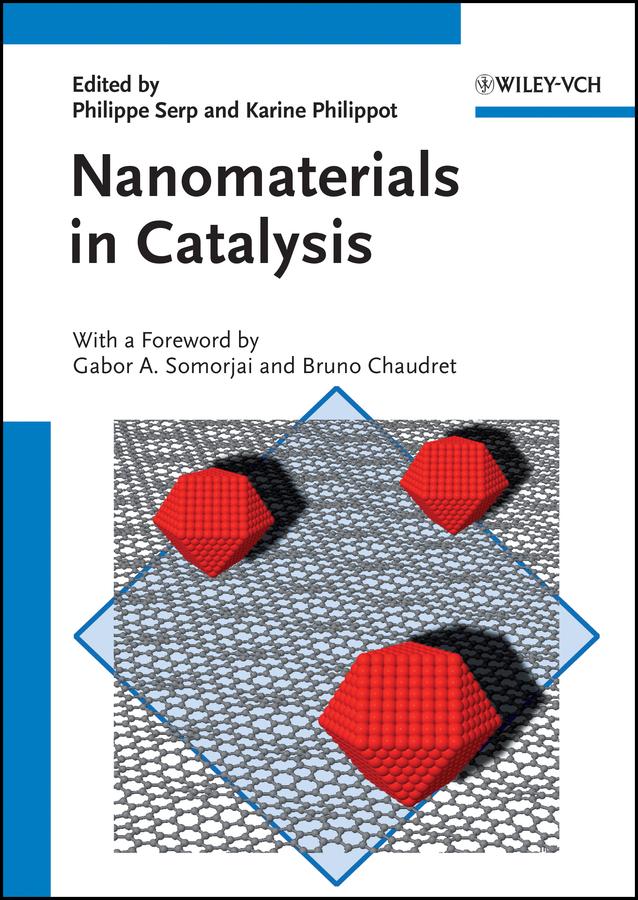
Nanocatalysis has emerged as a field at the interface between homogeneous and heterogeneous catalysis and offers unique solutions to
the demanding requirements for catalyst improvement. Heterogeneous catalysis represents one of the oldest commercial applications of nanoscience and nanoparticles of metals, semiconductors, oxides, and other compounds have been widely used for important chemical reactions. The main focus of this fi eld is the development of well-defined catalysts, which may include both metal nanoparticles and a nanomaterial as the support. These nanocatalysts should display the benefits of both homogenous and heterogeneous catalysts, such as high efficiency and selectivity, stability and easy recovery/recycling. The concept of nanocatalysis is outlined in this book and, in particular, it provides a comprehensive overview of the science of colloidal nanoparticles. A broad range of topics, from the fundamentals to applications in catalysis, are covered, without excluding micelles, nanoparticles in ionic liquids, dendrimers, nanotubes, and nanooxides, as well as modeling, and the characterization of nanocatalysts, making it an indispensable reference for both researchers at universities and
professionals in industry.
the demanding requirements for catalyst improvement. Heterogeneous catalysis represents one of the oldest commercial applications of nanoscience and nanoparticles of metals, semiconductors, oxides, and other compounds have been widely used for important chemical reactions. The main focus of this fi eld is the development of well-defined catalysts, which may include both metal nanoparticles and a nanomaterial as the support. These nanocatalysts should display the benefits of both homogenous and heterogeneous catalysts, such as high efficiency and selectivity, stability and easy recovery/recycling. The concept of nanocatalysis is outlined in this book and, in particular, it provides a comprehensive overview of the science of colloidal nanoparticles. A broad range of topics, from the fundamentals to applications in catalysis, are covered, without excluding micelles, nanoparticles in ionic liquids, dendrimers, nanotubes, and nanooxides, as well as modeling, and the characterization of nanocatalysts, making it an indispensable reference for both researchers at universities and
professionals in industry.
Betaal eenvoudig met kaart, Klarna, Apple Pay of Google Pay. Niet tevreden? Je hebt altijd 14 dagen bedenktijd. Lees meer in onze voorwaarden. Heb je vragen, mail ons dan via hello@memmo.org.
Memmo maakt studeren makkelijker – waar je ook bent ter wereld. Wij brengen je cursusboeken en slimme studietools samen op één plek: samenvattingen, quizzen, podcasts en flashcards. En Ted, je studievriend die antwoord geeft op alles wat je je afvraagt. Meer dan 50.000 studenten studeren hier al – gebouwd om je sneller te laten leren en minder stress te geven.