
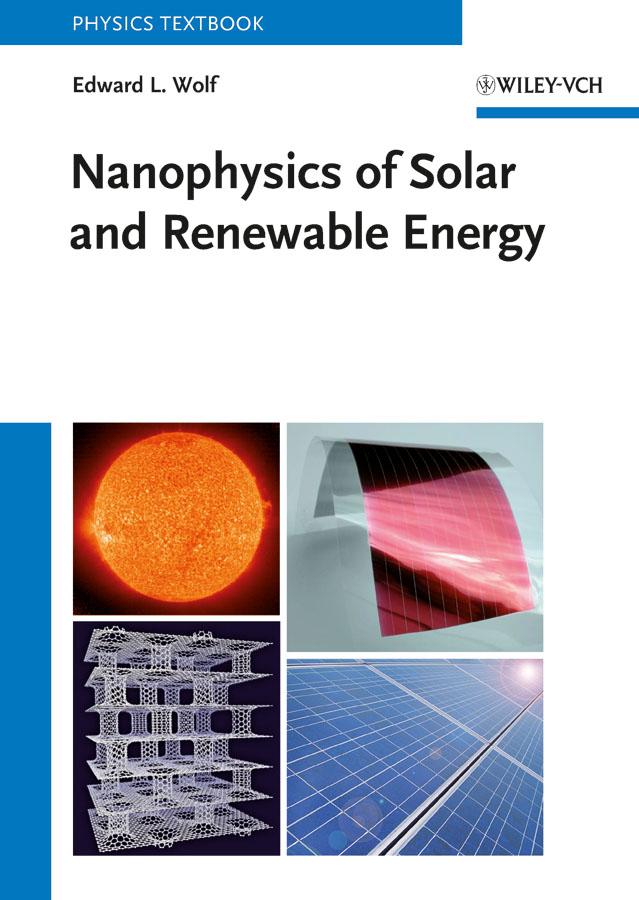
This easy accessible textbook provides an overview of solar to electric energy conversion, followed by a detailed look at one aspect, namely photovoltaics, including the underlying principles and fabrication methods. Ed Wolf, an experienced author and teacher, reviews such green technologies as solar-heated-steam power, hydrogen, and thermoelectric generation, as well as nuclear fusion. Throughout the book, carefully chosen, up-to-date examples are used to illustrate important concepts and research tools.
The opening chapters give a broad and exhaustive survey of long term energy resources, reviewing current and potential types of solar driven energy sources. The core part of the text on solar energy conversion discusses different concepts for generating electric power, followed by a profound presentation of the underlying semiconductor physics and rounded off by a look at efficiency and third-generation concepts. The concluding section offers a rough analysis of the economics relevant to the large-scale adoption of photovoltaic conversion with a discussion of such issues as durability, manufacturability and cost, as well as the importance of storage.
The book is self-contained so as to be suitable for students with introductory calculus-based courses in physics, chemistry, or engineering. It introduces concepts in quantum mechanics, atomic and molecular physics, plus the solid state and semiconductor junction physics needed to attain a quantitative understanding of the current status of this field. With its comments on economic aspects, it is also a useful tool for those readers interested in a career in alternative energy.
The opening chapters give a broad and exhaustive survey of long term energy resources, reviewing current and potential types of solar driven energy sources. The core part of the text on solar energy conversion discusses different concepts for generating electric power, followed by a profound presentation of the underlying semiconductor physics and rounded off by a look at efficiency and third-generation concepts. The concluding section offers a rough analysis of the economics relevant to the large-scale adoption of photovoltaic conversion with a discussion of such issues as durability, manufacturability and cost, as well as the importance of storage.
The book is self-contained so as to be suitable for students with introductory calculus-based courses in physics, chemistry, or engineering. It introduces concepts in quantum mechanics, atomic and molecular physics, plus the solid state and semiconductor junction physics needed to attain a quantitative understanding of the current status of this field. With its comments on economic aspects, it is also a useful tool for those readers interested in a career in alternative energy.
Betaal eenvoudig met kaart, Klarna, Apple Pay of Google Pay. Niet tevreden? Je hebt altijd 14 dagen bedenktijd. Lees meer in onze voorwaarden. Heb je vragen, mail ons dan via hello@memmo.org.
Memmo maakt studeren makkelijker – waar je ook bent ter wereld. Wij brengen je cursusboeken en slimme studietools samen op één plek: samenvattingen, quizzen, podcasts en flashcards. En Ted, je studievriend die antwoord geeft op alles wat je je afvraagt. Meer dan 50.000 studenten studeren hier al – gebouwd om je sneller te laten leren en minder stress te geven.